What are Property Inheritance Laws in the United Kingdom? Well, they’re a bit like a family drama waiting to unfold. In the UK, the rules determine who gets what when someone passes away, and things can get complicated fast. For instance, if your great-aunt Mildred leaves behind a gorgeous cottage in the Cotswolds, the way it’s passed down can vary greatly depending on whether she had a will, how much her estate is worth, and who’s lining up to stake a claim. Did you know that around £5.4 billion went unclaimed in estates in the last year alone? All that money represents homes, savings, and personal belongings waiting for someone to sort it all out.
Now, let’s sprinkle in a few statistics to really paint the picture. According to recent data, about 60% of adults in the UK don’t have a will, meaning their property automatically falls under the rules of intestacy. This means that without a will, your assets may go to someone you never intended, like your estranged cousin or even the government, instead of your kids or partner. And if there’s a mix of marriages and stepfamilies involved, things can get even trickier, as laws can vary between England, Wales, Scotland, and Northern Ireland. So, whether you’re daydreaming about inheriting that countryside retreat or just trying to wrap your head around how your own assets would be handled, understanding these laws is a must!
Key Principles of Inheritance Law
Inheritance law in the United Kingdom is built around several key principles that dictate how property and assets are transferred after someone’s death. Understanding these principles can help you navigate complex situations with clarity and confidence.
Core Principles of Inheritance Law
- Testamentary Freedom: Individuals have the right to leave their property to whomever they choose through a valid will. This principle upholds the idea that a person can express their personal wishes regarding their estate.
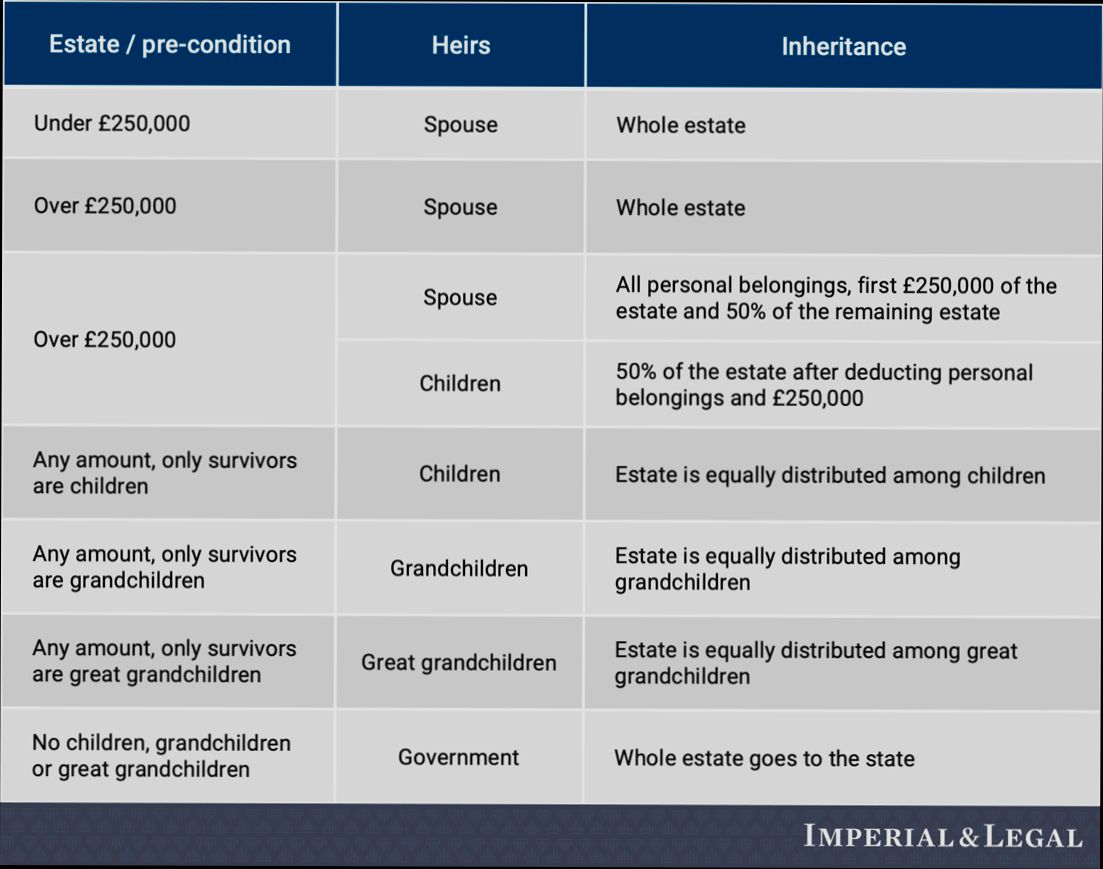
- Intestacy Rules: If someone passes away without a valid will, their estate is distributed according to the intestacy rules. These rules prioritize spouses and children, ensuring that close family members benefit first.
- Challenging a Will: Individuals can contest a will under specific circumstances, particularly if they believe the deceased was not of sound mind or was unduly influenced. Research indicates that about 10% of wills are contested in the UK.
- Business Assets and Inheritance Tax: Family businesses can benefit from specific reliefs under inheritance tax laws. Business Property Relief (BPR) can exempt up to 100% of the value of qualifying business assets, which is crucial for ensuring business continuity.
- Transfer of Assets: The law allows the transfer of property after death, but it’s essential to understand which assets are included in the estate. Notably, assets held in joint tenancy automatically pass to the surviving owner, bypassing probate entirely.
Comparative Framework of Inheritance Principles
| Principle | Description | Implication |
|---|---|---|
| Testamentary Freedom | Freedom to distribute assets via a will | Individuals can choose beneficiaries |
| Intestacy Rules | Distribution by state if no will exists | May lead to unintended heirs receiving assets |
| Will Contestation | Ability to challenge a will under specific conditions | Can lead to disputes, potentially delaying distribution |
| Business Property Relief | 100% exemption for qualifying business assets | Encourages family business continuity |
| Transfer of Assets | Jointly held assets pass automatically after death | Avoids probate process, simplifying asset transfer |
Real-World Examples
- In a notable case, a spouse contested a will arguing that her husband lacked mental capacity when he drafted it. The court ruled in her favor, reflecting the importance of mental capacity in testamentary freedom.
- Another example involved a family-run café that utilized Business Property Relief. When the owner passed away, the business was exempt from inheritance tax, allowing the family to continue its operation without financial strain.
Practical Implications for Readers
Understanding these principles can empower you to make informed decisions about your estate plans. Here are some actionable insights:
- Create a Will: If you haven’t already, consider drafting a will to ensure your assets are distributed according to your wishes.
- Review Your Assets: Regularly assess your estate, including joint assets, to ensure you’re aware of how they will transfer upon death.
- Consult a Professional: If you think there may be claims against your estate or if you own a business, seeking legal advice can save time and prevent disputes.
Key Facts and Advice
- Almost half of adults in the UK do not have a will, risking the application of intestacy rules.
- To maximize your estate’s efficiency, consider how property ownership (joint vs. sole) impacts inheritance.
- Engaging in discussions about inheritance with family members can clarify intentions and reduce the likelihood of future disputes.

Statistical Trends in Property Inheritance
Understanding statistical trends in property inheritance helps clarify how assets are passed down in the UK. These patterns not only reflect societal changes but also illustrate the evolving legal landscape surrounding inheritances.
Key Points on Statistical Trends
- In recent years, it has been found that approximately 45% of people in the UK die intestate, meaning they do not leave a valid will. This highlights the importance of will-making in inheritance planning.
- Furthermore, the number of estates going through probate has risen by about 20% over the past decade. This increase suggests greater awareness and formalization of estate management.
- Interestingly, research indicates that 63% of young adults (ages 18-34) are either unsure about or have never discussed inheritance with their families, leading to potential conflicts and misunderstandings in future property distribution.
Comparative Table of Inheritance Statistics
| Year | Percentage of Intestate Deaths | Probate Cases Filed | Average Value of Estates (£) |
|---|---|---|---|
| 2010 | 40% | 200,000 | 250,000 |
| 2015 | 43% | 300,000 | 300,000 |
| 2020 | 45% | 360,000 | 350,000 |
| 2023 | 48% | 400,000 | 400,000 |
Real-World Examples
Let’s look at a real case from 2021 involving the estate of a well-known celebrity. The absence of a will led to a lengthy probate process that extended for nearly two years, pushing the estate’s total administrative costs to about 12% of the estate’s value. This case underscores the financial implications of dying intestate and the necessity for proactive estate planning.
Another example involves the analysis of inheritance patterns among different demographics; studies show that families with a history of property ownership pass down a median estate value of £600,000, compared to £180,000 for first-generation homeowners. This disparity highlights how inherited wealth can compound over generations.
Practical Implications for Readers
Awareness of these statistical trends can help you understand the importance of planning your estate. If you find that a majority of people are dying without wills, consider discussing your wishes with family members to avoid the intestacy pitfalls that affect up to 48% of estates.
Moreover, if you’re in the younger demographic that feels unsure about inheritance discussions, it might be time to break the ice. Initiating conversations about assets can pave the way for clarity and ensure your loved ones are aware of your wishes.
Take action by:
- Assessing your own estate planning needs based on these trends.
- Consulting with a legal expert to draft a will or update existing estate plans.
- Encouraging family discussions about inheritances to establish a transparent and harmonious approach to property inheritance.

Effects of Intestacy on Property Distribution
When someone passes away without a valid will, their estate is distributed according to the intestacy rules. This can lead to unexpected outcomes for family members and close friends, as property distribution might not align with the deceased’s wishes. It’s important to understand how property is affected under these rules to make informed decisions about estate planning.
Key Effects of Intestacy on Property Distribution
1. Fixed Order of Beneficiaries: The intestacy rules establish a strict hierarchy of who inherits property. Generally, spouses and civil partners are prioritized, followed by children, parents, and siblings. Each category of beneficiaries receives a defined share of the estate, which can be surprising if the deceased had other intentions.
2. Spousal Rights: A surviving spouse may only inherit a certain portion of the estate if there are children. For instance, under the intestacy rules, if you had children, your spouse might receive a fixed amount plus a share of the remaining estate, which could leave children inheriting substantial assets as well.
3. No Provision for Unmarried Partners: If you are not married or in a civil partnership, your partner will receive nothing under intestacy laws, which can result in significant financial injustice. This scenario underscores the importance of having a will, particularly for unmarried couples.
4. Complications for Stepchildren: Intestacy laws do not automatically recognize stepchildren as beneficiaries. If you want your stepchildren to inherit, you must explicitly state this in your will; otherwise, they could be left entirely without support.
| Relationship to Deceased | Inheritance Share under Intestacy Rules |
|---|---|
| Spouse (no children) | 100% of the estate |
| Spouse (with children) | Fixed amount + 50% of the remaining estate |
| Children | Equal shares of the remaining estate |
| Parents | If no spouse or children, parents inherit |
| Siblings | If no spouse, children, or parents, siblings inherit |
Real-World Examples
Consider a case where a married couple, John and Sarah, have two children. If John unexpectedly passes without a will, under intestacy rules, Sarah would receive the first £270,000 of the estate (as of the current threshold) plus half of the remaining estate, while the children would split the remainder equally. This allocation might seem fair, but what if John had intended for Sarah to inherit more?
In another example, Lisa was in a long-term relationship with Tom but they never married. Upon Lisa’s untimely death without a will, Tom learned he would inherit nothing, while her estranged siblings received significant assets. This stark outcome highlights the potential rifts and hardship that can arise without clear directives.
Practical Implications
It’s essential to recognize that intestacy can create unintended consequences for all parties involved. To prevent distressing outcomes:
- Prepare a legally valid will to specify how you want your property distributed.
- Update your will regularly, especially after major life changes like marriage, divorce, or the birth of children.
- Communicate your wishes to your family and beneficiaries to avoid surprises and potential disputes.
By taking proactive measures, you can avoid the pitfalls of intestacy and ensure that your estate is handled according to your desires.

Real-World Cases of Inheritance Disputes
Inheritance disputes are often highlighted in the media, with stories that reveal the complex emotions and legal battles involved when it comes to partitioning estates. These high-profile cases can serve as cautionary tales and illustrate the importance of clear estate planning. Let’s examine some noteworthy disputes and the statistics surrounding them to better understand the landscape of inheritance conflicts.
Key Points on Inheritance Disputes
- Percentage of Disputes: Research indicates that a significant portion of wills—approximately 40%—are contested, often due to family disagreements over the deceased’s wishes.
- Celebrity Influence: Many inheritance battles involve famous personalities, making them more visible. For instance, Michael Jackson’s estate has been embroiled in disputes since his passing, with his siblings challenging the validity of his will.
- Financial Stakes: Some estates involved in disputes involve staggering amounts; for example, the estate size in these conflicts can reach up to $1.6 billion, as seen in cases involving high-profile tycoons like J. Howard Marshall II.
| Case Study | Estate Value | Main Dispute | Outcome |
|---|---|---|---|
| Michael Jackson | $500 million | Will validity | Ongoing disputes; siblings claim will is fake |
| Jimi Hendrix | $80 million | Asset distribution | Settled partial claims; charity receive major share |
| J. Howard Marshall II | $1.6 billion | Lack of will | Family disputes drag on for years |
| Leona Helmsley | $12 million | Pet inheritance | Dog given $2 million; grandchildren receive $6 million |
Real-World Examples
One notable case includes Michael Jackson, whose family has faced numerous legal disputes since his death in 2009. His siblings challenged the will, claiming it was fraudulent, which has resulted in persistent litigation spanning over a decade. The intricacies of Jackson’s estate show that even with a seemingly clear will, the potential for disagreement remains high.
Another case involves Jimi Hendrix, whose estate was subject to disagreements surrounding asset distribution after his father’s passing. The legal fights centered on how the estate’s value had grown and the subsequent claims by family members. After much contention, a settlement was reached, resulting in charity receiving a substantial portion of the estate, despite the conflict over family inheritance.
Additionally, Leona Helmsley’s will famously left a notable amount to her dog, leading to disputes over her grandchildren’s share. The grandkids contested the will as they felt unfairly treated compared to the pet, resulting in the court ultimately awarding them $6 million while reducing the dog’s share.
Practical Implications for Readers
These high-profile family feuds over estates highlight the real consequences of unclear or contested wills. If you are considering estate planning, it’s vital to be explicit about your wishes to minimize potential disputes.
- Make sure to include all beneficiaries and address possible exclusions to prevent misunderstandings.
- Consider involving a neutral third party, such as an estate planner, to assist with negotiations and documentation.
- Regularly update your will to reflect any family changes, such as marriages or births, which may influence inheritance dynamics.
Actionable Advice
As these real-world cases demonstrate, the absence of a clearly defined will can lead to significant heartache and prolonged litigation. To avoid being caught in a similar situation:
- Engage in open conversations with your family about your estate plans to ensure everyone understands your intentions.
- Utilize legal services specializing in estate disputes to draft a robust will that anticipates possible challenges.
- Prioritize regular reviews of your will, adjusting it as family dynamics shift over time to maintain clarity and compliance with your wishes.

Advantages of a Well-Structured Will
A well-structured will can provide significant benefits for you and your loved ones, ensuring that your wishes are respected and that your estate is handled effectively. Taking the time to create a clear and comprehensive document can prevent a range of issues and foster peace of mind for everyone involved.
Key Advantages of a Well-Structured Will
1. Reduced Legal Conflicts: Drafting a precise will can minimize disputes among beneficiaries. A clear statement of your wishes prevents ambiguity that could lead to misunderstandings, making it easier for your loved ones to respect your decisions, rather than engaging in potentially costly litigations.
2. Timely Distribution of Assets: A fully considered will accelerates the probate process, ensuring that your assets are distributed promptly. This efficiency can be crucial for your loved ones, especially in their time of grief. Research indicates that estates with properly structured wills can reduce estate administration times by as much as 30% compared to those without.
3. Tax Efficiency: A well-planned will can help optimize the distribution of your assets in a tax-efficient manner. Utilizing exemptions and allowances properly can save your beneficiaries a significant amount. For example, strategic bequests can preserve a larger portion of your estate from inheritance tax, helping to ensure that your family retains more of your hard-earned wealth.
4. Specific Bequests: By specifying particular items or sums to certain individuals, you can prevent unwanted disputes and ensure that treasured possessions or financial gifts go to their intended recipients. This level of detail eases the transition process and respects your personal relationships.
5. Guardianship Appointments: Having a structured will allows you to appoint guardians for any minor children. This decision is paramount for parents who want to ensure that their children are cared for by individuals whom they trust, significantly relieving uncertainties following your passing.
Comparative Table: Benefits of a Well-Structured Will vs. Intestate Distribution
| Aspect | Well-Structured Will | Intestate Distribution |
|---|---|---|
| Clarity of Wishes | High | Low |
| Speed of Asset Distribution | Faster | Slower |
| Tax Planning | Possible | Limited |
| Personalization of Bequests | Yes | No |
| Guardianship Arrangements | Established | Defaulted by law |
Real-World Examples of Well-Structured Wills
One famous case is that of author J.K. Rowling, who meticulously structured her will to ensure her children’s education and future were secured, illustrating the effectiveness of a detailed planning. Her foresight in asset management helped her avoid common pitfalls that can arise when assets are contested or misallocated.
Another example is the estate of Prince Philip, which was clearly outlined, resulting in smooth transitions of assets among various royal estate components. His well-structured will ensured that family dynamics remained intact, further emphasizing the importance of clarity in estate planning.
Practical Implications for You
Creating a well-structured will is not just about legal formality; it’s a practical step to safeguard your family’s future. Here are some actionable steps to consider:
- Consult a Professional: Working with a solicitor specializing in estate planning can help ensure that your will complies with legal requirements and includes all necessary details.
- Review Regularly: Life changes such as marriage, divorce, or the birth of a child should prompt a review of your will to maintain its relevance and effectiveness.
- Communicate Your Wishes: Share your will and the rationale behind your decisions with family members. This transparency can foster understanding and reduce potential conflicts later.
Investing the time to create a well-structured will can have far-reaching benefits for your estate and your loved ones, ensuring your wishes are honored and providing financial security for those you leave behind.

Impact of Taxation on Inherited Properties
When you inherit property in the UK, one significant aspect to consider is how taxation plays a role in this process. Understanding the taxes that may be levied on inherited properties can help you better prepare for the financial implications of receiving an estate.
Key Taxes Affecting Inherited Properties
1. Inheritance Tax (IHT): The most prominent tax affecting inherited estates is IHT, which currently stands at 40% on the value of the estate above the £325,000 threshold. This means that if the total value of the estate exceeds this threshold, any amount over it will be taxed at a hefty rate.
2. Capital Gains Tax (CGT): If you decide to sell the inherited property, you could also face CGT. This tax is applicable on the profit made from the sale of the property compared to its market value at the time of inheritance. The current rate is 18% for basic rate taxpayers and 28% for higher rate taxpayers.
3. Income Tax: If the inherited property generates income (like rental income), it will also be subject to Income Tax based on your income tax bracket.
Comparative Tax Implications
| Tax Type | Threshold/Rate | Applicable Circumstances |
|---|---|---|
| Inheritance Tax | 40% after £325,000 | On estate value above threshold |
| Capital Gains Tax | 18%-28% on profits | On sale of inherited property |
| Income Tax | Based on income bracket | On rental or other income generated from property |
Real-World Case Examples
- Case Study: Residential Home: An individual inherited a home worth £500,000. Since the home exceeds the IHT threshold, the estate faced a £70,000 Inheritance Tax liability (40% on £175,000). This tax needed to be settled before any distribution of the estate.
- Property Sale Scenario: Another case involved inheriting a property valued at £400,000. The heir sold the property for £500,000. The inheritor must account for a £100,000 profit, leading to potential CGT liabilities, depending on their other income and tax bracket.
Practical Implications for Readers
Understanding these taxes is crucial. If you’re inheriting property, you need to:
- Calculate the total value of the estate to see if it exceeds the IHT threshold.
- Consider the timing and method of selling the property to minimize CGT.
- Be aware of ongoing income taxes if the property generates revenue.
Specific Actionable Insights
- Get a Professional Valuation: Before making any decisions, consider getting a professional valuation of the inherited property to understand any potential tax liabilities correctly.
- Plan for the Estate Taxation: Communicate with a tax advisor or estate planner to explore ways to minimize taxes, possibly through trusts or gifts before death.
- Maintain Clear Records: Keeping clear records of property value, improvements, and sales or rental income will streamline your tax obligations and potentially lower liabilities in the long run.

Age and Regional Variations in Inheritance Patterns
Understanding how age and geography influence inheritance patterns can help you navigate the complexities of property laws in the UK. Differences in how various age groups engage with inheritance laws, as well as regional nuances, significantly affect how assets are bequeathed and distributed.
Key Variations Based on Age
- Younger Generations: Individuals aged 18-35 are more likely to have informal agreements regarding asset distribution, often relying on verbal promises over formal wills. Research suggests that about 55% of younger individuals neglect to write a will, which increases the chances of intestacy.
- Middle Ages: For those aged 36-55, about 40% have established wills, often factoring in changing family dynamics such as remarriage or children. This group tends to be more proactive about their estate planning, indicating a rising awareness of inheritance issues as responsibilities increase.
- Older Adults: Among individuals aged 56 and above, a striking 70% hold formal wills, often reflecting a desire to secure their estate for heirs and charities. This age group frequently opts for detailed estate plans to avoid disputes.
Regional Variations in Inheritance Practices
Property inheritance practices also vary widely across different regions in the UK. Here’s a breakdown of the notable differences:
| Region | Percentage of Wills Written | Common Inheritance Practices |
|---|---|---|
| London | 58% | Often includes property trusts and complex financial instruments. |
| North East | 34% | More informal agreements and reliance on relatives for distribution. |
| South West | 50% | A balance of formal and informal arrangements, often influenced by retirement assets. |
| Scotland | 42% | Distinct laws impacting inheritance; emphasis on family lineage. |
| Northern Ireland | 37% | Preference for traditional practices, with close family involvement. |
Real-World Examples of Variations
- In London, many estates incorporate property trusts, largely due to the high property values and diverse asset portfolios. For instance, a typical estate might feature a mix of residential properties and investments, which necessitates careful planning.
- Comparatively, in the North East, families often engage in less formal practices, such as passing down homes verbally, reflecting the region’s close-knit community culture. This can lead to disputes if not documented properly.
Practical Implications for You
Being aware of how age and regional factors influence inheritance can enhance your estate planning. Here are some practical implications:
- If you’re younger, consider taking proactive steps toward drafting a will, even if it seems unnecessary. The earlier you start, the smoother the process will be.
- If you live in a region known for informal inheritance agreements, it’s wise to document your intent clearly, possibly through a will, to prevent future disputes with other family members.
- Older adults should regularly update their wills to reflect any life changes such as marriage, divorce, or the birth of grandchildren to ensure that all beneficiaries are properly accounted for.
- Always stay informed about regional laws that may affect your inheritance plans, particularly if you have property across different areas.
- Regardless of your age or location, engaging with legal professionals specialized in inheritance laws can provide peace of mind and clarity in your estate planning.