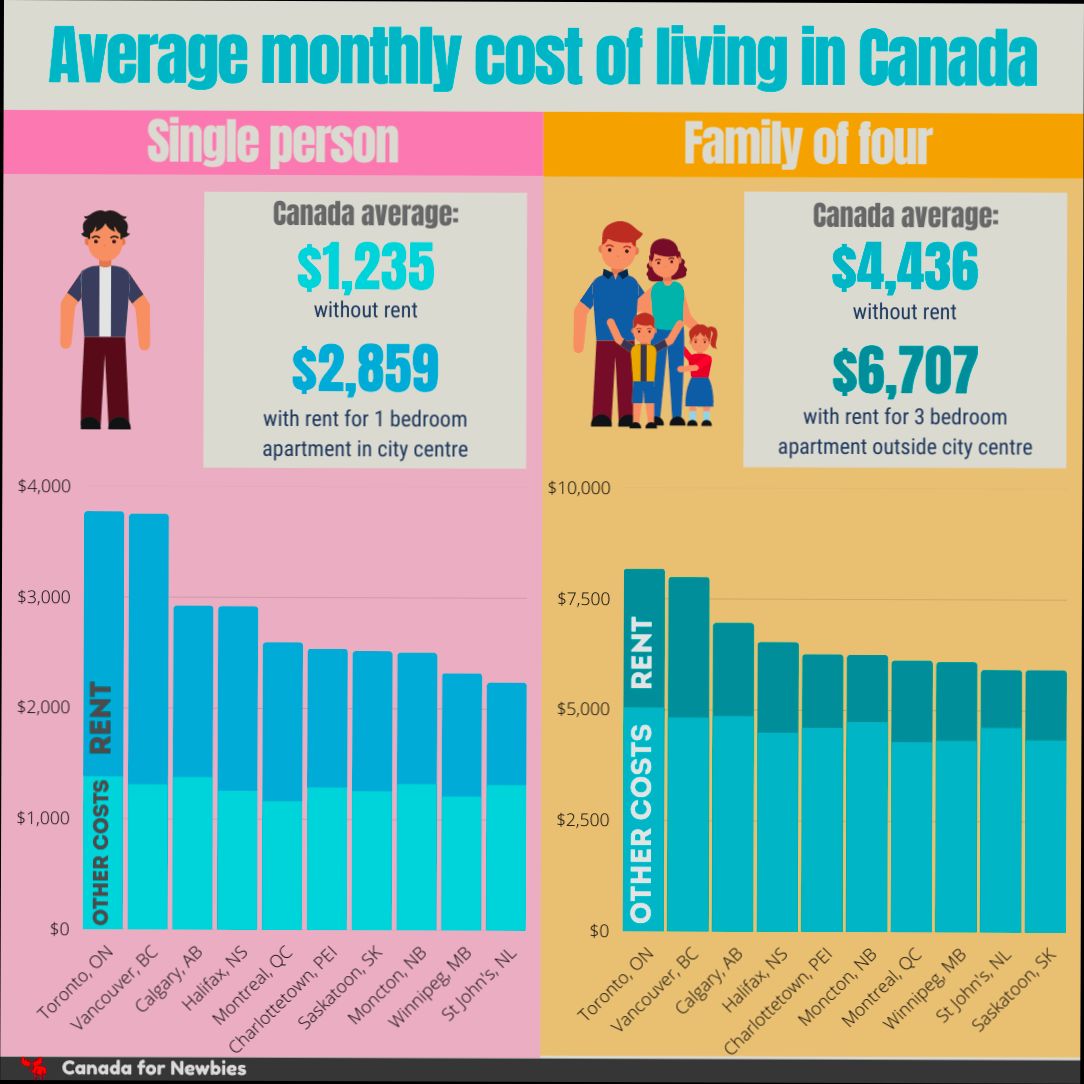
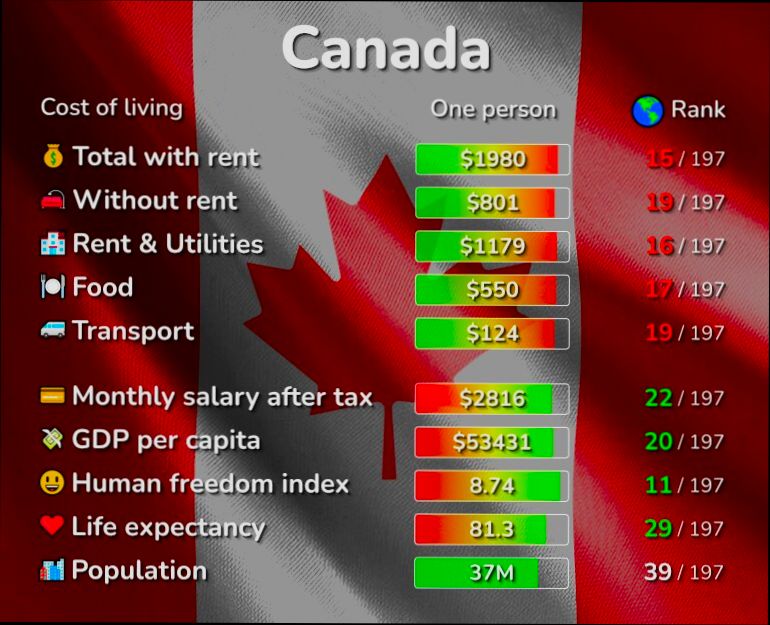
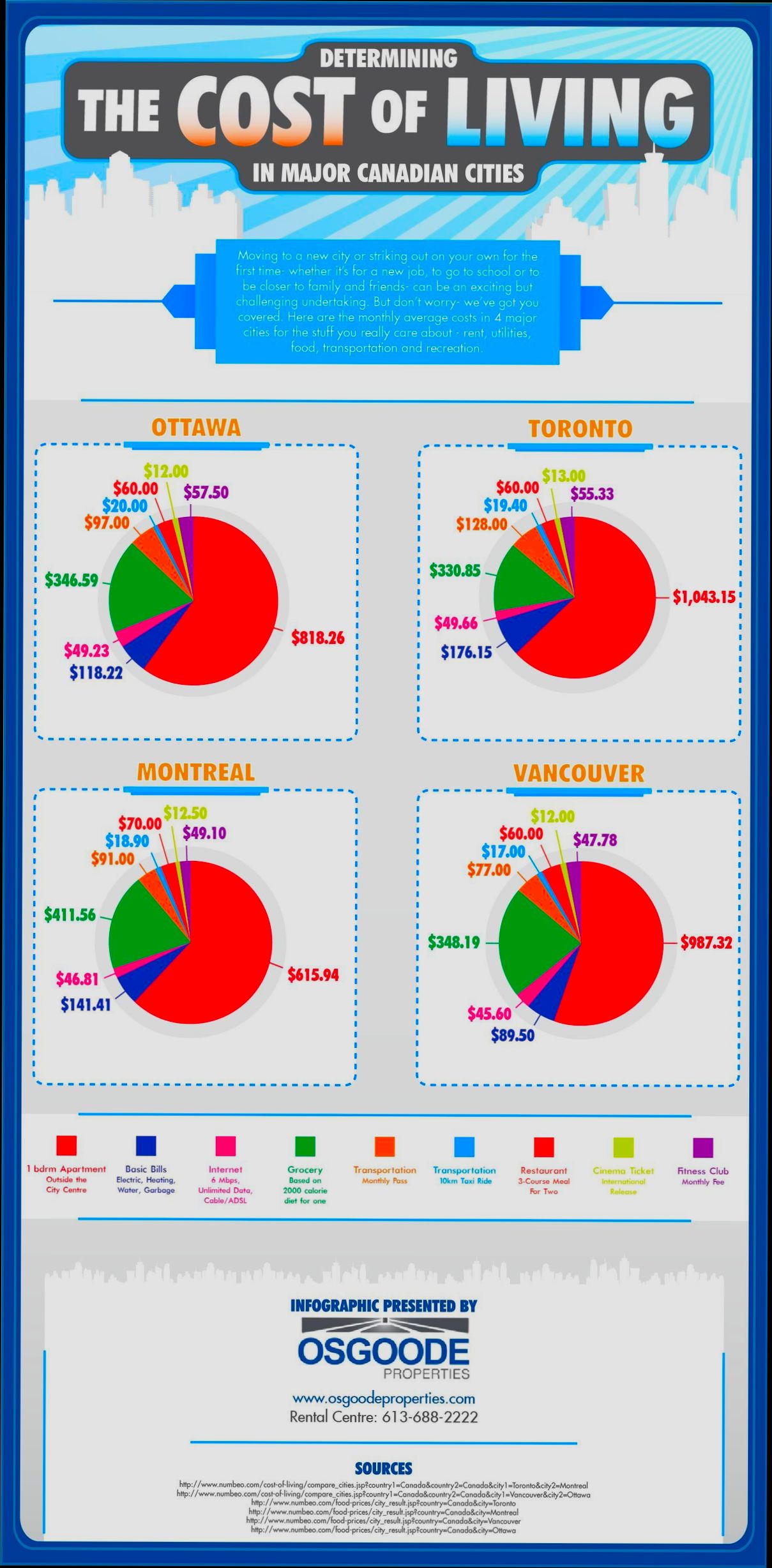
What is the Cost of Living in Canada? It varies widely across provinces and even within cities. For instance, you might be paying around CAD 2,000 a month for a one-bedroom apartment in the buzzing heart of Toronto, while just a few hours away, you could snag a similar place in Halifax for about CAD 1,500. Grocery prices also keep us on our toes—while a loaf of bread costs roughly CAD 3 in Montreal, it could jump to closer to CAD 4 in Vancouver. The price of your weekly coffee routine can range from CAD 3 at a local shop to CAD 5 at a trendy café downtown, showcasing just how location affects our daily expenses.
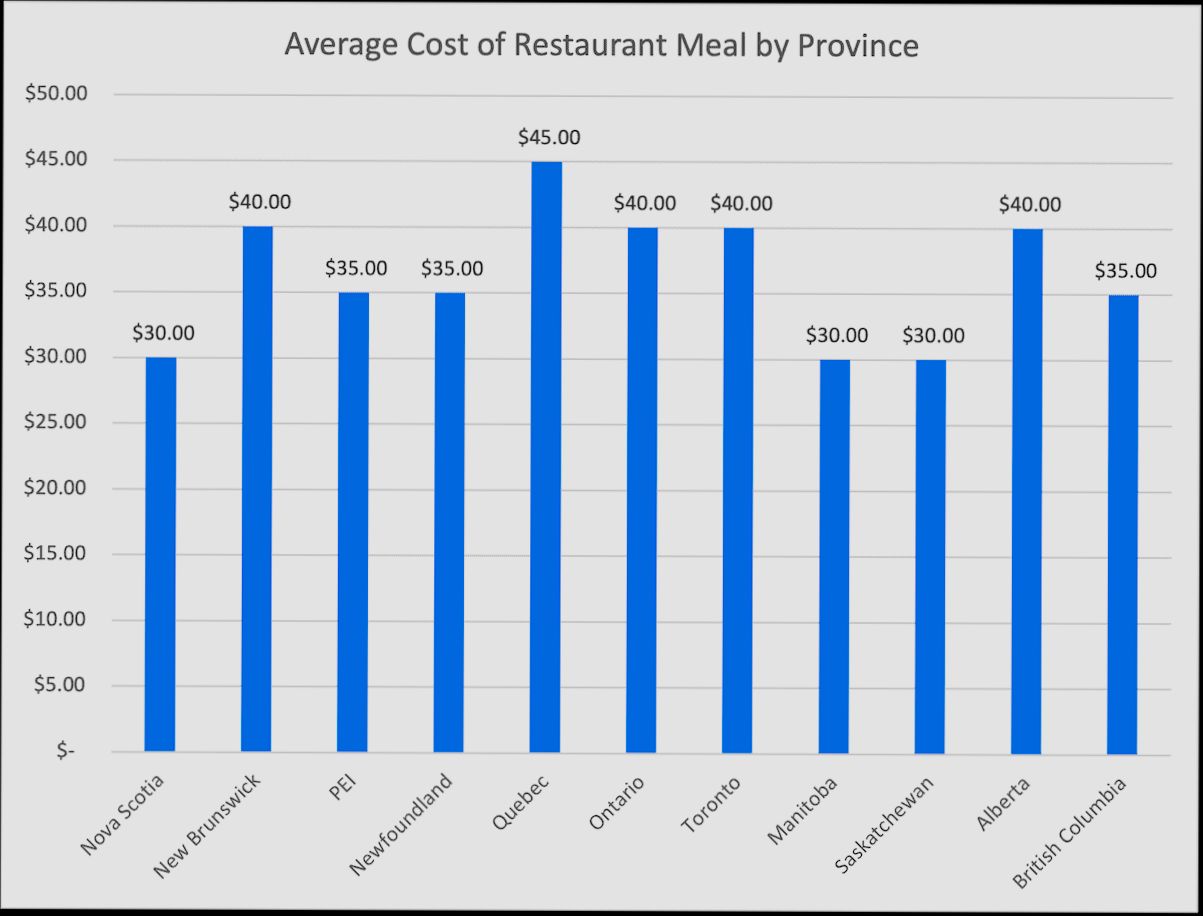
But it’s not just housing and groceries that add up. Health insurance is a big deal here too, and while basic healthcare is covered for residents, dental and vision can quickly rack up costs. And then, there’s transportation: if you’re commuting in the Greater Toronto Area, you might fork out CAD 150 a month for a transit pass, whereas, in Calgary, it’s about CAD 100. Let’s not forget about entertainment; a night out with friends can easily set you back CAD 60 for dinner and drinks. The numbers tell a story of diverse experiences and choices, amplifying the reality of living in Canada’s vibrant cities.
Regional Variations in Cost of Living
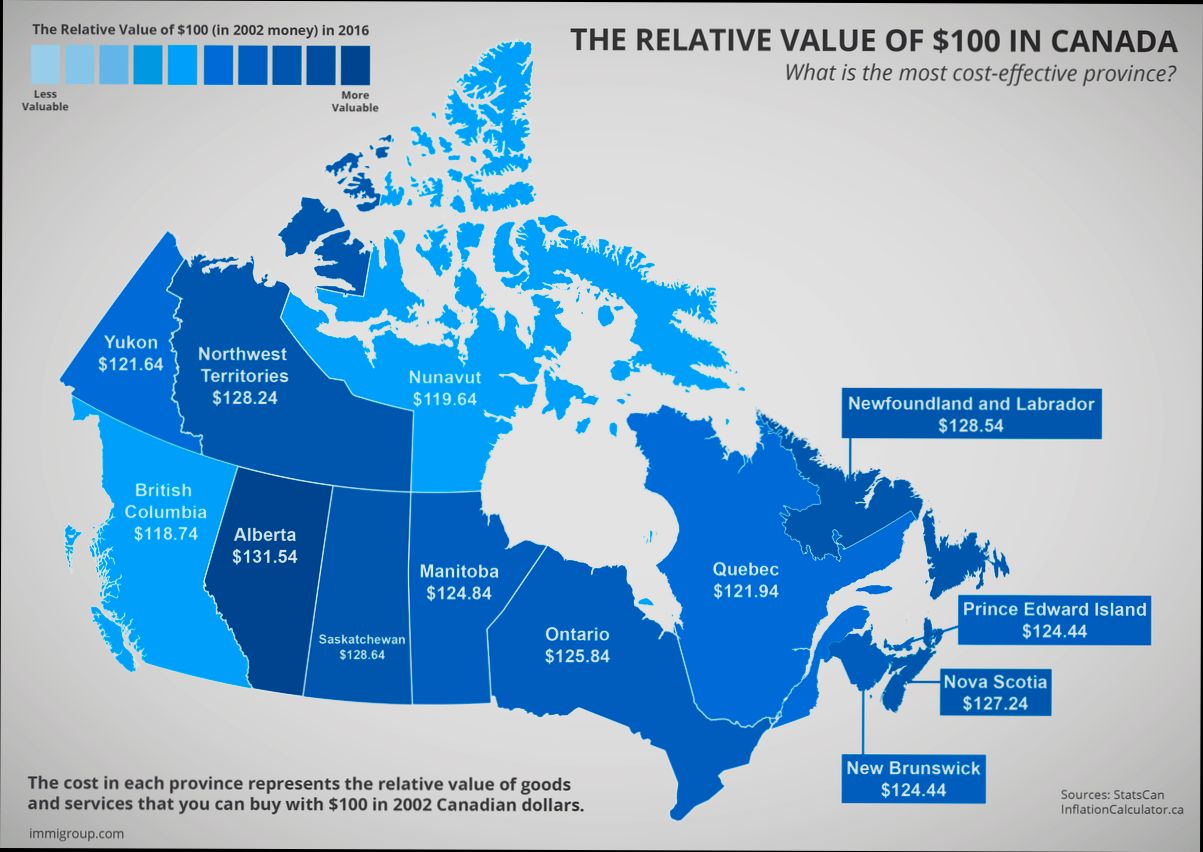
When exploring the cost of living in Canada, one fundamental aspect is the regional variations that can significantly impact your financial situation. Each province and territory presents unique economic conditions, local demands, and resources that dictate the price of goods and services, making it essential for you to understand these differences.
- Housing Costs: Median home prices can vary dramatically, with urban centers often bearing the highest costs. For example, a significant variance in housing rents reflects regional price parities, showing that places like Vancouver and Toronto have extremely high housing-related RPPs compared to rural areas. Vancouver’s housing RPP is approximately 157.3, while regions in the Maritimes might see an RPP below 100.
- Local Goods and Services: The cost of everyday items like groceries can also differ. In higher RPP areas, you may find food prices 10-20% higher than the national average. Conversely, in provinces like Newfoundland and Labrador, food costs may be inflated due to transportation expenses.
- Utilities and Transportation: The price of essential services such as electricity, water, and internet can vary by region. For example, electricity costs in Quebec are significantly lower than in Alberta, where utility prices are driven up by greater reliance on fossil fuels versus hydroelectric power in Quebec.
| Region | Housing RPP | Grocery Costs Index | Electricity Cost Index |
|---|---|---|---|
| Vancouver, BC | 157.3 | 120 | 90 |
| Toronto, ON | 156.5 | 115 | 110 |
| Halifax, NS | 100.0 | 105 | 95 |
| Calgary, AB | 108.5 | 110 | 125 |
| St. John’s, NL | 90 | 130 | 145 |
In real-world applications, take a professional like a teacher considering relocation. If they move from Toronto to St. John’s, while the housing costs decrease, they might face higher grocery prices and utility bills.
- Insurance and Healthcare Costs: Insurance premiums are also region-dependent. In provinces with higher densities, like Ontario, premiums might be higher due to increased demand and risk levels compared to rural provinces where lower premiums prevail.
- Education and Childcare: Tuition fees and childcare expenses may also reflect regional disparities, which could significantly affect young families. For example, education costs in cities with a high concentration of universities, such as Montreal, tend to be higher than rural areas with fewer institutional options.
You should evaluate your potential new location not just on salary but also on how these regional costs will affect your daily life. Investigate local tax structures, housing markets, and typical expenses for your lifestyle. When budgeting or planning a move, look at data sources that compare these costs effectively to prepare for any financial bumps along the way.
Understanding how regional variations in cost of living influence your financial landscape is crucial for making informed decisions for your lifestyle and long-term economic health.
Comparative Analysis of Housing Expenses
When we dive into the comparative analysis of housing expenses in Canada, it’s clear that understanding these costs is crucial for anyone considering relocation or simply assessing their budget. From urban sprawls to smaller towns, the diversity in housing expenses can influence your financial comfort directly.
Key Points on Housing Expenses
- Rent Costs: Average rent for a two-bedroom apartment can range from CAD 1,000 in smaller cities like Winnipeg to over CAD 3,000 in major metropolitan areas like Vancouver and Toronto. This disparity can be a hefty factor in your monthly budget.
- Home Ownership: The average price of a home across Canada stands at approximately CAD 730,000. However, in cities like Toronto, this can skyrocket to over CAD 1.1 million, showcasing how location plays a vital role in ownership costs.
- Mortgage Rates: Current mortgage rates fluctuate around 3.5% to 4.5%, impacting monthly payments significantly. For a CAD 500,000 mortgage, this translates to roughly CAD 2,200 monthly at 4%, while a 3.5% rate reduces this to about CAD 1,900.
Comparative Housing Expenses Table
| City | Average Monthly Rent (2-Bedroom) | Average Home Price | Mortgage Monthly Payment (CAD 500,000) |
|---|---|---|---|
| Vancouver | CAD 3,200 | CAD 1,200,000 | CAD 2,200 |
| Toronto | CAD 3,000 | CAD 1,100,000 | CAD 2,100 |
| Calgary | CAD 1,600 | CAD 500,000 | CAD 1,900 |
| Ottawa | CAD 2,200 | CAD 700,000 | CAD 2,100 |
| Winnipeg | CAD 1,000 | CAD 300,000 | CAD 1,600 |
Real-World Examples
In Toronto, the average rent increase can be as steep as 6% annually, putting significant budget pressure on renters. A working professional moving from Calgary, where two-bedroom rent averages CAD 1,600, might find it challenging to adjust to the bustling rental market in Toronto, marked by escalating prices.
Similarly, first-time homebuyers in Vancouver face substantial barriers. With an average home price of CAD 1.2 million, many young families find themselves stretched thin financially, often needing to allocate more than 40% of their income towards housing.
Practical Implications for Readers
For those looking to relocate or understand their housing options better, here are a few actionable insights:
- Budget Accordingly: Create a budget that accounts for the local housing market. Consider both rent and mortgage payments, ensuring to include property taxes and utilities.
- Research Neighborhoods: Investigate various neighborhoods, as even cities with high average housing expenses can have affordable pockets with lower rents or home prices.
- Plan for Adjustments: If you’re moving from a low-cost town to a high-cost city, plan for a lifestyle adjustment. Factor in not just basic housing but also how that impacts commuting, lifestyle choices, and overall living expenses.
By maintaining a keen awareness of these housing dynamics, you can make informed decisions that support your financial well-being in the Canadian context.
Essential Living Costs: A Data Overview
Understanding essential living costs in Canada is crucial, as these expenses play a significant role in shaping your overall financial health. For many residents, especially those from low- and middle-income households, the burden of these costs can feel overwhelming, especially when they rise at rates higher than official inflation.
Key Points on Essential Living Costs
1. Medical Care: Health care in Canada remains a vital, yet often underestimated cost. While basic medical services are covered by Medicare, additional expenses for prescription medications, dental care, and vision care can add up quickly. A study revealed that the average out-of-pocket expenses for Canadians reached approximately CAD 800 annually, prompting many to seek supplemental insurance.
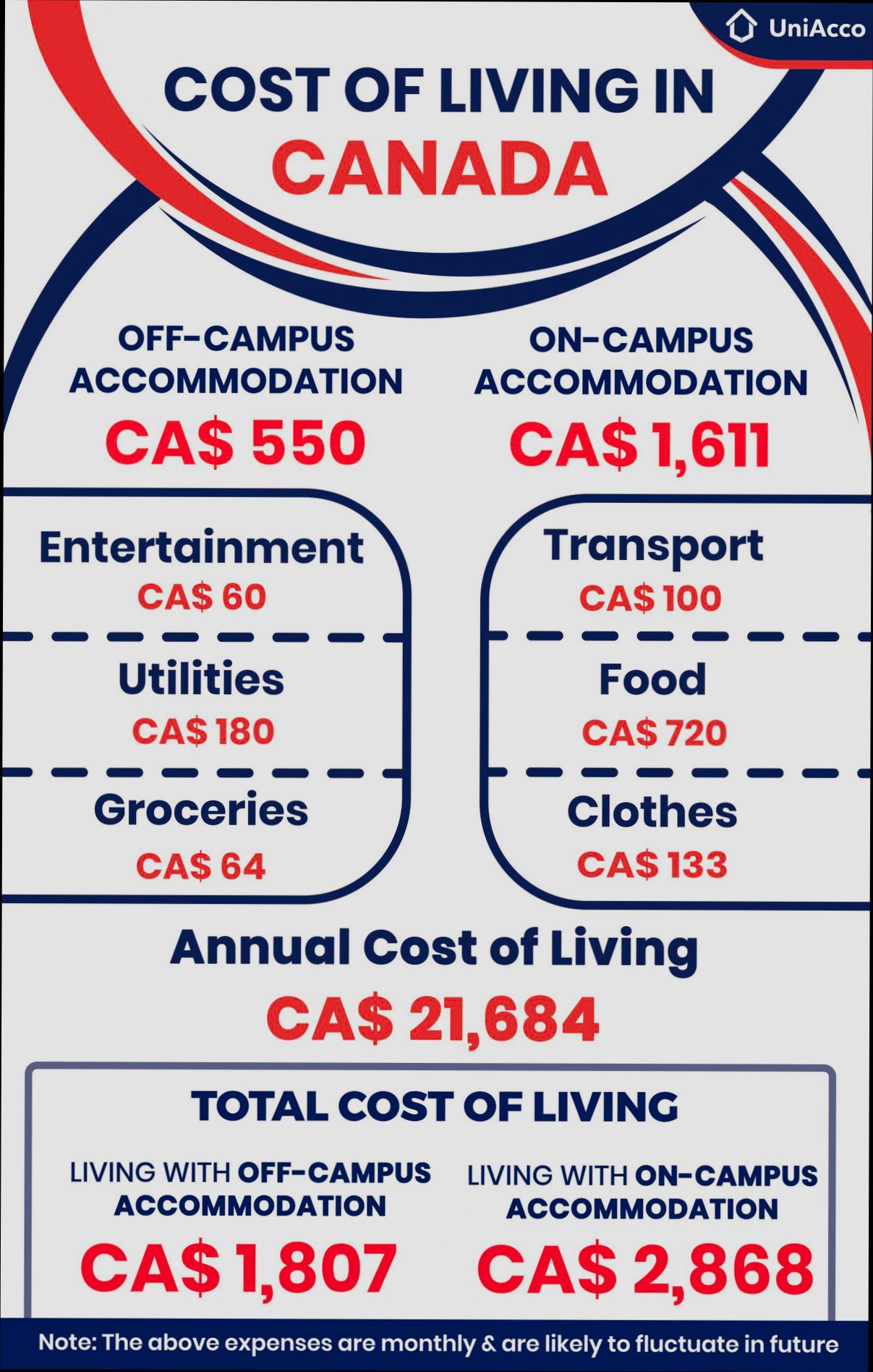
2. Transportation: With urban living demanding accessible transport, costs associated with commuting can vary. On average, Canadians spend about CAD 1,200 annually on public transportation. If you’re driving, the cost of gas, insurance, and maintenance can total CAD 4,500 or more yearly.
3. Miscellaneous Costs: Everyday items like clothing, personal care products, and household supplies also have specific financial implications. In 2023, these costs rose sharply—by 15%—affecting consumers’ discretionary spending. As a result, budgeting for miscellaneous expenses is crucial for maintaining a balanced financial overview.
Comparative Table: Essential Living Costs in Canada
| Category | Average Annual Cost (CAD) | Notes |
|---|---|---|
| Medical Care | $800 | Excludes basic Medicare services |
| Transportation | $1,200 (public transit) / $4,500 (driving) | Significant variance based on lifestyle |
| Miscellaneous (Clothing & Personal Care) | $1,500 | Includes basic clothing and toiletries |
Real-World Examples
Let’s consider a couple of case studies to illustrate how essential living costs can impact daily life in Canada:
- Anna, a single working mother in Toronto, spends about CAD 200 on public transport monthly. With child care costs adding another CAD 1,000 monthly, combined with her out-of-pocket medical expenses, it’s clear that she needs to budget carefully. The rise in transportation and miscellaneous costs makes her finances tighter each year.
- Michael and Sarah, a couple in Calgary, face transportation costs exceeding CAD 5,000 annually due to their reliance on a personal vehicle for commuting and weekend getaways. Their indirect costs, like maintenance and insurance, significantly affect their savings, so they constantly adjust their spending on clothing and leisure activities to maintain their budget.
Practical Implications
To better manage your essential living costs, consider the following:
- Budget for Medical Expenses: Set aside a monthly budget for medical-related costs, even if you are covered under the public system. It can protect you from unexpected bills.
- Evaluate Transportation Needs: Assess whether your lifestyle truly necessitates a vehicle. If public transit options are viable, it could save you substantial annual expenses.
- Control Miscellaneous Spending: Create a monthly limit for clothing and personal care items, keeping an eye out for sales or buying in bulk to maximize savings.
You might find that by tracking these essential costs closely, small adjustments can lead to significant savings over time. Budgeting effectively allows you to anticipate and prepare for any fluctuating expenses in these essential living categories.
Impact of Currency Fluctuations on Prices
The fluctuations in currency values can play a pivotal role in shaping the prices you encounter daily in Canada. As the Canadian dollar rises or falls against other currencies, it directly influences the cost of imported goods and services, ultimately impacting what you pay at the checkout.
Key Points on Currency Fluctuations
1. Imported Goods Pricing: A stronger Canadian dollar makes it cheaper to import goods, which can lead to lower prices in stores. Conversely, a weaker dollar raises import costs. For example, if the CAD/USD exchange rate shifts from 1.30 to 1.40, import costs for electronics can increase by approximately 8%, affecting consumer prices.
2. Inflation Impact: Currency depreciation can also boost inflation. When the dollar weakens, the price of raw materials for manufacturing increases. This can lead to a rise in the Consumer Price Index (CPI), impacting general living costs. Recent data showed that a 10% drop in the Canadian dollar could lead to an estimated 2% increase in CPI.
3. Supply Chain Effects: The impact of currency fluctuations is not always immediate. In many cases, suppliers may delay price adjustments, causing prices to be stagnant temporarily before a noticeable change occurs. This lag can create uncertainty about the future costs of everyday items.
Comparative Pricing Table
| Item | Price in CAD (when CAD is strong) | Price in CAD (when CAD is weak) |
|---|---|---|
| Electronics | $1,000 | $1,080 |
| Imported Foods | $4.00 per kg | $4.40 per kg |
| Clothing | $60 | $66 |
| Automobiles (average) | $30,000 | $32,000 |
Real-World Examples
- In 2021, with the Canadian dollar at a higher rate against the USD, Canadians enjoyed a decrease in the price of imported products like smartphones and laptops, making it a favorable time for tech purchases.
- Conversely, after the dollar fell in value against the Euro in 2022, Canadian consumers saw an immediate spike in prices for imported European goods, such as wine and luxury clothing, exacerbating spending for those items by about 15%.
Practical Implications for Readers
For individuals and families, staying informed about currency trends can help you anticipate price fluctuations. Being proactive, such as purchasing imports during a strong dollar phase, can lead to significant savings. Additionally, if you’re planning to travel or purchase items from abroad, timing your purchases when the dollar is favorable can be financially beneficial.
- Actionable Advice: Keep an eye on the CAD’s performance against major currencies. Websites that track currency fluctuations or financial news outlets provide insights that can help you make informed shopping decisions.
- Budget Planning: Adjust your budget periodically, considering potential increases in prices for goods that are heavily influenced by import costs. A slight adjustment in your budget can cushion the impact when the dollar weakens.
Monitoring currency fluctuations offers you a simple yet effective way to manage your financial health in relation to the cost of living in Canada.
Real-Life Examples of Monthly Budgets
Creating a monthly budget is essential for managing your finances effectively, especially when assessing the cost of living in Canada. By examining real-life examples, you can gain insights into how different individuals allocate their income, making it easier for you to create your own budget tailored to your lifestyle.
Key Points on Monthly Budgets
Here are some interesting data points regarding typical monthly budgets in Canada:
- Average Salary: The average monthly take-home income in Canada is around CAD 4,000 after taxes.
- Housing Expense: Depending on the city, you may allocate between 30% to 50% of your income to housing costs.
- Groceries: A single person typically spends about CAD 300 to CAD 500 monthly on groceries, while a family of four might spend between CAD 800 to CAD 1,200.
- Transportation: Monthly transportation costs can range from CAD 100 in smaller towns to CAD 200 or more in major cities, where public transit or commuter expenses add up.
Comparative Monthly Budget Table
| Expense Category | Example - Single Individual | Example - Family of Four |
|---|---|---|
| Income | CAD 4,000 | CAD 8,000 |
| Housing | CAD 1,200 (30%) | CAD 2,500 (31%) |
| Groceries | CAD 400 (10%) | CAD 1,000 (12.5%) |
| Transportation | CAD 150 (3.75%) | CAD 300 (3.75%) |
| Utilities | CAD 200 (5%) | CAD 400 (5%) |
| Entertainment | CAD 300 (7.5%) | CAD 600 (7.5%) |
| Savings & Investments | CAD 800 (20%) | CAD 1,500 (18.75%) |
| Other Expenses | CAD 1,050 (25%) | CAD 1,500 (18.75%) |
| Total | CAD 4,000 | CAD 8,000 |
Real-World Examples
1. Sarah, a young professional in Montreal: She earns CAD 4,200 monthly. Here’s how she allocates her budget:
- Housing: CAD 1,200 (28.5%)
- Groceries: CAD 350 (8.3%)
- Transportation: CAD 100 (2.4%)
- Utilities: CAD 200 (4.8%)
- Savings: CAD 800 (19%)
- Entertainment and dining out: CAD 600 (14.3%)
- Miscellaneous: CAD 1,000 (23.8%)
2. The Johnson Family in Calgary: With two working adults and two children, their joint income is CAD 8,500. Their budget looks like this:
- Housing: CAD 2,200 (25.9%)
- Groceries: CAD 900 (10.6%)
- Transportation: CAD 400 (4.7%)
- Childcare and Education: CAD 1,000 (11.8%)
- Utilities: CAD 500 (5.9%)
- Savings: CAD 1,200 (14.1%)
- Entertainment: CAD 1,000 (11.8%)
- Miscellaneous: CAD 1,300 (15.3%)
Practical Implications for Readers
By examining these real-life examples, you can see the flexibility and variety in budgeting approaches. Prioritize essential expenses, but also ensure you allocate funds for savings and entertainment to maintain a balanced lifestyle.
It’s essential to track your spending and adjust your budget as needed to reflect changes in income or major life events. Whether you’re a single individual or a family, your budgeting strategy should align with your financial goals and lifestyle preferences.
One actionable tip is to use budgeting apps or tools to streamline your tracking process. This can significantly help you monitor spending in real-time, which is especially valuable for individuals navigating fluctuating income or expenses.
Advantages of Urban vs Rural Living
When it comes to choosing between urban and rural living, both options come with unique advantages that can significantly impact your lifestyle and overall happiness. Let’s explore what makes each living environment appealing without rehashing previously discussed topics.
Urban Living Advantages
Living in an urban environment offers numerous conveniences that can enhance your quality of life:
- Accessibility: Urban areas often feature a well-connected public transport system, allowing for easy commuting. According to the research, over 70% of urban dwellers use public transport regularly, which can save costs associated with car ownership.
- Job Opportunities: Cities typically host a higher concentration of businesses and service industries. Statistically, urban areas can offer 25% higher salaries compared to rural regions, making them attractive for career-focused individuals.
- Diverse Amenities: The range of amenities like shopping centers, gyms, restaurants, and entertainment venues is generally broader in urban settings. A staggering 80% of urban residents have access to various cultural and recreational activities, enriching life experiences.
Rural Living Advantages
On the flip side, rural living has its own set of wonderful benefits:
- Space and Peace: Rural areas are characterized by more spacious living environments and lower population density, which can offer a quieter, slower pace of life. Many Canadians who live in rural settings enjoy at least 1-2 acres of land, often providing space for gardening or outdoor activities.
- Community Ties: Rural communities tend to foster a sense of belonging and stronger interpersonal relationships among neighbors. Research indicates that 65% of rural residents feel a strong connection to their community, which can improve mental well-being.
- Lower Cost of Living: While urban centers can be costly, rural regions typically provide lower housing and utility expenses. For instance, housing costs in rural areas can be as much as 30-40% less than in major urban centers.
| Feature | Urban Living | Rural Living |
|---|---|---|
| Population Density | High | Low |
| Average Salary | 25% higher | Lower |
| Housing Costs | 30-40% more | 30-40% less |
| Access to Amenities | Extensive | Limited |
| Community Connection | Moderate | Stronger |
Real-World Examples
Explore how individuals thrive in both environments:
- Urban Example: A software engineer in Toronto might earn CAD 95,000 annually, benefiting from diverse job opportunities, nightlife, and cultural experiences, while leading a fast-paced city lifestyle.
- Rural Example: Meanwhile, a farmer in Manitoba enjoys a modest income of CAD 60,000, but appreciates the tranquility, strong neighborly bonds, and lower home expenses, which contribute to a satisfying quality of life.
Practical Implications
As you consider your living situation, think about the following actionable insights:
- Commute Considerations: Factor in your daily commuting options and consider how much time you are willing to dedicate to travel. Urban living often means longer commutes.
- Home Environment: Decide how much space you desire for outdoor activities or gardening, especially if you value peace and space in your lifestyle.
- Employment Flexibility: Assess job opportunities in different fields that might be more available in urban areas compared to rural settings, ensuring your career goals align with your living choice.
When evaluating urban versus rural living, balance the lifestyle benefits with personal and career goals to find the right fit for you.
Healthcare Costs and Their Economic Implications
When we dive into the realm of healthcare costs in Canada, it’s not just about the price tag for medical services or prescriptions; it affects the economy at large and your personal finances. Understanding these costs helps us navigate the broader implications on our lives and budgets.
Key Insights on Healthcare Costs
- Annual Healthcare Expenditure: On average, Canadian households spend about CAD 3,000 annually on healthcare expenses not covered by provincial health insurance. This figure can strain your budget, especially in a high cost-of-living environment.
- Prescription Drug Costs: Prescription medications can significantly influence healthcare expenses. Canadians collectively spend over CAD 30 billion on prescription drugs yearly, making it one of the largest components of personal healthcare expenditures.
- Out-of-Pocket Expenses: Approximately 33% of Canadians report facing significant out-of-pocket healthcare costs. These expenses can include dental work, vision care, or co-pays for specialist visits, emphasizing the need for personal budget planning.
Comparative Analysis of Healthcare Costs
| Type of Expense | Average Annual Cost (CAD) | Percentage of Total Household Budget |
|---|---|---|
| Prescription Drugs | 1,200 | 3% |
| Dental Care | 900 | 2.3% |
| Vision Care | 500 | 1.25% |
| Physiotherapy | 600 | 1.5% |
| Chiropractic Care | 400 | 1% |
Real-World Examples
Consider Jane, a resident of Toronto. She spends about CAD 4,000 annually on healthcare-related expenses, including prescription drugs, dental care, and physiotherapy. This amount represents nearly 10% of her net income, highlighting how healthcare costs can greatly alter financial decisions.
Another example is Robert, who lives in a smaller town and faces lower housing costs. His annual healthcare expenses total around CAD 2,500, still a substantial amount that impacts his ability to save for retirement.
Practical Implications for You
To mitigate the economic impact of healthcare costs on your budget, consider the following strategies:
- Maximize Insurance Benefits: Review your health insurance plan to ensure you utilize the maximum benefits available, including preventive care services that may be covered.
- Consider Supplementary Insurance: If you find that out-of-pocket expenses are overwhelming, exploring supplementary insurance plans to cover those gaps might be a wise choice.
- Budgeting for Healthcare: Allocate a specific percentage of your monthly income to healthcare expenses to prepare for necessary medical costs throughout the year.
Understanding these dynamics surrounding healthcare costs allows you to make informed decisions and plan better for financial stability in Canada’s evolving economic landscape.