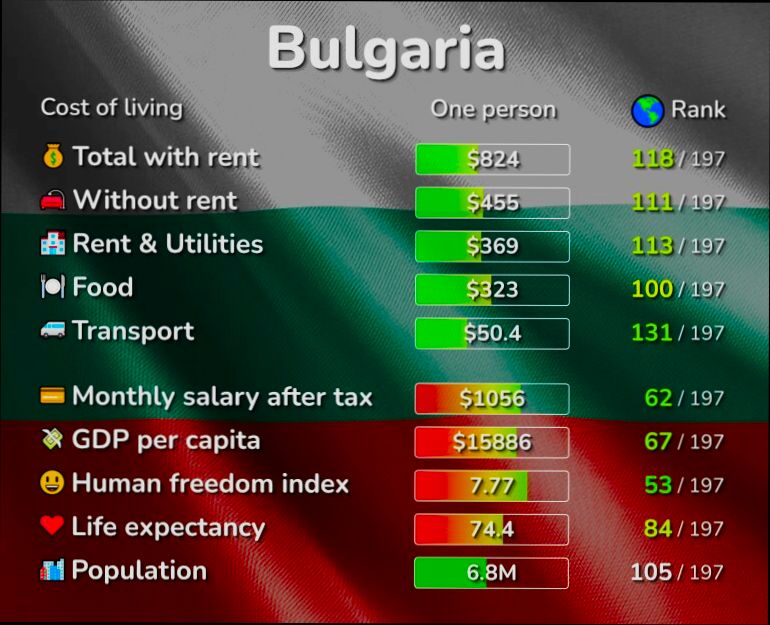
What is the Cost of Living in Bulgaria? Well, let’s dive right in! Picture this: you can grab a hearty meal in a cozy restaurant in Sofia for about 12 to 15 Bulgarian lev, which is roughly 6 to 8 euros. If you’re sipping coffee, you’re looking at just 1 to 2 lev, making it an affordable daily indulgence. Rent in the capital city is also surprisingly budget-friendly. A one-bedroom apartment in Sofia’s city center typically costs around 700 to 900 lev (about 350 to 450 euros), while moving to a seaside city like Varna? You might just pay half that for a similar space.
But it’s not just about the food and rent—transportation and utilities add to the mix. A monthly public transport pass in Sofia will only set you back about 50 lev (or 25 euros), which is a steal for traversing the city. And if you’re a night owl, just know that a pint of local beer at a bar hovers around 2 to 4 lev, making a night out pretty wallet-friendly. All these factors blend into a lifestyle that many find surprisingly affordable, allowing them to stretch their euros much further than in many Western European countries.
Comparative Analysis of Living Expenses
Comparing living expenses in Bulgaria to other countries offers a unique perspective on what you can expect when planning a move or an extended stay. By understanding the costs associated with everyday life in Bulgaria, you can make informed decisions to suit your budget and lifestyle.
Key Cost Comparisons
- Housing Costs: The average monthly rent for a one-bedroom apartment in Sofia is approximately €330, which is significantly lower than similar cities in Western Europe where you might pay upwards of €1,200.
- Grocery Prices: Basic grocery items in Bulgaria can be around 30-50% cheaper than in countries like Germany or France. For example, a liter of milk averages €1.20 in Bulgaria compared to €1.50 in Germany.
- Dining Out: Enjoying a meal at a restaurant will usually cost you between €10-€15 per person in Bulgaria, while in the UK, the same meal can easily set you back €25 or more.
Comparative Living Expenses Table
| Expense Category | Bulgaria (€) | Germany (€) | Spain (€) | UK (€) |
|---|---|---|---|---|
| Rent (1-bedroom) | 330 | 1,200 | 800 | 1,400 |
| Milk (1L) | 1.20 | 1.50 | 1.10 | 1.20 |
| Dinner (1 person) | 15 | 25 | 20 | 30 |
| Public Transport (Monthly pass) | 20 | 80 | 50 | 120 |
| Utilities (monthly) | 100 | 250 | 150 | 300 |
Real-World Examples
Consider the case of British expat James, who moved to Varna. He found that his monthly expenses dropped by almost 40% compared to his previous life in Brighton. His rent, groceries, and dining out costs were all significantly lower, allowing him to enjoy a higher standard of living while saving more.
Another example is a family from Belgium who relocated to Plovdiv. They realized that their monthly grocery bill decreased from €600 to about €400, highlighting the substantial difference in food prices.
Practical Implications
Understanding the cost of living in Bulgaria through comparative analysis allows you to budget effectively. If you’re planning to relocate, consider these actionable steps:
- Rent Wisely: Look for apartments outside the city center for even better deals.
- Meal Planning: Shopping at local markets can save you even further on groceries.
- Public Transport: Utilize public transportation which is budget-friendly and efficient, ideally fitting into a €20 monthly transportation budget.
Actionable Insights
When considering Bulgaria for living expenses, remember:
- Always compare local prices with your home country to understand the real savings.
- Consider lifestyle changes, such as eating out less or using public transport, to maximize your budget.
- Investigate local deals and discounts that could yield even lower living costs in your new Bulgarian home.
Housing Costs in Major Bulgarian Cities
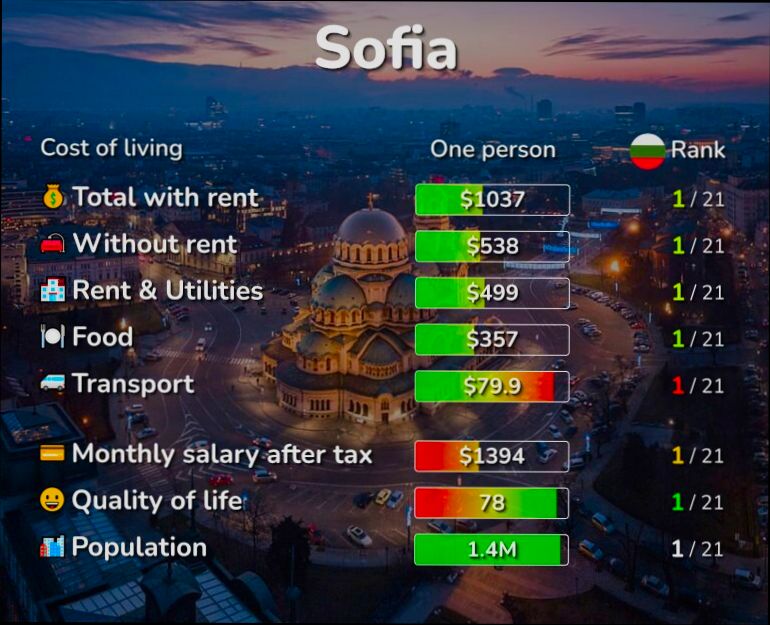
When considering a move to Bulgaria, understanding housing costs in its major cities is essential. Each city presents different rental landscapes and market dynamics that can significantly influence your budget.
Key Housing Cost Insights
- Sofia: As the capital, Sofia boasts a higher rental market. A two-bedroom apartment can average around €450 per month in prime areas.
- Plovdiv: Here, you can find a one-bedroom apartment for about €250, showcasing a more affordable option compared to Sofia.
- Varna: On the Black Sea coast, expect to pay about €300 for a one-bedroom apartment. Varna often attracts tourists and expats, slightly inflating its rental prices.
- Burgas: In this coastal city, housing options are relatively budget-friendly; a one-bedroom apartment costs around €240 per month, making it an appealing choice for those seeking lower living expenses.
Comparative Housing Costs Table
| City | One-Bedroom Apartment (City Center) | Two-Bedroom Apartment (City Center) |
|---|---|---|
| Sofia | €330 | €450 |
| Plovdiv | €250 | €350 |
| Varna | €300 | €400 |
| Burgas | €240 | €320 |
Real-World Examples
In Sofia, renting a modern one-bedroom apartment in a downtown complex can cost you around €370, depending on the amenities. Some neighborhoods like Lozenets or Vitosha are popular among young professionals, often leading to higher rents.
On the other hand, if you choose Plovdiv, the charming old city area offers several one-bedroom apartments for €220 to €260. This price point makes it an attractive option for students and families alike.
In Varna, a one-bedroom apartment with a sea view can range from €320 to €360, appealing to those who prioritize lifestyle while still maintaining a reasonable budget.
Practical Implications
1. Consider Location: If living in Sofia is essential, opt for outskirts neighborhoods to save money, which can lower your monthly expenses by 20-30%.
2. Negotiate Rent: Landlords in Bulgaria are sometimes open to negotiations, especially for longer leases. It’s worth asking for a discount.
3. Utilities: Keep in mind that utility costs can add approximately €50-€100 to your monthly expenses, depending on the size of the apartment.
4. Furnished Options: If you’re looking for furnished apartments, expect to pay a 10-15% premium on rent, reflecting the added convenience.
Understanding these housing costs can help you make informed decisions as you navigate living in Bulgaria’s vibrant cities.
Impact of Inflation on Consumer Prices
Inflation plays a significant role in shaping consumer prices, influencing how much you pay for everyday goods and services in Bulgaria. With rising inflation rates, it’s essential to understand its effects on your purchasing power and the cost of living in this beautiful country.
Key Points about Inflation’s Impact
- Rising Food Costs: Inflation can lead to increases in food prices. In Bulgaria, a substantial portion of consumer spending goes towards groceries, and a recent study showed that food prices have surged by approximately 15% over the past year. This surge can take a noticeable bite out of your monthly budget.
- Transportation Expenses: The cost of transportation has also seen inflationary pressures, with prices for public transportation tickets increasing by 12%. If you rely on these services, this can significantly affect your local travel expenses.
- Utilities and Housing: Utility costs are not immune to inflation. In recent months, bills for electricity and water have risen by about 10%, reflecting the broader trend of increasing living expenses. This can strain your budget, especially if you’re living on a fixed income.
- Healthcare Costs: Medical services and medications are also subject to price increases under inflationary conditions. Recent statistics indicate that healthcare costs in Bulgaria have grown by approximately 8% over the past year, impacting those who require regular medical care.
Comparative Table of Inflation Impact on Consumer Prices
| Category | Yearly Increase (%) | Average Monthly Cost (in BGN) |
|---|---|---|
| Food | 15% | 300 |
| Transportation | 12% | 50 |
| Utilities | 10% | 120 |
| Healthcare | 8% | 100 |
Real-World Examples
Consider a family of four living in Sofia. They might have previously spent around 250 BGN on groceries monthly. With a 15% inflation rate, that same grocery bill now costs them around 287.5 BGN, leading to an additional 37.5 BGN expenditure each month.
Similarly, if they relied on public transport for commuting, the increase to 1.50 BGN per ticket means they’ll need to budget an extra 6 BGN a month, if they make around 4 trips a week.
Practical Implications
Understanding inflation’s effect on consumer prices is crucial for effective budget management. As prices rise, you might want to:
- Reevaluate Your Budget: Take a close look at your monthly spending categories, adjusting for any significant changes due to inflation.
- Consider Shopping Habits: Opt for local markets or bulk buying to alleviate the impact of rising food prices.
- Monitor Utility Use: Being more frugal with utilities can help you mitigate the effects of increasing costs in this area.
Actionable Advice
Stay informed about inflation trends and adjust your financial strategies accordingly. For instance, if you know that food prices have risen by 15%, factor that into your shopping plans and try meal planning to limit impulse purchases. Keeping an eye on inflation will empower you to make more informed choices about your everyday spending in Bulgaria.
Real-World Examples of Monthly Budgets
Understanding real-world examples of monthly budgets is crucial for managing your finances effectively, especially as you navigate the cost of living in Bulgaria. Drawing from actual budgeting practices can help you visualize how to allocate your resources wisely.
Key Points on Monthly Budgets
When budgeting, consider the following distribution derived from personal finance insights:
- 50% of your income should cover living expenses like rent, utilities, and groceries.
- 20% can be directed towards financial goals, such as savings or debt repayment.
- 30% is for discretionary spending, including dining out, entertainment, and travel.
These guidelines provide a solid foundation for establishing a budget that aligns with your lifestyle in Bulgaria.
Monthly Budget Comparison Table
| Category | Percentage Allocated | Sample Monthly Amount (BGN) |
|---|---|---|
| Living Expenses | 50% | 1,000 |
| Financial Goals | 20% | 400 |
| Discretionary Spending | 30% | 600 |
| Total | 100% | 2,000 |
Real-World Budget Examples
Many bloggers openly share their budgeting practices, giving you practical insights into managing your money. For instance:
1. Maria’s Budget:
- Income: 2,000 BGN per month.
- Housing: 800 BGN for rent.
- Utilities: 200 BGN.
- Groceries: 300 BGN.
- Savings: 400 BGN.
- Leisure: 300 BGN, allowing for occasional dining out and entertainment.
2. Ivan’s Budget:
- Income: 1,500 BGN per month.
- Rent: 600 BGN.
- Groceries: 250 BGN.
- Transportation: 150 BGN.
- Personal Spending: 300 BGN, which includes gym memberships and outings.
These examples illustrate that while the total income may vary, the principles of budgeting such as tracking each category remain consistent and beneficial.
Practical Implications
As you consider your own budget in Bulgaria, think about your priorities. Tracking your expenses can pinpoint areas where you could save more or where you might need to adjust your lifestyle. Engaging in budget discussions with family or friends can also enhance transparency and support, fostering a collaborative approach to financial management.
To get started, it might be helpful to:
- Gather your monthly income and outline fixed and variable expenses.
- Review your spending over the last few months to establish realistic budget allocations.
- Use budgeting apps or spreadsheets to visualize your financial situation.
By applying these practices, you can create a well-defined budget that helps you manage living expenses effectively while pursuing your long-term financial goals.
Healthcare Affordability and Accessibility
When considering a move to Bulgaria, healthcare affordability and accessibility play crucial roles in your overall quality of life. Knowing how the healthcare system operates and what costs to expect can significantly impact your decision-making process.
Key Insights into Healthcare Costs
- Public Healthcare System: Bulgaria has a public healthcare system funded primarily through compulsory health insurance, which is relatively affordable. Monthly contributions are about 8% of gross wages, with employers covering 4.8% and employees contributing 3.2%. This structure ensures that a broad segment of the population has access to necessary healthcare services.
- Cost of Services: For those without insurance or needing services outside the public system, healthcare remains accessible. A standard doctor’s visit in a public clinic typically costs around €10-€30, while private clinics charge from €20-€100 depending on the specialty.
- Prescriptions and Medications: Prescription medication costs are moderate. On average, Bulgarians spend about €20-€50 per month on medications, with many common drugs being covered at varying percentages by the health insurance system.
Healthcare Comparison Table
| Healthcare Service | Public Cost (€) | Private Cost (€) |
|---|---|---|
| General practitioner visit | 10-30 | 20-100 |
| Specialist consultation | 15-50 | 30-150 |
| Basic medical examination | 0-20 | 25-80 |
| Dental check-up | 15-30 | 25-100 |
| Prescription medication cost | 5-25 | 10-50 |
Real-World Examples
- A retired expat mentions her experience with the Bulgarian healthcare system, stating she pays around €25 for regular check-ups in a public clinic. She’s pleased with the service quality for her basic healthcare needs, noting that complex procedures can be more expensive but are typically covered by her insurance.
- Another individual highlights the affordability of minor surgeries, stating that a minor procedure that would cost hundreds in their home country was performed in Bulgaria for just about €200 in a private clinic.
Practical Implications
- For expatriates and locals alike, the combination of affordable public healthcare and reasonable private options makes Bulgaria an appealing choice for long-term living. If you’re moving or visiting, familiarize yourself with local health providers and insurance options to avoid unexpected costs.
- Consider looking into supplemental insurance if you plan to use private healthcare services frequently, as this can mitigate costs significantly and ensure timely access to specialists.
Actionable Advice
- Always keep your health insurance information handy and understand what your plan covers, as this can save you from out-of-pocket expenses during emergencies. Research trusted healthcare providers beforehand, especially if you have specific medical needs, to ensure a smooth experience in accessing services.
Advantages of Living in Bulgaria
Living in Bulgaria comes with a plethora of advantages that significantly enhance your quality of life. From stunning natural landscapes to rich cultural experiences, the benefits are vast and appealing. Let’s explore some of the key advantages that make Bulgaria a remarkable place to call home.
Affordable Cost of Services
One of the most notable benefits of living in Bulgaria is the overall affordability of services compared to many European nations. For instance, you could enjoy dining out at a mid-range restaurant for as low as €20, which is approximately 70% cheaper than cities like Paris or Amsterdam, where the same meal could cost you upwards of €60. This affordability extends to various services that improve your lifestyle while being easy on the wallet.
Beautiful Natural Environment
Bulgaria boasts a diverse and stunning natural environment, from the serene Black Sea coast to the majestic peaks of the Balkan Mountains. Here are some notable features:
- Variety of Landscapes: Bulgaria offers mountains, plains, and coastlines, providing ample opportunities for outdoor activities.
- National Parks: There are 11 national parks where you can hike, bike, or just enjoy nature, all at little to no cost.
Rich Cultural Heritage
Living in Bulgaria means immersing yourself in a rich tapestry of history and culture. With more than 40 historical sites recognized by UNESCO, you’ll find endless opportunities to explore unique traditions, festivals, and local crafts.
- Traditional Festivals: Events such as the Rose Festival in Kazanlak and various music and dance celebrations throughout the year create a vibrant community atmosphere.
- Cuisine: The local food scene is a delight, with many traditional dishes like banitsa and shopska salad available at budget-friendly prices.
Great Community and Friendly Locals
The Bulgarian community is known for its hospitality and friendliness, making it easier for newcomers to integrate and feel at home. You will likely find:
- Supportive Networks: Expats and locals often create clubs and groups that welcome new members, helping you form connections and friendships.
- Language Learning Opportunities: With many local language schools and casual meetups available, you can easily learn Bulgarian, enhancing your interactions with the community.
| Aspect | Description | Cost Comparison |
|---|---|---|
| Dining at Restaurants | Affordable mid-range meals | €20 in Bulgaria vs. €60 in Paris |
| National Park Access | Free entry to parks and low-cost activities | N/A |
| Local Traditional Festivals | Active community participation | Minimal costs, often free |
Real-World Examples
Consider the story of Anna, an expat who moved to Sofia. She frequently attends local food festivals and finds that typical expenses, including groceries and entertainment, are at least 40% lower than her previous home in Spain. Another example is a group of international retirees in Plovdiv who enjoy regular social outings that cost a fraction of what they would elsewhere in Europe.
Practical Implications for You
If you’re contemplating moving to Bulgaria, take advantage of its low-cost yet high-quality lifestyle. Eating out, attending cultural events, or exploring local parks can easily fit into your budget, allowing you to enjoy life fully without financial strain.
Here are some tips to make the most of your experience:
- Join Local Clubs and Groups: Engage with community activities to meet people and learn more about your surroundings.
- Explore Outside Major Cities: While Sofia is vibrant, smaller towns like Bansko or Veliko Tarnovo offer lower living costs and a charming vibe.
Specific Facts to Consider
Bulgaria’s strategic location in Southeast Europe grants you quick access to neighboring countries, making it easy for weekend getaways. With the added benefit of free public transportation for seniors and discounts for students at various cultural attractions, living here can be both enriching and economical. Plus, the favorable climate, with over 300 sunny days a year, provides a pleasant backdrop for outdoor living.
Essential Statistical Insights on Cost Trends
Understanding cost trends in Bulgaria provides valuable insights for anyone considering moving to this Eastern European gem. The trends reflect how inflation, market forces, and consumer behavior shape the financial landscape.
Key Insights on Cost Trends
- Consumer Price Index (CPI): The annual CPI in Bulgaria has shown an average increase of 3.5% over the past two years. This steady rise highlights the gradual increase in the cost of living, especially in urban areas.
- Food Costs: Notably, the cost of staple foods has increased by about 5% in the last year, with bread and dairy products seeing the highest increases. This trend can significantly impact your monthly budgeting if you consume these items frequently.
- Transportation Costs: A survey indicated that public transportation fares increased by approximately 10% over the last year. This shift means budgeting for transport will require more careful planning, especially if you rely on buses or trams for daily commuting.
- Utilities: Utility rates (including electricity, water, and heating) have experienced a rise of roughly 4% which can affect how you calculate your monthly expenses. This is crucial to factor in, especially during the winter months.
Comparative Cost Trends Table
| Category | 2022 Average Price | 2023 Average Price | Yearly Change (%) |
|---|---|---|---|
| Bread | €0.85 | €0.90 | +5.88% |
| Public Transport | €1.20 | €1.32 | +10% |
| Utilities | €100 | €104 | +4% |
| Dairy Products | €0.90 | €0.95 | +5.56% |
Real-World Examples
Consider the example of a family of four living in Plovdiv, where they previously spent around €200 monthly on food. With the rising food prices, they now find themselves budgeting about €210, reflecting the overall trend in food inflation.
Another case to note is a young professional commuting to work in Sofia, facing an increase in transport costs from €30 to about €33 monthly due to the public transportation fare hike. This subtle shift, while it may seem small, can accumulate significantly over time.
Practical Implications
As we examine these trends, it’s crucial to adjust budgets regularly. Being aware of rising prices can inform your spending patterns and help you make informed decisions in daily living expenses. Here are some actionable tips:
- Monitor price changes in key categories such as groceries and utilities regularly to adjust your budget accordingly.
- Consider using public transport alternatives or carpooling to mitigate rising transport costs.
- Evaluate your energy consumption practices at home to stay informed about potential savings as utility prices fluctuate.
Stay proactive and regularly reassess your financial plans based on these essential cost trends to maintain a sustainable lifestyle in Bulgaria.