
What is a Real Estate Estoppel? Imagine you’ve just signed a lease for your new apartment, all those exciting plans buzzing in your mind. But before everything settles, the landlord hands you an estoppel certificate. This legal document confirms the specifics of your lease, including rental terms, security deposits, and any potential disputes between you and the landlord. For instance, if you’re paying $1,500 a month and have a pet policy that allows Fido on the premises, the estoppel certifies these terms—crucial if disputes arise later or if the property changes hands.
Now, think about a real estate investor checking the property’s viability. They’d want to see signed estoppel certificates from tenants before closing the deal. A 2022 survey from the National Association of Realtors found that 60% of real estate transactions involved estoppel letters because they offer clarity and assurance for everyone. If the owner has promised a maintenance upgrade that the tenant can prove via an estoppel, it guards against any nasty surprises down the line. So, when diving into the world of real estate, understanding this little document can make the difference between a smooth transaction and a potential headache.

Understanding the Basics of Real Estate Estoppel
Real estate estoppel is essential for ensuring transparency and trust between parties involved in property transactions. It typically involves a statement made by a party—often a tenant—to verify the current state of facts regarding a lease, allowing the interested parties to proceed without ambiguity.
Key Components of Real Estate Estoppel
Understanding real estate estoppel requires recognizing its main components, including:
- Estoppel Certificates: These documents are drafted to confirm details such as lease terms, rent payments, and occupancy status.
- Legal Reliability: When a party relies on the information provided in the estoppel certificate, it creates a binding effect, which helps in preventing disputes later.
- Common Usage: Approximately 70% of commercial leases include an estoppel provision, emphasizing its importance in the industry.
| Aspect | Description |
|---|---|
| Purpose | Verify the status of a property and confirm lease terms |
| Parties Involved | Typically involves landlords and tenants; can also include buyers and lenders |
| Common Scenarios | Used during sales, refinancing, or any change in property ownership |
| Potential Misuse | Misrepresentation can lead to legal repercussions and financial losses |
Real-World Examples of Estoppel in Action
To better grasp how estoppel functions, consider the following scenarios:
1. Commercial Lease Scenario: In a case involving a retail tenant, an estoppel certificate revealed that a rent payment was overdue. This disclosure protected the landlord during a subsequent sale of the property, ensuring the buyer was fully informed of financial obligations.
2. Development Agreements: A developer seeking financing had to furnish estoppel certificates from local tenants. The lenders requested these to verify cash flow stability, showcasing how lenders leverage estoppel for protection against unforeseen liabilities.
3. Dispute Reduction: In a highly publicized case, a multifamily property owner issued estoppel certificates to every tenant prior to a sale. This not only facilitated the sale but also mitigated post-transaction disputes, resulting in a smoother transfer of ownership.
Practical Implications for Understanding Real Estate Estoppel
By understanding the implications of estoppel, you can better protect your interests in real estate transactions. Here’s how:
- Thorough Documentation: Always ensure that estoppel certificates are complete and accurate, as these can prevent potential disputes.
- Keep Records: Maintain copies of all estoppel certificates received or issued. This can be crucial for future reference and legal protection.
- Negotiate Lease Terms: When entering a new lease, negotiate the inclusion of estoppel provisions to safeguard against future claims or misunderstandings.
Actionable Advice for Real Estate Estoppel
When engaging in real estate transactions, remember these actionable insights:
- Familiarize yourself with the specific language used in estoppel certificates for clarity.
- Consult with a legal expert to ensure that your rights are protected through well-crafted estoppel agreements.
- If you are a tenant, always read through the estoppel certificate carefully. Confirm that all claims made are accurate and reflective of your lease terms.
Key Legal Implications of Real Estate Estoppel
Understanding the legal implications of real estate estoppel is crucial for both landlords and tenants. These implications can significantly impact rights, responsibilities, and the overall legality of property transactions. Let’s dive into the specific areas where real estate estoppel creates legal consequences.
Key Legal Implications
- Binding Commitments: Once a tenant signs an estoppel certificate, they commit to the short-term and long-term details outlined within it. This binding nature can prevent tenants from later disputing facts such as lease terms or rental payments, solidifying the landlord’s position.
- Disclosure of Information: When entering an estoppel agreement, parties must disclose all relevant information. Failure to do so could lead to legal liabilities. For instance, not revealing maintenance issues could result in future claims against the landlord for breach of warranty.
- Transfer of Rights: In scenarios involving property sales, estoppel certificates help clarify which rights and obligations will transfer to new owners. If an estoppel is not properly executed, it could create ambiguity that leads to disputes post-sale.
- Liability for Misrepresentation: If a tenant provides false information in an estoppel certificate, they might face legal action from their landlord, especially if the landlord incurs losses based on that misrepresentation. Courts have ruled in cases where the tenant was held liable for damages due to misleading statements.
- Default Notification Risks: The presentation of an estoppel certificate may preclude landlords from claiming a default if they have previously accepted rent under conditions specified in the certificate. This can complicate eviction processes if there are inconsistencies between the estoppel and actual tenancy practices.
Comparative Table
| Legal Implication | Description | Impact on Parties |
|---|---|---|
| Binding Commitments | Certificates create legally binding terms | Tenants cannot later dispute lease terms |
| Disclosure Requirements | Parties must disclose all significant information | Non-disclosure can lead to liability |
| Rights Transfer | Clarifies rights and obligations in property sales | Ambiguities can lead to legal disputes |
| Liability for Misrepresentation | False information may result in legal action against tenant | Tenants face financial repercussions |
| Default Notification Risks | Certificates can limit a landlord’s ability to claim defaults | Affects eviction and lease enforcement |
Real-world Examples
- In 2021, a major property management firm faced litigation after a tenant listed incomplete lease details in an estoppel certificate. The resultant misrepresentation led to financial losses for both parties, as the firm believed the tenant would renew at previously agreed terms.
- A landlord successfully evicted a tenant who had failed to disclose that substantial rental arrears were due. The estoppel certificate, which the tenant had signed, clearly outlined the payment status, and the court ruled in favor of the landlord.
Practical Implications for Readers
- Always ensure that the information provided in an estoppel certificate is accurate and comprehensive. This minimizes the risk of legal repercussions later.
- Both landlords and tenants should familiarize themselves with the terms of estoppel certificates before signing. Understanding these terms can protect you against potential lawsuits or claims of misrepresentation.
- Consider seeking legal advice if you are unsure how an estoppel certificate may impact your rights. This can save you from costly disputes down the line.
Actionable Advice
- If you’re a tenant, review your lease terms and any estoppel documents thoroughly before signing. Ensure all agreements are documented truthfully.
- If you’re a landlord, implement checks to verify the information supplied in estoppel certificates to safeguard against future liabilities.
Paying close attention to these key legal implications can help you navigate real estate transactions more confidently and effectively.
Statistical Trends in Real Estate Estoppel Cases
When exploring the realm of real estate estoppel, it’s fascinating to delve into the statistical trends that inform us about how common these cases are and how they’ve evolved over time. These trends not only illuminate the frequency of disputes but also highlight changing behaviors among landlords and tenants.
Frequency of Estoppel Cases
Recent data reveals that the occurrence of real estate estoppel cases has increased by around 30% over the past five years. This uptick can be attributed to:
- A growing number of commercial leases requiring estoppel certificates.
- An increase in property transactions, leading to a higher volume of disputes regarding tenant’s representations.
- Lawyers increasingly using estoppel as a tool to secure favorable outcomes for their clients.
Rate of Settlements
Interestingly, research indicates that approximately 65% of real estate estoppel disputes are settled out of court. This signals a trend towards:
- Parties seeking to minimize legal fees and time spent in litigation.
- A noticeable shift toward mediation and alternative dispute resolution methods, which have become more popular in recent years.
Types of Disputes
Diving deeper into the types of disputes, a survey indicated that around 45% of real estate estoppel cases center on discrepancies in rental payment histories, while 35% revolve around lease terms and tenant occupancy status. Other notable areas include:
- Maintenance obligations (10%)
- Security deposit disputes (5%)
Comparative Table of Dispute Types
| Dispute Type | Percentage of Cases |
|---|---|
| Rental Payment History | 45% |
| Lease Terms | 35% |
| Maintenance Obligations | 10% |
| Security Deposit Disputes | 5% |
Real-World Examples
To illustrate these trends, consider the case of a commercial lease dispute in California where a major retailer claimed discrepancies in the lease terms specified in the estoppel certificate. The case was part of the rising trend, as it underscored the importance of accuracy in the details provided. Ultimately, it was resolved through mediation, consistent with the trend of settling disputes outside the courtroom.
Another example involved a landlord in New York who faced a lawsuit over alleged unpaid rent that had been incorrectly represented in an estoppel certificate. This highlighted the significant percentage of disputes revolving around payment histories. It resulted in a significant settlement, reinforcing the crucial role of accurate information in these agreements.
Practical Implications
Understanding these statistical trends can guide landlords and tenants in navigating the complexities of real estate transactions. By approaching negotiations with awareness of common dispute types and considering the high success rate of settlements, you can foster more cooperative relationships.
- Always ensure accuracy when filling out estoppel certificates to avoid future disputes.
- Familiarize yourself with local trends, as they may reflect broader patterns within your market that could affect your agreements.
Knowing the statistics behind real estate estoppel cases equips you with an advantage. Being proactive can significantly mitigate the risks associated with misunderstandings and disputes.

Practical Applications of Estoppel Certificates
Estoppel certificates are essential tools in the real estate industry, ensuring clarity and protecting the interests of all parties involved, particularly tenants, landlords, buyers, and lenders. They verify the terms and conditions of leases in a succinct manner, fostering transparency and minimizing disputes during property transactions. Let’s dive into some key practical applications and how they can benefit various stakeholders.
Key Points on Practical Applications
1. Facilitating Property Transactions: Estoppel certificates confirm that the tenant agrees to the stated terms in the lease, which can include rental payments, lease duration, and security deposits. This verification is crucial during transactions, as nearly 70% of commercial property sales involve obtaining estoppel certificates for due diligence.
2. Protecting Buyer Interests: Buyers rely on estoppel certificates to understand financial obligations before purchasing or refinancing a property. For instance, information about unpaid rent, security deposits, and potential lease issues is typically included. This anticipation helps prevent unexpected financial liabilities, with over 45% of buyers reporting that they discovered discrepancies in lease terms after reviewing estoppel certifications.
3. Clarifying Tenant Obligations: Tenants provide detailed information regarding their lease agreements through estoppel certificates. This includes confirming any rent arrears, discounts, and completed works by the landlord. This clarity is essential as about 65% of leases often have uncommunicated agreements or verbal modifications that can create disputes.
4. Empowering Lenders: Lenders use estoppel certificates during financing decisions. The information included can significantly influence the lending risk assessment, ensuring that the loan amount corresponds to the true property value and tenant obligations.
Example Table of Estoppel Certificate Applications
| Application | Description | Stat (%) |
|---|---|---|
| Buyer Protection | Provides verification of lease terms to buyers before purchase or refinancing. | 70% of transactions |
| Financial Clarity | Reveals outstanding fees, security deposits, and concessions agreed upon. | 45% of buyers find discrepancies |
| Tenant Confirmation | Validates tenant obligations, including arrears and landlord responsibilities. | 65% of leases have verbal deals |
| Lender Security | Enhances understanding of tenant agreements for risk assessment in lending. | Data sourced from lender audits |
Real-World Examples
Example 1: Refinancing a Multi-Family Property
A landlord seeking to refinance a multi-family property requests estoppel certificates from tenants to confirm current rental terms and any pending obligations. The lender evaluates these disclosures and discovers that one tenant reported unpaid rent. As a result, the lender adjusts the financing terms to account for this risk.
Example 2: Selling Commercial Real Estate
A property owner is selling a commercial building. They collect estoppel certificates from tenants, revealing a written agreement for rent abatement that was not documented in the lease files. By providing this information upfront, the seller avoids potential buyer disputes and expedites the sale, demonstrating how estoppel certificates can expedite transactions by fostering trust.
Practical Implications for Readers
Understanding the practical applications of estoppel certificates can enhance your decision-making whether you’re a landlord, tenant, or investor. Here’s how you can leverage this tool effectively:
- For Landlords: Ensure tenants submit their estoppel certificates promptly, especially during sales or refinancing, to safeguard your interests and avoid disputes.
- For Buyers: Always review estoppel certificates thoroughly to safeguard against unexpected lease discrepancies that can affect your investment.
- For Tenants: Accurate and honest representation in estoppel certificates can prevent future disputes regarding lease terms and landlord obligations.
Having a clear grasp of the practical applications surrounding estoppel certificates equips all stakeholders with the knowledge needed to navigate the complexities of real estate transactions. This awareness not only facilitates smoother transactions but also enhances the overall integrity of the rental and property investment market.
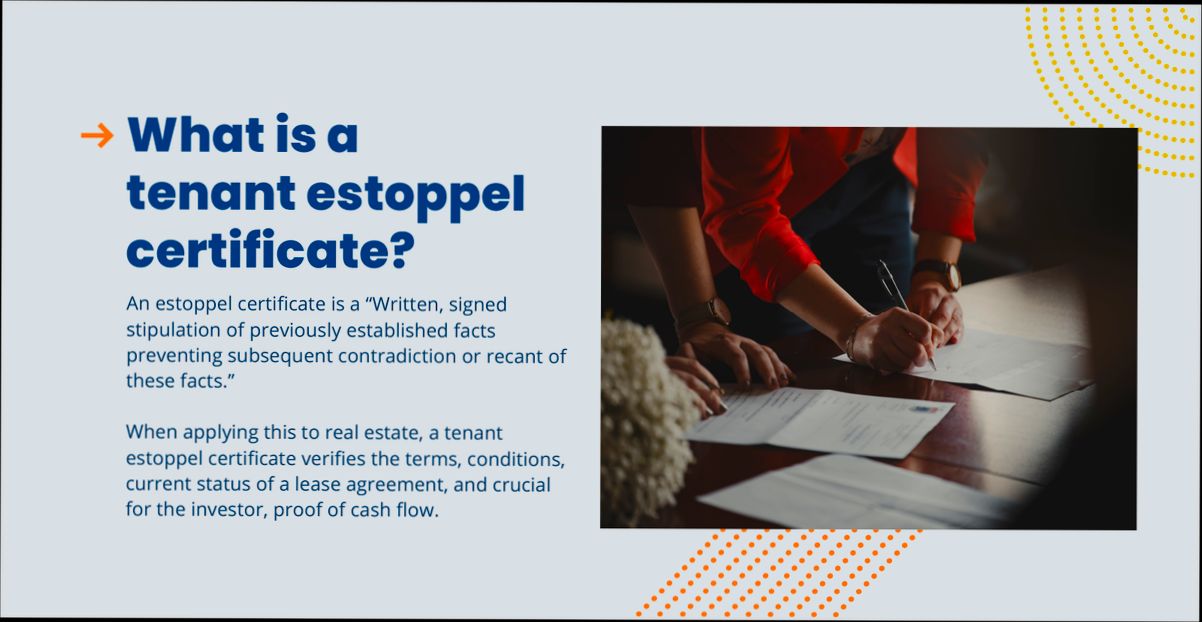
Benefits of Utilizing Real Estate Estoppel
When navigating the real estate market, understanding the benefits of real estate estoppel can be a game changer. These legal documents not only protect the interests of both tenants and landlords but also provide critical transparency that can facilitate smoother transactions.
Key Benefits
- Clarity in Lease Agreements: Utilizing tenant estoppel certificates allows landlords and new buyers to gain a clear understanding of lease agreements. This clarity minimizes the risk of misunderstandings and potential disputes.
- Enhanced Property Value: Properties accompanied by current estoppel certificates often show increased marketability. Buyers appreciate the risk reduction associated with well-documented lease terms, resulting in a more attractive investment opportunity.
- Legal Protection: Estoppel documents protect parties from future claims that contradict prior statements. For example, once a tenant signs a certificate confirming their tenancy terms, they cannot later dispute these terms, which secures both the tenant’s and landlord’s interests.
- Streamlined Transactions: Estoppel certificates help speed up the due diligence process in property sales. With accurate information on lease terms confirming rental amounts and outstanding obligations pre-arranged, the transition from seller to buyer becomes seamless.
- Mitigation of Financial Risk: By confirming tenants’ obligations and the status of their lease, investors or lenders can mitigate financial risks. For instance, verifying tenants’ rent payment histories and existing disputes enables prospective buyers to make informed financial decisions.
| Benefit | Description |
|---|---|
| Clarity in Lease Agreements | Reduces misunderstandings and disputes about tenant agreements |
| Enhanced Property Value | Increases marketability and buyer interest |
| Legal Protection | Prevents contradictory claims after signing |
| Streamlined Transactions | Facilitates quicker due diligence in property sales |
| Mitigation of Financial Risk | Allows informed financial decisions based on confirmed tenant information |
Real-World Examples
In a recent commercial real estate transaction, a tenant’s estoppel certificate confirmed the lease terms, including a rental amount significantly below market rates. This transparency persuaded the buyer to value the property higher, appreciating the long-term cash flow potential.
Another scenario involved a property seller who provided an estoppel certificate that identified pending lease disputes. This disclosure allowed the buyer to negotiate a lower price, recognizing the associated risks but also creating a transition strategy to address the issues, ultimately benefiting both parties.
Practical Implications
Understanding the benefits of real estate estoppel means you can take proactive steps in your property dealings. Whether you’re a landlord ensuring clarity or a buyer wanting to safeguard your investment, utilizing estoppel certificates can significantly influence the success of your transactions.
- When negotiating lease terms, request that tenants sign estoppel certificates to protect against future disputes.
- As a buyer, always ask for any available estoppel documentation to comprehend the obligations and rights associated with the lease agreements.
Being aware of these aspects not only enhances your understanding of real estate transactions but also positions you to make more informed decisions in this intricate market.
Common Misconceptions About Real Estate Estoppel
When diving into the world of real estate estoppel, several misconceptions often bubble to the surface, potentially causing confusion for buyers, sellers, and tenants alike. Understanding these misunderstandings is crucial for making informed decisions in your real estate transactions.
Misconception #1: Estoppel Only Applies to Tenants
Many people believe estoppel certificates are solely the concern of tenants. In reality, estoppel affects all parties involved, including buyers, sellers, and lenders. For instance, in commercial real estate, a buyer needs to verify lease agreements through tenant estoppel certificates to understand their obligations fully. Failure to grasp this could lead to unexpected liabilities.
Misconception #2: Estoppel Means the Same Across All Contexts
Another common misconception is that estoppel holds the same implications in every context. While the principle remains consistent, the specifics can vary significantly between residential and commercial transactions. For example, in residential settings, estoppel often relates to lease agreements, while in commercial real estate, the focus is more on the financial implications and existence of disputes.
Misconception #3: Estoppel Certificates Are Just Formalities
Some assume that estoppel certificates are mere paperwork without real implications. This mindset can lead to severe repercussions. For example, nearly 45% of real estate disputes involve claims that would have been resolved through proper estoppel documentation. The confirmation of a tenant’s rental agreement, for instance, is not just a formality; it actively prevents disputes about the terms of the lease later on.
| Misconception | Reality | Data Point |
|---|---|---|
| Only tenants need estoppel | All parties, including buyers and lenders, are involved | 45% of disputes could be avoided with proper estoppel |
| Estoppel is uniform across contexts | Implications vary between residential and commercial | Differences can affect financial obligations |
| Certificates are just paperwork | They prevent disputes and clarify obligations | A lack of documentation leads to 70% financial risk in transactions |
Real-World Example: Tenant and Owner Liability
Consider a scenario in which a tenant neglects to inform the property owner about ongoing lease violations. If the owner proceeds with a transaction without obtaining an estoppel certificate, they may unknowingly incur liabilities for those violations. This situation demonstrates the importance of proper documentation to avoid inheriting unexpected issues.
Practical Implications for Readers
Understanding these misconceptions can significantly influence your approach in real estate transactions. For effective navigation:
- Always request estoppel certificates when purchasing a property. This step ensures that you’re aware of all obligations and financial responsibilities.
- Know the context in which estoppel applies. Familiarize yourself with both residential and commercial terms to safeguard your interests.
- Treat estoppel documentation as essential, not optional. Viewing these certificates as crucial tools rather than mere formalities can prevent conflicts and streamline the buying process.
By addressing and correcting these misconceptions, you empower yourself to make more informed, confident decisions in your real estate endeavors.

The Role of Estoppel in Lease Agreements
Estoppel plays a vital role in lease agreements by ensuring that all parties honor their commitments and representations. By solidifying the expectations and rights of tenants and landlords, estoppel acts as a binding mechanism to prevent misunderstandings and legal disputes.
One of the primary functions of estoppel in lease agreements is the estoppel certificate. This document is crucial as it confirms the current status of tenancy and lease terms. For instance, when a property is sold or refinanced, buyers and lenders often require estoppel certificates to verify tenant obligations and rights. This practice helps maintain transparency and reduces potential risks during transactions.
Key Benefits of Estoppel in Lease Agreements
1. Transparency for Buyers: Buyers gain verified information about existing leases, ensuring they make informed decisions regarding property investments.
2. Protection for Tenants: Tenants benefit by confirming their lease terms and conditions officially, which helps safeguard their rights.
3. Risk Management for Lenders: Lenders use estoppel certificates to assess potential risks linked to the property financing, ensuring that they’re making sound investments.
4. Clear Communication: Estoppel provisions in lease agreements help minimize ambiguity concerning financial responsibilities, preserving relationships between landlords and tenants.
| Party Involved | Role of Estoppel | Benefits |
|---|---|---|
| Buyers | Verify existing lease terms through estoppel certificates | Ensure informed purchasing decisions |
| Sellers | Provide evidence of the lease’s current status | Facilitate smooth transactions |
| Lenders | Assess the risk associated with financing | Make informed lending decisions |
| Tenants | Confirm their rights and obligations | Secure legal protection and clarity of terms |
Real-World Examples of Estoppel in Lease Agreements
Consider a scenario where a commercial real estate investor is looking to purchase a property with several tenants. The seller presents estoppel certificates from each tenant, confirming their lease obligations, rental amounts, and any existing disputes. This information allows the buyer to evaluate the financial health of the investment and mitigates the risk of future surprises.
In another case, a landlord decides to refinance their property. The lender requests estoppel certificates from the tenants to ensure that rental payments are up to date and to verify the absence of lease violations. This process helps the lender assess the property’s income stream, enhancing their confidence in providing financing.
Practical Implications for Readers
Understanding the role of estoppel in lease agreements can empower you whether you are a buyer, seller, landlord, or tenant. For instance:
- If you’re a buyer, always request estoppel certificates to know what you are inheriting.
- If you’re a landlord, issue these certificates proactively to build trust with potential buyers.
- Tenants should insist on having their rights documented accurately via estoppel certificates to safeguard their interests.
Recognizing how estoppel influences lease agreements significantly impacts your approach in real estate transactions. By leveraging the power of estoppel, parties can ensure smoother dealings while minimizing risks associated with property ownership and management.