
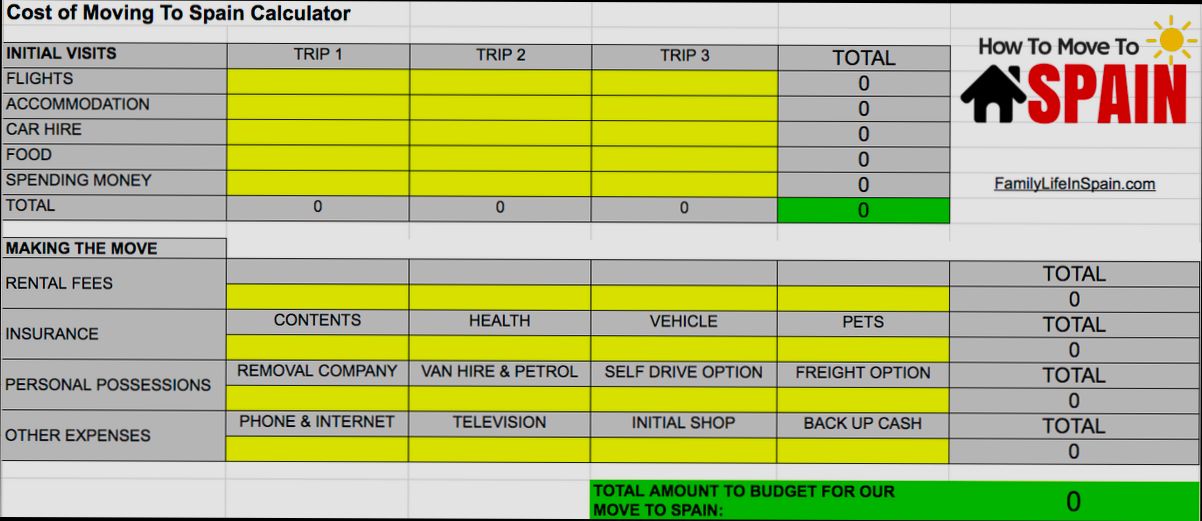
What are the Costs of Moving to Spain? If you’re dreaming of sunny beaches, vibrant culture, and siestas, you might want to buckle up for the financial ride. Your first major expense is likely the airfare, which can run anywhere from $400 to over $1,200, depending on where you’re flying from and the time of year. Then, there’s securing a place to live. Renting a modest apartment in cities like Barcelona or Madrid can set you back around €1,000 a month, while smaller towns might offer a cozy spot for €600. Don’t forget about the cost of getting your documents in order! It’s not uncommon to pay between €300 to €600 for visa applications, health insurance, and legal fees—those little details really add up.
Next, consider everyday living costs. Groceries in Spain are generally affordable, but it’s good to know that eating out can vary widely. A meal at a decent restaurant might cost you about €15, while a casual tapas spot can be budget-friendly at around €10 per person. Transportation is also something to factor in; a monthly public transport pass in a big city could be about €55. Plus, let’s talk about utilities—monthly bills for electricity, water, and internet often hover around €150 to €200. It all adds up quickly, and being aware of these costs will give you a clearer picture of what life in Spain really entails.

Understanding Visa and Residency Costs
When moving to Spain, understanding the costs associated with obtaining a visa and residency is crucial for your financial planning. Various fees and requirements can catch you off guard if you aren’t adequately prepared. Let’s break down these expenses so you can better manage your move.
Key Visa and Residency Costs
Visa costs in Spain can vary depending on the type you’re applying for. Here’s what you need to know:
- Study Visa: Typical fees range from €60 to €150.
- Work Visa: The application fee usually falls between €70 to €200.
- Family Reunion Visa: Expect to pay about €200 to €300.
- Temporary Residency: The fee can reach up to €500, depending on the length of stay and specific requirements.
It’s also important to consider additional expenses like:
- Documentation: Translation and notarization of documents can cost you between €100 and €300, depending on how many documents you have.
- Health Insurance: Required for most visas, adequate coverage could set you back about €800 to €1,200 annually.
Comparative Costs of Visa Types
| Visa Type | Application Fee (€) | Additional Costs (€) | Total Estimated Costs (€) |
|---|---|---|---|
| Study Visa | 60 - 150 | 300 (documentation included) | 360 - 450 |
| Work Visa | 70 - 200 | 500 (documentation included) | 570 - 700 |
| Family Reunion Visa | 200 - 300 | 400 (documentation included) | 600 - 700 |
| Temporary Residency | 300 - 500 | 1000 (including insurance) | 1300 - 1500 |
Real-World Examples of Visa Costs
For aspiring students, if you are applying for a study visa, including documentation costs, you might expect to spend around €450 in total. Conversely, if you’re applying for a work visa and need to secure health insurance, you could easily be looking at a total around €700.
In a case study detailed on a migration blog, a family of four applying for a family reunion visa anticipated expenditures of €650 after accounting for visa fees and necessary translations of birth certificates and other critical documents.
Practical Implications for Readers
Understanding these costs up front helps you budget more effectively for your move. Ensure you factor in potential fluctuations in these costs, as they can vary based on exchange rates and any policy changes in the Spanish immigration system. It’s also wise to keep a buffer for unexpected expenses.
Actionable Advice
Before applying for your visa, make a checklist of required documents and associated costs. Compare it with your budget to ensure you are prepared. Don’t forget to shop around for health insurance providers to find the best deal that meets visa requirements.

Housing Expenses in Different Regions
When considering moving to Spain, understanding housing expenses across different regions is essential for budget planning. Spain showcases significant regional variations in housing costs, influenced by factors like location, property type, and local economic conditions. Let’s dive into the specifics.
In Spain, the housing price to income ratio currently stands at 8.3, indicating a moderate level of affordability compared to other countries. This means that housing costs relate reasonably well to average incomes, but it still requires careful budgeting.
Housing Price to Income Comparisons
- Madrid: The median home prices in Madrid have consistently increased, with a housing price to income ratio slightly above the national average.
- Barcelona: Residents face higher housing costs, with a ratio nearing 9, making it essential to be prudent when planning a budget.
- Valencia: Offers more affordable housing options, with a price to income ratio around 7, appealing to those seeking a balance between cost and quality of life.
Comparative Housing Data
| Region | Housing Price to Income Ratio 2024 | Mortgage as a % of Income 2024 | Affordability Index 2024 |
|---|---|---|---|
| Spain (National) | 8.3 | 57.7% | 1.7 |
| Madrid | 9.0 | 60.0% | 1.7 |
| Barcelona | 9.5 | 62.0% | 1.6 |
| Valencia | 7.0 | 50.0% | 2.0 |
Real-World Examples of Regional Costs
For instance, you might find that a two-bedroom apartment in central Madrid can cost upwards of €1,800 per month, whereas the same property in Valencia could be rented for approximately €1,200. This stark difference highlights how geographical preferences impact housing choices and budgets.
Additionally, in smaller cities like Granada or Bilbao, you could see even lower rental and purchase prices, often under €1,000 for similar properties, which can be a great opportunity for those looking to relocate.
Practical Implications for Potential Movers
- Budget Wisely: If you’re considering moving to a region like Madrid or Barcelona, calculate your expected income against the housing costs to determine financial feasibility.
- Explore Secondary Markets: Investigating cities like Valencia or Zaragoza might yield better housing options without a drastic compromise on lifestyle.
- Factor in Additional Costs: Don’t forget to account for property taxes, maintenance, and community fees, as these expenses can vary dramatically between regions.
If you’re contemplating a move, it’s wise to leverage online tools and local real estate resources to get the latest on average housing prices in your desired area. Prepare detailed budgeting to reflect not just the mortgage or rental costs, but all associated housing expenses.
Healthcare Costs for Expatriates
When moving to Spain as an expatriate, understanding healthcare costs is essential for your financial planning. Healthcare can be a significant part of your budget, especially if you’re coming from countries with varying healthcare systems and insurance costs. Let’s dive into what you need to know about healthcare expenses for expatriates in Spain.
Average Insurance Costs
In comparing healthcare costs for expatriates, insurance costs vary widely by country. For expats from the US, healthcare insurance is one of the highest globally, averaging around $15,300 per year. While Spain offers more affordable healthcare options, it’s crucial to identify the average insurance costs for expatriates so you can budget accordingly.
- Insurance Costs by Country:
- US: $15,300
- Hong Kong: $8,300
- Singapore: $6,900
- Israel: $6,300
Here’s a table specifically comparing average insurance costs for expatriates:
| Rank | Country | Average Insurance Cost ($) |
|---|---|---|
| 1 | United States | 15,300 |
| 2 | Hong Kong | 8,300 |
| 3 | Singapore | 6,900 |
| 4 | Israel | 6,300 |
| 5 | China | 5,900 |
| 6 | Dubai | 5,900 |
| 7 | Bahrain | 5,800 |
| 8 | United Kingdom | 5,800 |
| 9 | Oman | 5,700 |
| 10 | Taiwan | 5,700 |
| 72 | Romania | 4,000 |
Real-World Examples
Consider an expatriate from the US planning a move to Spain. While they might be accustomed to high healthcare insurance costs, they could find that obtaining private health insurance in Spain may range from approximately €40 to €100 per month for basic coverage, significantly less than what they would pay in their home country. This can lead to substantial savings over the course of a year.
Another example includes expatriates from the UK who typically pay about $5,800 for health insurance in their home country. Transitioning to Spain, they may opt for local health plans that provide comprehensive coverage often at a fraction of that annual cost, allowing for better financial flexibility.
Practical Implications
Understanding healthcare costs allows you to make informed decisions on whether to purchase private insurance, explore public healthcare options, or go the self-pay route for medical services.
- Budgeting for Healthcare:
- Research different health insurance providers in Spain.
- Consider the healthcare coverage you need (family plans, individual coverage, etc.).
- Review local hospitals and clinics to evaluate their costs compared to your insurance.
By being proactive with your healthcare planning and understanding the landscape of medical insurance in Spain, you can avoid unexpected expenses, ensuring you have coverage that transitions smoothly alongside your new life abroad.
Remember, obtaining healthcare coverage before your move will not only ease your transition but also set you up for a more comfortable living experience in Spain.

Statistical Overview of Moving Expenses
When planning your move to Spain, understanding the statistical landscape of moving expenses can help you anticipate your costs more accurately. Let’s dive into some key statistics and data points to shed light on what you can expect.
Key Moving Expenses Statistics
- On average, international moving expenses can range from €2,000 to €5,000, depending on the volume of goods and distance.
- For domestic relocations within Spain, the costs average around €1,000 to €2,500.
- When utilizing a traditional moving service, approximately 60% of individuals report spending above the average budget allocated for packing and transportation.
Comparative Table of Moving Expenses
| Expense Type | Average Cost (Low) | Average Cost (High) |
|---|---|---|
| International Move | €2,000 | €5,000 |
| Domestic Move | €1,000 | €2,500 |
| Professional Packing | €300 | €800 |
| Insurance for Goods | €100 | €500 |
Real-World Examples of Moving Expenses
To illustrate these figures, consider a family moving from Berlin to Barcelona who hired a professional moving company. Their total moving expense amounted to around €4,500, which included packing services and insurance. This is consistent with the average costs for international relocation.
Conversely, an individual who decided on a budget-friendly option by using a shipping container for personal items reported spending around €2,300 for the entire relocation, which aligns with the lower end of the international moving cost spectrum.
Practical Implications for Budgeting
- If you’re moving internationally, be sure to compare quotes from several moving companies. Don’t just settle for the first one; this could save you a substantial amount.
- When opting for professional packing, allocate a portion of your budget specifically for this service, as it can significantly influence your overall moving costs.
- Always consider obtaining moving insurance, especially for high-value items, as this can be a small price to pay for peace of mind.
Final Facts and Actionable Advice
- Aim to start your moving preparations at least three months in advance to allow time for cost comparisons and budget adjustments.
- Keep track of all potential expenses by creating a moving budget plan; this will help you avoid surprises during your move.
By being aware of these statistical insights, you can approach your moving expenses with clarity and confidence.

Real-World Moving Experiences to Spain
Moving to Spain can be an exciting journey, but it comes with its own set of real-world experiences that can impact your costs and planning. Let’s dive into what you might expect when relocating to this vibrant country based on actual moving experiences.
Key Insights from Movers
Many individuals and families have shared their experiences, which reveal crucial insights into the real-world costs involved in moving to Spain. Here are some key points to consider:
- Shipping Costs: Individuals reported spending between €1,500 and €3,500 to ship household goods, depending on the volume and distance.
- Customs Fees: Some movers encountered customs fees averaging around €400, especially for those who brought in vehicles or significant amounts of furniture.
- Unexpected Expenses: Several people found that they had to budget for unanticipated costs, such as temporary housing or additional storage, which can quickly add up to €800 to €1,200 for a few months.
Comparative Table of Costs
| Expense Category | Low Estimate (€) | High Estimate (€) |
|---|---|---|
| Shipping Household Goods | 1,500 | 3,500 |
| Customs Fees | 200 | 600 |
| Temporary Housing | 800 | 1,200 |
| Storage Fees | 150 | 500 |
Real-World Examples
- The Gonzalez Family: They moved from Mexico City to Valencia and reported a total moving expense of about €6,000. Their shipping costs were approximately €2,500, but they incurred an additional €750 for customs when they brought their family car. Unexpectedly, they had to secure temporary housing for a month while searching for a permanent home, costing them around €1,000.
- Sarah’s Solo Move: A single expat from Canada moved to Barcelona, spending around €4,200. While her shipping costs were lower at €1,800, she faced a customs fee of €300. Sarah also had to pay for storage in Spain for her belongings for two months, totaling nearly €400.
Practical Implications for Moving
When planning your move to Spain, consider the following actionable insights:
- Plan for Hidden Costs: Always budget for unexpected expenses. Include extra funds for temporary accommodations, customs fees, or additional storage, as these can significantly affect your total budget.
- Do Your Research: Connecting with online forums or moving groups can provide valuable insights. Engaging with people who have already made the move can help you navigate potential challenges.
- Get Multiple Quotes: When selecting a shipping company, it pays to get several estimates. Prices can vary significantly based on the service provider, so it’s wise to compare options.
- Consider Timing: The time of year you choose to move can impact costs significantly. Summer months tend to be busier, leading to higher shipping rates.
By focusing on these real-world moving experiences, you can better prepare for a smoother transition to life in Spain, ensuring that your budget aligns with reality.

Long-Term Financial Benefits of Relocation
When you consider moving to a new country like Spain, the long-term financial benefits can far outweigh the initial costs. Relocation can open doors to enhanced earning potential, increased savings, and new financial opportunities, all of which contribute to your overall financial stability.
Higher Earning Potential
One of the strongest motivators for relocating is the opportunity for a higher salary. Many expatriates find that wages are significantly elevated in countries with thriving economies. For instance, moving to a region like Madrid could result in salary increases that exceed 20% compared to smaller towns. This increased earning can pave the way for:
- Enhanced savings rates, allowing for greater contributions to retirement accounts.
- Funds available for investments, leading to better financial growth over time.
- The ability to build an emergency fund, providing security for unexpected expenses.
Investment Growth Opportunities
Chip into more financial opportunities by immersing yourself in a new market. Many regions in Spain offer various investment vehicles that weren’t available in your previous location. Some noteworthy benefits include:
- Access to real estate investment potential, especially in growing cities where property values are on the rise. For example, properties in Barcelona have appreciated by approximately 5% annually over the last five years.
- The availability of investment accounts with competitive interest rates or growth potential, including products like Add-On CDs, which allow you to increase your savings pace.
Long-Term Cost Savings
Moving to a region with a lower cost of living can be financially advantageous. Lower expenses mean you can save a higher percentage of your income, which can be crucial for long-term financial health. For example, living in regions of Spain, such as Valencia or Seville, can offer:
- A cost of living that is approximately 30-40% lower than major cities like Madrid and Barcelona.
- More disposable income that you can redirect towards saving for retirement or paying down debts.
| City | Average Salary Increase (%) | Cost of Living Comparison (%) |
|---|---|---|
| Madrid | 20% | 30% higher than Valencia |
| Valencia | 10% | 40% lower than Barcelona |
| Seville | 15% | 25% lower than Madrid |
Real-World Examples
Take the case of Emily, who moved from Chicago to Barcelona. She landed a job that offered a 25% salary increase and found that her monthly expenses were roughly 30% lower. Within just two years, she managed to save more than €15,000, which she was able to invest into her retirement savings.
Another example is Robert, who moved to Valencia and transitioned into a role within the tech industry. He not only received a 15% raise but also took advantage of the investment opportunities available, leading to a significant growth in his financial portfolio.
Practical Implications
Understanding the financial benefits of relocating helps you strategize not only for a fulfilling career but also for long-term financial success. To maximize these benefits:
- Research companies that offer relocation assistance, as this can mitigate initial moving costs.
- Evaluate job offers not just based on salary but the full package, including bonuses, benefits, and opportunities for raises.
- Consider the overall economic landscape of the city you are moving to, ensuring it aligns with your career intentions and financial goals.
Investing time into planning your relocation can position you for greater financial advantages in the years to come.

Cost Comparisons: Spain vs Other European Countries
When considering a move to Spain, understanding how its cost structures compare with other European countries is essential for smart financial planning. Each nation has its unique financial landscape, which can significantly influence your overall expenses.
Housing Costs Across Europe
Spain’s housing costs can vary markedly compared to other destinations. For example:
- Spain: The average rent for a one-bedroom apartment in the city center is about €1,000.
- Germany: In cities like Berlin, similar accommodations can cost around €1,200.
- France: Living in Paris can set you back approximately €1,500 for a one-bedroom apartment in the heart of the city.
Transportation Expenses
Understanding transportation costs can also inform your decision:
- Spain: Public transport is quite affordable, with a monthly ticket costing around €40.
- Italy: In cities like Milan, a similar ticket can run about €60.
- Netherlands: In Amsterdam, monthly transport fares can average around €95.
Grocery Prices
Food costs can affect your monthly budget significantly:
- Spain: The average cost for groceries per month for one person is approximately €250.
- UK: In London, the same amount could easily reach €300.
- Sweden: Grocery expenses may average around €350 monthly.
Comparative Cost Table
| Expense Type | Spain (€) | Germany (€) | France (€) | Italy (€) | Netherlands (€) |
|---|---|---|---|---|---|
| Rent (1BR) | 1,000 | 1,200 | 1,500 | 1,200 | 1,250 |
| Public Transport | 40 | 70 | 65 | 60 | 95 |
| Monthly Groceries | 250 | 300 | 320 | 280 | 350 |
Real-World Examples
Many expatriates report that their overall living costs in Spain tend to be lower compared to cities in Northern Europe, leading to a better quality of life on similar budgets. For instance, a family relocating from London to Barcelona found that not only did they save on rent, but the lower grocery prices also allowed them to spend on leisure activities, enhancing their lifestyle.
Practical Implications
As you consider moving to Spain, be sure to factor in regional differences within the country as well. Cities like Madrid may have higher costs compared to smaller towns, which can offer more budget-friendly options. Always compare similar cities or regions to gauge where your money will stretch further.
Having a clear understanding of the daily costs associated with living in Spain compared to other European countries helps tailor your financial expectations and allows for a more accurate budget when planning your move.