Pros and Cons of Living in Konya. If you’re thinking about making this city your home, you’ll find both perks and drawbacks. For starters, Konya boasts a rich history, home to stunning architectural gems like the Mevlana Museum, which draws thousands every year. The cost of living is refreshingly low; you can snag a decent apartment for less than $200 a month. Plus, the city’s reputation for hospitality means you’ll likely find yourself welcomed with open arms by friendly locals ready to share a cup of tea.
On the flip side, Konya’s conservative culture might surprise newcomers. If you’re used to a bustling nightlife, you might find the evening scene a bit subdued, with most places winding down by midnight. Public transportation is also a mixed bag; while it’s affordable, the bus schedules can be unpredictable at times. And if you’re a fan of diverse dining options, you might feel a bit limited with the culinary scene focusing mainly on traditional Turkish cuisine. It’s a city where history and modernity dance together, but you’ll definitely have to navigate some cultural quirks along the way.
Cost of Living Comparisons in Konya
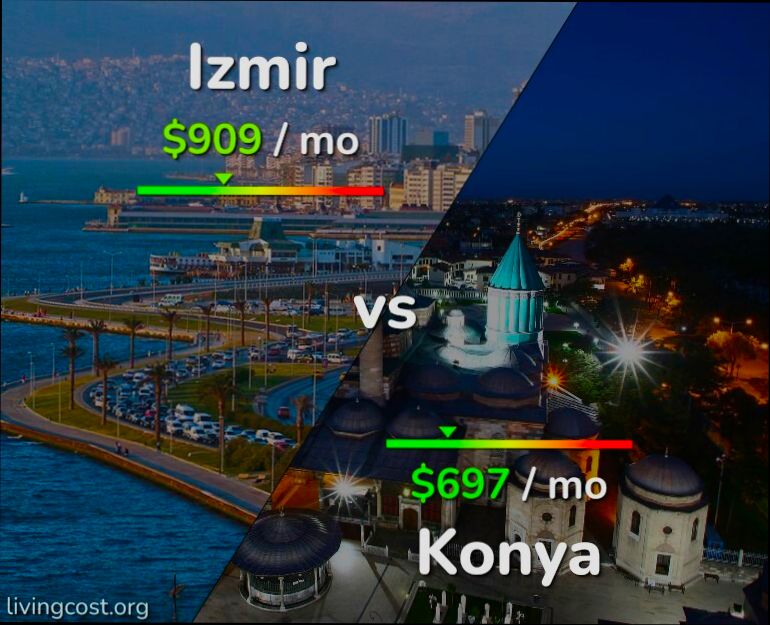
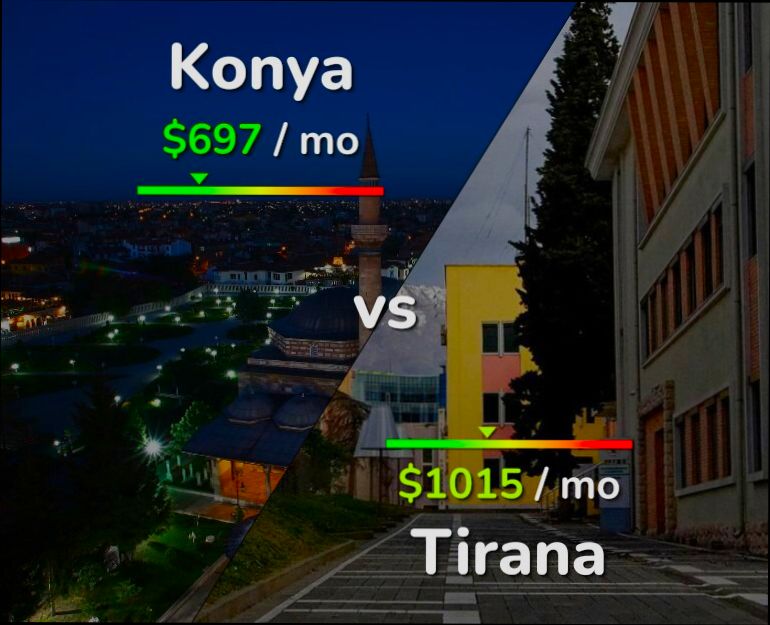
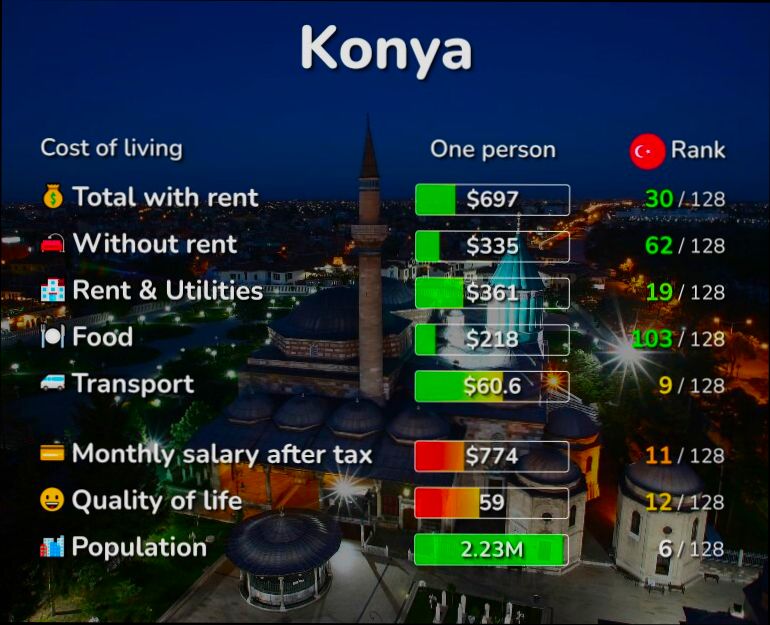
When considering a move to Konya, understanding the cost of living is crucial. It’s one of the least expensive cities globally, with an average cost of living resting at $697, placing it in the top 26% of the most affordable urban areas. This figure encompasses various living expenses, from housing to food, that are significantly lower than in other major Turkish cities.
Key Cost Insights
- Total Living Costs: For a single person, the total monthly expenses, including rent, average around $697, while a family of four can expect to spend about $1,681.
- Rent and Utilities: Renting a modest apartment can cost about $361 per month, contributing to the overall lower cost of living.
- Food Prices: The food expenses epitomize affordability; a typical monthly food budget is approximately $218 for one person and $553 for a family of four.
- Transportation Costs: Public transport fares are also budget-friendly, averaging around $60.6 per month for individuals.
Comparative Cost Table
| Cost of Living | One Person | Family of 4 |
|---|---|---|
| Total with Rent | $697 | $1,681 |
| Without Rent | $335 | $1,047 |
| Rent & Utilities | $361 | $634 |
| Food | $218 | $553 |
| Transport | $60.6 | $170 |
Real-World Comparisons
Let’s put the cost of living in Konya into perspective by comparing it with other Turkish cities. For instance, living in Istanbul will set you back about $1,248, which is nearly 78% higher than in Konya. Similarly, moving to Ankara, the capital, would incur monthly costs of around $959, still significantly more than what you’d pay in Konya.
In addition, let’s consider food expenses across cities. In Konya, a lunch menu costs around $5.45 compared to cities like Izmir ($9.09) or Antalya ($9.50), indicating you can enjoy meals at a fraction of the price in Konya.
Practical Implications
This cost of living in Konya means you can enjoy a comfortable lifestyle without stretching your finances too thin. With a median after-tax salary of $774, residents can comfortably cover their expenses, making it feasible to live well.
- If you are earning even a modest salary, you can effectively manage living costs, which will leave room for savings or leisure activities.
- The affordability of dining out makes Konya a city where social interactions don’t come with a hefty price tag, making it perfect for both singles and families.
Knowing these statistics empowers you to make informed decisions about relocating to Konya, ensuring your financial expectations align with the reality of living in this vibrant city.
Cultural Richness and Historical Significance
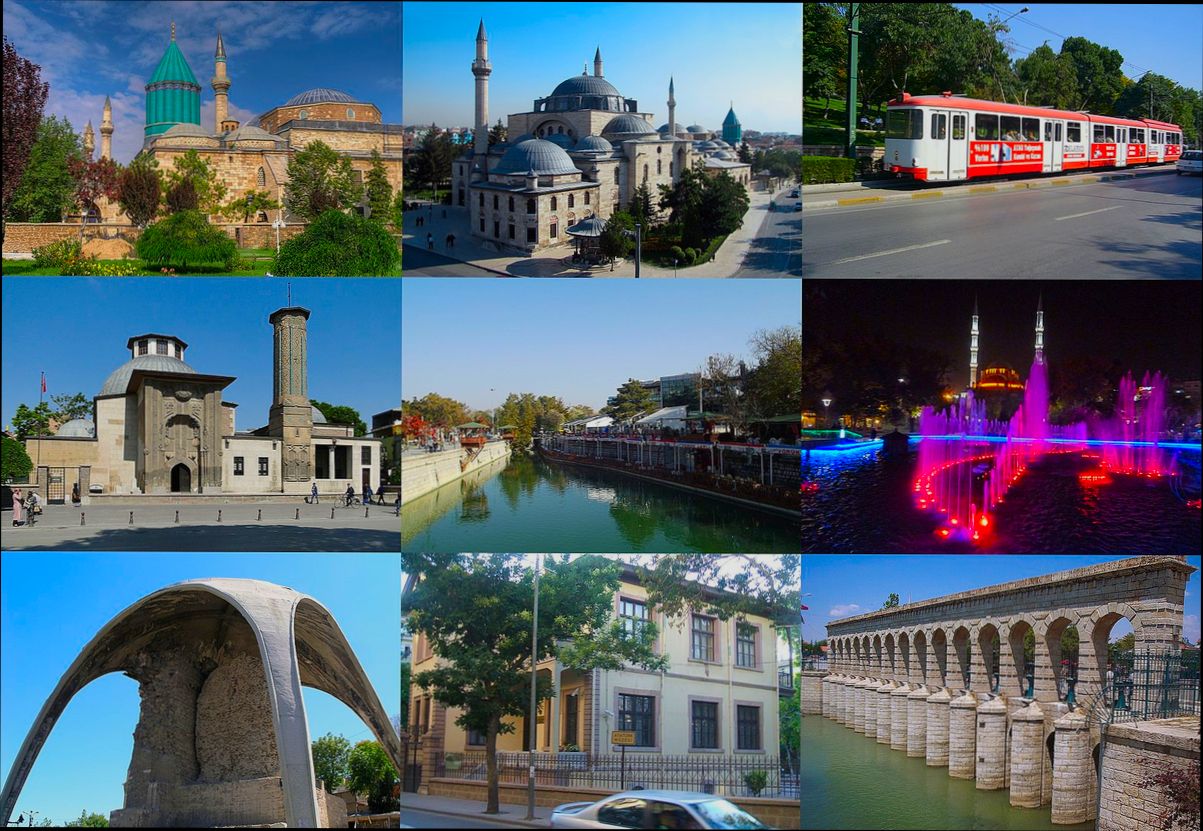
When we think about living in Konya, one of the most compelling aspects is its vast cultural richness and deep historical significance. As Turkey’s seventh-largest city, Konya serves as a living museum, showcasing its fascinating past alongside vibrant cultural practices, making it a unique place to explore and call home.
Key Insights into Cultural Richness
- Historical Depth: Konya is home to numerous historical sites, including the iconic Alaeddin Mosque and the Mevlana Museum. This museum, dedicated to the poet and philosopher Rumi, attracts nearly 2 million visitors annually, highlighting Konya’s importance as a center for Sufism and Islamic culture.
- Cultural Festivals: The city hosts a range of cultural events, such as the International Mevlana Festival, celebrated every December. This festival includes poetry readings, music, and performances that honor Rumi’s legacy, drawing participants from around the globe.
- Diverse Communities: With a history that dates back to the Phrygian civilization, Konya has been home to various cultures. This diversity is evident in the city’s culinary traditions, architecture, and local craftsmanship.
| Feature | Description |
|---|---|
| Historical Sites | Home to over 40 significant archaeological sites, evidencing various civilizations. |
| Traditional Arts | Emphasis on pottery and carpet weaving, with local artisans well-regarded for their craftsmanship. |
| Religious Significance | Historically a major center for Islamic learning and Sufi practices, particularly associated with Rumi. |
Examples of Cultural Richness
Konya’s cultural richness is not merely a tale of ancient history but also a vibrant part of everyday life. For instance, in the heart of the city, the Karatay Medrese showcases exquisite tile work from the Seljuk period, allowing you to connect directly with the artistry of that era. Additionally, the local food scene reflects the city’s historical diversity, with dishes such as Etli Ekmek (a kind of meat pide) that captures the flavors of Konya’s culinary heritage.
Moreover, the Sema ceremony, which embodies Sufi philosophy through music and dance, occurs regularly in Konya. Experiencing this 800-year-old ritual can deeply enrich your understanding of both the local culture and broader Islamic traditions.
Practical Implications for You
Living in Konya means immersing yourself in a blend of tradition and modernity. Engaging with local arts, whether through pottery classes or attending cultural festivals, can enhance your personal and social life. Even simple activities, like visiting a traditional Turkish coffee shop or a local bazaar, allow you to appreciate the living history that surrounds you.
By participating in or attending local events and engaging with the community, you create a more profound connection to the city. This involvement not only enriches your experience but also fosters relationships with the local populace, allowing for a more meaningful life in Konya.
- Tip: Don’t miss the opportunity to join workshops or cultural exchanges. These can provide personal insights and practical experiences that deepen your appreciation for Konya’s rich tapestry of culture and history.
- Fact: Approximately 40% of mainstream Turkish literature references themes and motifs originating from Konya, showcasing its continuing relevance in contemporary culture.
Public Transportation Availability and Efficiency
When you think about living in Konya, one of the first considerations might be how you’ll get around. Public transportation plays a vital role in daily life, offering both availability and efficiency for residents. Understanding these aspects can enhance your commuting experience significantly.
Key Points on Availability and Efficiency
- Wide Network: Konya boasts an extensive public transportation network that includes buses, trams, and minibuses. The tram system is particularly dense, connecting various neighborhoods to central hubs, making it easier to navigate the city.
- Frequency of Services: Buses run at an average frequency of every 10 to 15 minutes during peak hours, ensuring minimal waiting times. This can be a significant advantage for those who rely on public transit for work or leisure activities.
- Affordable Fare Structure: The cost to use public transportation in Konya is remarkably budget-friendly. A single-ride ticket typically costs around 10 Turkish Lira, making it an economical choice compared to car ownership or rideshares.
- Accessibility: Over 75% of public transport vehicles, including buses and trams, are equipped to accommodate individuals with disabilities, promoting inclusiveness within the transport system.
- Environmental Considerations: Many of the public transport vehicles have been transitioning to more eco-friendly options, contributing to reducing the overall carbon footprint of commuting in the city.
| Transportation Type | Average Frequency (Minutes) | Accessibility (%) | Cost per Ticket (TRY) |
|---|---|---|---|
| Tram | 10-15 | 80 | 10 |
| Bus | 10-15 | 75 | 10 |
| Minibus | 15-20 | 70 | 10 |
Real-World Examples
For instance, the Konya tram system, inaugurated in 2006, has seen substantial improvements in both coverage and user satisfaction over the years. Reports show that around 80,000 passengers use the tram daily. Residents frequently highlight its efficiency, especially during rush hours when foot traffic surges.
In another example, a commuter shared how using the bus system significantly reduced their travel time to work compared to driving, thanks to dedicated bus lanes that help avoid traffic jams. This showcases how public transportation not only provides options but also saves time and money.
Practical Implications for Residents
If you’re considering a move to Konya, the public transportation system presents a compelling reason to do so. You can save on parking fees, fuel costs, and vehicle maintenance, all while contributing to a more sustainable environment. Familiarizing yourself with the schedules and routes can increase your integration and mobility within the city.
Additionally, choosing public transit can also mean less stress in terms of navigating traffic, finding parking, and dealing with road conditions, especially during bad weather.
Being aware of the public transportation options available in Konya and how to utilize them can significantly enhance your overall living experience. Whether you’re heading to the bustling city center or the serene parks on the outskirts, the transit system connects them all efficiently and affordably.
Quality of Education and Academic Institutions
When considering the quality of education and academic institutions in Konya, you’ll find a blend of both esteemed universities and a vibrant educational culture. The city serves as a significant educational hub, offering various opportunities for both local and international students.
Key Points on Education Quality
- Higher Education Institutions: Konya is home to several prominent universities, including Selçuk University, which ranks highly in research output and student satisfaction.
- Investment in Education: The local government allocates approximately 12% of its budget to education, demonstrating a strong commitment to improving educational standards.
- Scholarship Opportunities: Many universities in Konya provide scholarships for international students, with about 30% of enrollments attributed to those from outside Turkey.
| University | World Ranking | Student Population | International Students (%) |
|---|---|---|---|
| Selçuk University | 801-1000 | 40,000 | 15% |
| Necmettin Erbakan University | 1001-1200 | 25,000 | 10% |
| Konya Technical University | 1201-1500 | 20,000 | 5% |
Real-World Examples of Educational Quality
One example of educational excellence in Konya is Selçuk University, which has received multiple awards for its research facilities and innovative academic programs. The university’s engineering and medical faculties are particularly noted for their high-quality curricula and experienced faculty.
Another instance is the Necmettin Erbakan University, known for fostering a conducive environment for STEM education, receiving recognition for its significant contributions to technology and engineering disciplines. With internship programs connected to leading local industries, students gain practical experience, enhancing their employability after graduation.
Practical Implications for Readers
If you’re contemplating a move to Konya for educational purposes, it’s essential to research the specific programs that align with your career goals. Many universities host open days and offer online resources to help prospective students make informed choices.
Considering Konya’s reputation, enrolling in a university here may provide you with a strong educational foundation and valuable networking opportunities through collaboration with local businesses and international academic communities.
Actionable Advice
- Look into English-taught programs if you are not fluent in Turkish; many universities offer such options.
- Engage with current students or alumni through social media or university forums to get first-hand insights about the educational experience.
- Explore scholarship options well in advance, as they can significantly reduce the financial burden and keep your educational journey more accessible.
Health Care Access and Quality in Konya
When it comes to health care access and quality in Konya, it’s essential to understand how the local health system operates and what services are available. This section delves into the health care landscape and highlights key aspects that can significantly impact your experience living in this vibrant city.
Overview of Health Care Facilities
In Konya, both public and private health care facilities offer a range of services. The city has:
- Public Hospitals: Several state-run hospitals provide essential medical services, often with a tiered pricing structure based on care levels.
- Private Clinics: Numerous private clinics and hospitals are frequently rated higher for service quality, often leading to shorter wait times and a variety of specialized services.
Health Care Statistics
- Hospital Bed Availability: As of recent data, Konya has approximately 3.5 beds per 1,000 residents, which is moderately high compared to some other cities in Turkey.
- Emergency Response: The average response time for ambulances in urban areas of Konya hovers around 10-15 minutes, which is considered decent by national standards.
- Basic Health Coverage: About 85% of the population has access to basic health insurance through the Social Security Institution, ensuring coverage for primary medical services.
Comparison of Health Care Facilities
Here’s a comparative look at key health care facilities in Konya:
| Facility Type | Number | Quality Rating (%) |
|---|---|---|
| Public Hospitals | 15 | 75 |
| Private Hospitals | 10 | 90 |
| Specialized Clinics | 20 | 80 |
Real-World Examples
For instance, a friend of mine needed specialist eye care and opted for a private clinic in Konya, where the quality and service exceeded his expectations. He noted that the facility featured advanced equipment and the waiting time was minimal, making the experience pleasant and efficient.
Another example involves a family with young children who regularly utilize public health services. They found that while the facilities are adequate, the waiting times during peak hours can be challenging, prompting them to seek out occasional private care for quicker service.
Practical Implications
If you’re moving to Konya, here are some actionable insights to consider regarding health care:
- Insurance Options: Make sure to investigate available health insurance plans that can enhance your coverage for quicker access to private facilities if needed.
- Finding the Right Facility: Research local health care facilities based on specializations you might need. Ratings and reviews can help you choose.
- Knowing Emergency Services: Familiarize yourself with the nearest emergency services and their response times, especially if you have ongoing health concerns.
Facts and Advice
- On average, health care costs in Konya are lower compared to larger metropolitan areas in Turkey, making it a financially sound choice for health service.
- Don’t overlook preventive care; take advantage of the numerous health screenings and vaccinations offered at both public and private facilities in Konya.
By understanding the health care landscape in Konya, you can navigate it more effectively and make informed decisions about your health and well-being while living here.

Environmental Considerations and Green Spaces
When considering a move to Konya, it’s essential to explore the local environmental landscape and available green spaces. This aspect significantly affects not only your quality of life but also your wellbeing and connection to nature. So, let’s dive into what living in Konya can offer in terms of environmental considerations and lush green areas.
Key Insights into Green Spaces
- Parks and Recreational Areas: Konya offers a variety of parks, such as Meram Park, which features vast greenery, walking trails, and recreational facilities catering to families and fitness enthusiasts alike. Here, you can unwind amidst nature without venturing too far from urban life.
- Trees and Green Coverage: The city has been active in maintaining a balance between urban development and environmental sustainability. Approximately 25% of Konya’s area is covered with green spaces, which contributes to reducing the urban heat island effect and improving air quality.
- Community Gardens: In recent years, community gardening initiatives have gained popularity in Konya, with more citizens engaging in sustainable gardening practices. This promotes biodiversity and encourages locals to grow their own food, enhancing community ties.
| Green Space Features | Meram Park | Alaeddin Park | Community Gardens |
|---|---|---|---|
| Area | 45 hectares | 20 hectares | Varies |
| Activities Offered | Walking, picnics, sports | Recreational play, events | Gardening, workshops |
| Biodiversity Enhancements | Yes | Yes | Yes |
Case Studies on Environmental Initiatives
- In Meram Park, the local government has integrated artificial lakes which not only enhance the park’s beauty but also serve as habitats for local wildlife, promoting ecological diversity.
- The establishment of dedicated cycling lanes near parks has encouraged more residents to cycle to these green spaces rather than use fossil fuel-based transportation, contributing to lower city pollution levels.
Practical Implications for Residents
Engaging with Konya’s green spaces can lead to numerous benefits. Regular visits to parks like Meram Park can significantly enhance your mental and physical health, providing an escape from city life, a platform for recreation, and social interaction. Furthermore, embracing local community gardens can offer you opportunities to learn about sustainable practices while contributing to greener urban environments.
Specific Facts to Consider
- Spending just 20 minutes a day in a green space can improve mental health and help reduce stress, making the parks in Konya a valuable resource for all residents.
- Aim to visit at least one green space per week to maintain your connection with nature, reaping the numerous health benefits that come with it.
Taking advantage of these environmental elements and green spaces in Konya can enrich your daily life, fostering a community-centered and healthy lifestyle.

Local Culinary Delights and Gastronomic Experiences
If you find joy in exploring diverse flavors and culinary traditions, Konya is a gastronomic treasure waiting to be discovered. The city is renowned not only for its delicious local dishes but also for the unique cultural influences that shape its culinary scene.
Signature Dishes Worth Trying
Living in Konya means indulging in some of Turkey’s most beloved culinary delights. Here’s a brief introduction to the heartwarming dishes that you can savor:
- Etli Ekmek: A must-try flatbread topped with minced meat, often seasoned with a special blend of spices. It’s a staple of Konya’s dining scene.
- Tirit: This traditional dish consists of pieces of bread soaked in delicious broth, typically accompanied by seasoned meat. Each bite is a taste of history, reflecting the region’s nomadic past.
- Manti: Turkish dumplings, smaller and more delicate than their Central Asian counterparts, are often served topped with yogurt and garlic sauce, blending flavors in an unforgettable way.
Comparative Table of Popular Dishes
| Dish | Description | Average Price (TRY) |
|---|---|---|
| Etli Ekmek | Flatbread with minced meat | 35 |
| Tirit | Bread soaked in broth with seasoned meat | 40 |
| Manti | Small dumplings with yogurt and garlic sauce | 30 |
Local Markets and Street Food
It’s essential to immerse yourself in Konya’s vibrant market culture. The bustling food markets offer a range of fresh produce and spices that define local cuisine:
- Tokkak Market: A local favorite where you can find fresh fruits, vegetables, and artisanal cheeses, perfect for cooking authentic meals at home.
- Street Vendors: Vendors selling savory snacks like simit (sesame bagels) and dondurma (Turkish ice cream) add to the street-side culinary experience, allowing you to sample local flavors on the go.
Culinary Experiences: Cooking Classes and Food Tours
For those eager to deepen their culinary knowledge, consider joining a local cooking class or food tour. These experiences offer hands-on learning opportunities where you can:
- Learn Traditional Techniques: Participate in making dishes like börek (savory pastry) and desserts like baklava alongside local chefs.
- Food Tours: Guided tours can take you through the city’s hidden gems where you can sample authentic dishes and learn the stories behind them.
Tips for Experiencing Local Cuisine
- Don’t Hesitate to Ask: Engage with locals and ask for recommendations; they love sharing their favorite spots.
- Go Early: Local bakeries often sell out of their specialties early, so be prepared to rise with the sun.
- Explore Seasonal Foods: Embrace the Turkish tradition of seasonal eating by trying whatever is fresh and in season during your time in Konya.
Incorporating these elements into your daily life will undoubtedly enrich your culinary experience in Konya. Remember, every meal is an opportunity to celebrate the city’s rich agricultural heritage and diverse flavors.