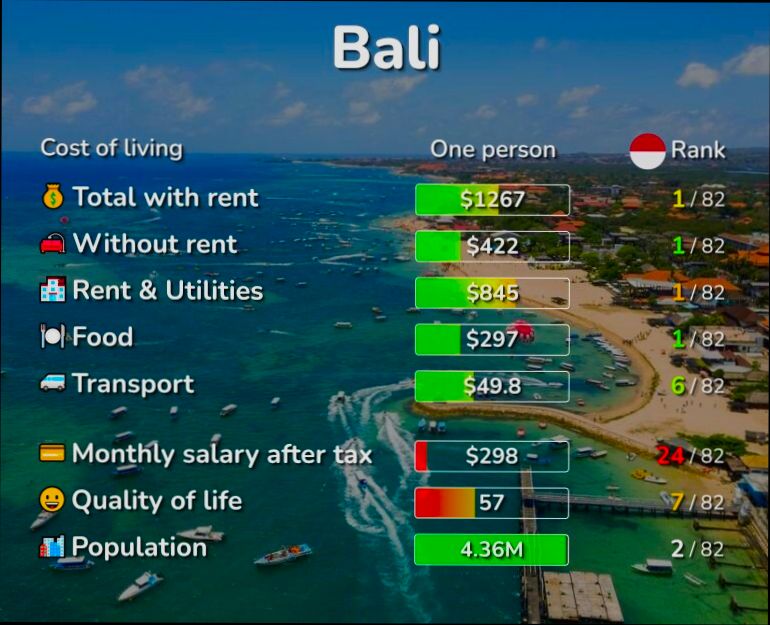
What are the costs of moving to Bali? If you’re dreaming of swapping your 9-to-5 grind for beach sunsets and coconut trees, it’s crucial to crunch some numbers first. On average, the cost of living in Bali can be surprisingly low; you might find one-bedroom apartments in popular areas like Canggu or Ubud for around $400 to $800 a month. But don’t forget about the little things—groceries can run you about $200 to $300 a month if you enjoy fresh local produce, and dining out at local warungs can cost as little as $2 for a meal.
But let’s talk about the one-time moving expenses, which can stack up fast. Flights from the U.S. typically hover around $800 to $1,200, while shipping your belongings could range from a few hundred to several thousand dollars, depending on how much you’re bringing. Visa costs also add to the pot; a tourist visa might initially seem inexpensive at about $35, but don’t overlook extension fees. Considering all these factors, it’s essential to paint a clear picture of what relocating truly entails before you take that leap into paradise.

Housing Costs and Availability in Bali
When considering a move to Bali, understanding housing costs and availability is crucial. The island presents a variety of living options, from budget-friendly accommodations to luxurious villas. Let’s dive into what you can expect.
Housing Cost Overview
The cost of housing in Bali can vary significantly based on location, type, and amenities. Generally speaking, here’s what you can expect to pay:
- Budget accommodations: Ranging from $200 to $600 per month, these usually include guesthouses or homestays.
- Mid-range options: Private villas or apartments can set you back between $700 and $1,800, depending on factors such as location and amenities.
- Luxury properties: High-end villas often start at around $2,000 and can exceed $2,500, especially in popular areas like Canggu or Seminyak.
Monthly Rental Price Comparison by Area
| Area | Budget Accommodations | Mid-Range Private Villas | Luxury Properties |
|---|---|---|---|
| Ubud | $300 - $600 | $700 - $1,500 | $2,000+ |
| Canggu | $400 - $700 | $1,000 - $1,800 | $2,500+ |
Local Housing Market Insights
In Ubud, you’ll find lush greenery and a focus on wellness, which makes it appealing for those seeking tranquility. The average budget accommodations are around $300 to $600. Meanwhile, if you lean toward Canggu, known for its surf community, budget options rise slightly to between $400 and $700.
Factors affecting these prices include:
- Proximity to popular amenities: Areas near surf spots and vibrant cafés tend to be pricier.
- Cultural attractions: Living near traditional markets and festivals can elevate costs, especially in cultural hubs.
Real-World Experiences
A friend of mine recently moved to Sanur and found a delightful homestay for $500 a month. This included a private bathroom and access to a shared pool. In contrast, his colleague in Canggu reported paying $1,200 a month for a one-bedroom villa that came with a pool, highlighting the variance based on location and amenities.
Practical Implications for You
If you’re planning to move to Bali, prioritize your desired lifestyle when selecting accommodation. If socializing and active nightlife are important, focusing on areas like Canggu may serve you well. Conversely, if peace and wellness are your goals, Ubud’s options might suit you better.
Actionable Advice
- Determine your budget beforehand and consider which type of housing aligns with your lifestyle preferences.
- Use local rental platforms or expat groups on social media to get real-time insights into available properties.
- Visit potential rentals in person if possible; many listings can look different than they appear online.
Comparative Analysis of Living Expenses
When you’re considering a move to Bali, understanding the comparative analysis of living expenses is essential for budgeting effectively. This section dives into the various costs you’ll encounter, from food and transportation to healthcare and entertainment, allowing you to navigate your financial expectations smoothly.
Key Points of Living Expenses
- Groceries and Dining Out: On average, eating at local warungs can cost around $2 to $5 per meal, while mid-range restaurants may charge $10 to $20. In contrast, a typical Western meal could range from $15 to $30.
- Transportation: Motorbike rentals are popular and typically cost between $50 to $70 per month. Alternatively, using ride-sharing apps like Gojek or Grab can cost you around $0.50 to $1.50 per trip within urban areas.
- Healthcare: Basic health insurance in Bali costs approximately $100 to $300 annually, depending on coverage. In contrast, a visit to a local clinic may cost around $20 to $50, considerably less than similar services in Western countries.
- Utilities and Internet: The average monthly utility bill (electricity, water, and gas) ranges from $50 to $100, while Internet packages can cost about $25 to $50 per month for reliable service.
Comparative Living Expenses Table
| Expense Category | Bali Costs (USD) | Comparison (Western Country) |
|---|---|---|
| Meals at Local Restaurants | $2 - $5 (per meal) | $15 - $30 (per meal) |
| Motorbike Rental | $50 - $70 (per month) | $200 - $500 (per month) |
| Private Healthcare Visit | $20 - $50 | $100 - $300 |
| Basic Utility Bills | $50 - $100 | $200 - $300 |
| Internet Service | $25 - $50 (per month) | $50 - $100 (per month) |
Real-World Examples
Consider Sarah, a digital nomad who resides in Canggu. She spends about $300 monthly on food and transportation by indulging in local cuisine and renting a motorbike. In contrast, her friend Mark, who prefers Western-style dining, spends upwards of $600 a month just on food expenses.
Another case is that of Tom and Anna, a couple who moved to Seminyak. They noted that their overall healthcare costs dropped significantly. They pay $40 for each clinic visit, while back home they would have faced bills exceeding $200.
Practical Implications
Understanding the comparative costs of living in Bali versus your home country allows for strategic budgeting. This knowledge can empower you to maintain a comfortable lifestyle while potentially living well below your previous expenses.
- Opting for local dishes not only supports community businesses but also keeps your dining budget manageable.
- Consider renting a motorbike for convenience and savings rather than relying on more expensive taxi services.
Actionable Advice
If you’re planning a move, allocate funds based on the lower costs you can expect for essentials in Bali. For example, budget around $250 for groceries and local dining per month, and expect to spend about $60 on transportation. By being informed and proactive, you can stretch your budget further while enjoying the vibrant lifestyle Bali has to offer.

Healthcare Costs and Considerations
When relocating to Bali, navigating the local healthcare landscape is vital for your well-being. Understanding what to expect in terms of costs and available services ensures you’re prepared for any medical needs that might arise.
Healthcare Costs Overview
Healthcare expenses in Bali can range widely based on the type of services and facilities you choose. Here are some essential points to consider:
- Consultation Fees: Visiting a general practitioner typically costs between $10 to $30, while specialist consultations can range from $30 to $100, depending on the complexity of the issue.
- Emergency Services: Local hospitals offer emergency services, but costs may be higher, particularly if you require an ambulance, which can charge anywhere from $30 to $100 for transport.
- Routine Health Services: Basic routine services, like blood tests or vaccinations, can cost as little as $5 to $20, providing an affordable way to maintain your health.
| Service Type | Estimated Cost |
|---|---|
| General Practitioner Visit | $10 - $30 |
| Specialist Consultation | $30 - $100 |
| Blood Test/ Vaccination | $5 - $20 |
| Emergency Transport | $30 - $100 |
Real-World Examples
One expat shared their experience after a minor health scare. They visited a local clinic for a routine check-up and paid just $15 for a full consultation and a few basic tests. On another occasion, they required a specialist and paid about $70, which included the consultation and follow-up advice for their condition.
Healthcare in Bali, while generally affordable, can vary significantly depending on where you go. A friend living in Ubud mentioned a high-quality private hospital where costs can double than at local clinics, but they offered more advanced services and shorter wait times.
Practical Considerations
As you plan your move, keep these actionable insights in mind:
- Insurance Coverage: Ensure your health insurance covers international services, especially since some lower-cost clinics may not be affiliated with providers that meet your coverage.
- Local Pharmacy Access: Pharmacies in Bali are widespread and can provide over-the-counter medications at a fraction of the cost found in Western countries, often helping you save on minor ailments.
- Emergency Plan: Familiarize yourself with the local hospitals and clinics that best suit your health needs to minimize anxiety when urgent care is necessary.
Remember, proactive planning can help you navigate Bali’s healthcare system efficiently while keeping your costs manageable.
Education Expenses for Expats in Bali
Moving to Bali with your family can bring up numerous questions, especially about education expenses. As a vibrant melting pot of cultures and lifestyles, Bali offers various schooling options for expats. Understanding these costs can help you plan your budget effectively.
Key Insights on Education Expenses
When considering education in Bali, it’s essential to evaluate various schooling systems. Here are some key points regarding education expenses for expats:
- International Schools: Tuition fees for international schools in Bali generally range from $5,000 to $20,000 annually, depending on the school’s reputation, curriculum, and facilities.
- Local Schools: Enrolling your child in local Indonesian schools can considerably lower the cost, with annual fees typically between $500 to $3,000. However, the teaching language is primarily Indonesian.
- Additional Costs: Besides tuition, you may incur extra expenses, such as registration fees, uniforms, school supplies, and extracurricular activities, which can add another $500 to $1,500 per year.
- Language Classes: Many expat families opt for language classes to help their children adapt, costing around $150 to $300 per month depending on frequency and group size.
| School Type | Annual Tuition Range | Additional Costs |
|---|---|---|
| International Schools | $5,000 - $20,000 | $500 - $1,500 |
| Local Indonesian Schools | $500 - $3,000 | $300 - $600 |
Real-world Examples
For instance, an American family moving to Bali opted for an international school with an annual fee of $12,000. They planned to budget an additional $800 for uniforms and activities throughout the year. In contrast, a British family chose a local school at $1,200 per year and set aside $300 for supplies and events.
Another expat family highlighted the importance of language classes, sharing that they paid $200 a month for Indonesian language lessons, significantly helping their children integrate into the local culture.
Practical Implications
When planning your education budget in Bali, consider the following:
- Research the schools in your area to compare tuition and reputation.
- Budget for both tuition and additional costs like materials, uniform, and transportation.
- Explore the possibility of enrolling in language classes for your children, enhancing their interaction with local peers.
Specific facts to keep in mind include that international schools often provide a curriculum based on your home country, offering a smoother transition for your child. Choosing the right school can significantly affect your expat experience and your child’s adjustment in Bali.

Potential Financial Benefits of Relocating
Relocating to Bali offers numerous financial benefits that can make your lifestyle more affordable and even enhance your overall financial health. Let’s explore some enticing advantages you can expect when you make the move.
Reduced Tax Burden
Bali’s tax environment can be significantly more favorable compared to many Western countries. For instance, if you’re a digital nomad or freelancer, you may qualify as a non-resident and only pay taxes on your Indonesian source income. This can result in substantial tax savings, allowing you to keep more of your hard-earned money.
- Income Tax: The personal income tax rate in Indonesia starts at 5% for earnings over IDR 60 million (around $4,200), compared to rates that can reach as high as 37% in countries like the U.S. or U.K.
- Expat Benefits: Many expats also benefit from tax treaties that help to avoid double taxation, further enhancing their financial situation.
Cost of Living Comparison
One of the most compelling aspects of relocating to Bali is the dramatic difference in your overall cost of living. Although we’ve previously discussed essential expenses, it’s important to focus on the broader financial picture.
- Utility Costs: Utilities in Bali, including electricity, water, and internet, typically cost between $50 to $150 per month, which is much lower than in places like California, where similar services can soar to $300 or more.
- Transportation Savings: Owning a scooter in Bali can cost around $30 to $50 per month, promoting a very affordable mode of transportation. In contrast, maintaining a car in the U.S. can easily exceed $500 monthly, considering insurance, fuel, and maintenance.
Table: Comparative Cost of Living Benefits
| Expense Category | Bali (Monthly) | U.S. Average (Monthly) | Savings (%) |
|---|---|---|---|
| Rent (1 Bedroom) | $300 - $700 | $1,500 - $3,000 | 50% - 70% |
| Groceries | $150 - $300 | $400 - $600 | 50% |
| Utilities | $50 - $150 | $250 - $400 | 60% |
| Transportation (Scooter) | $30 - $50 | $500 (Car) | 90% |
| Dining Out (Average Meal) | $5 | $15 | 66% |
Real-World Examples
Consider the case of Sam, an IT professional who relocated to Bali from London. He reported a drastic drop in his costs:
- Rent: He went from paying £1,800 ($2,400) a month for a small flat in London to renting a villa in Bali for just $500 per month.
- Food: Sam’s monthly grocery bill reduced from about £300 ($400) to $150 in Bali without sacrificing quality.
- Life Quality: With the money saved, he started exploring local cuisine and adventures, significantly enriching his lifestyle.
Practical Implications for You
- Budget-Friendly Lifestyle: You can expect your effective income to stretch much further in Bali due to lower costs in housing, food, and transportation.
- Investment Opportunities: With the money you save on everyday expenses, consider putting aside funds for investments or creating a savings pad for future adventures or projects.
- Quality of Life Enhancements: Use the financial freedom Bali provides to prioritize personal experiences over material possessions, enhancing your quality of life.
Actionable Advice
When planning your move, create a detailed budget reflecting the differences in living costs. This proactive approach will help you fully appreciate the financial benefits of relocating. Consider speaking with fellow expats about their experiences; you may uncover even more savings opportunities that could make your transition smoother and more rewarding.

Budgeting Strategies for Moving to Bali
Transitioning to Bali can be a thrilling adventure, but solid budgeting strategies are essential for a smooth relocation. Having a clear financial plan can help you navigate the various costs associated with this endeavor and ensure you meet your living standards without undue stress.
Set a Detailed Budget
Before making the move, evaluate your finances comprehensively. Consider including the following categories in your budget:
- Housing: Estimate costs based on your preferred area and housing type.
- Daily Expenses: Allocate funds for groceries, dining out, and transportation.
- Healthcare: Factor in medical expenses and insurance.
- Education: If you have children, include schooling costs.
Aim to have at least 6-12 months of living expenses saved to cushion against unexpected costs.
Create a Spending Plan
A spending plan can help you meet your budget goals more effectively. Try these strategies:
- Track Your Expenses: Use apps like Mint or YNAB (You Need a Budget) to keep an eye on your spending.
- Set Monthly Limits: Assign spending limits for each category to avoid overspending.
- Prioritize Needs vs. Wants: Focus on essential expenses before discretionary spending.
Comparative Cost Table
| Expense Category | Estimated Monthly Cost (USD) |
|---|---|
| Housing | $200 - $600 |
| Groceries | $150 - $300 |
| Dining Out | $60 - $200 |
| Transportation | $40 - $100 |
| Healthcare | $70 - $250 |
Real-World Examples
Consider the case of Sarah and Tom, a couple relocating from Australia. They budgeted $1,500 monthly, breaking it down into:
- Housing: $400 for a modest villa in Seminyak.
- Groceries and Dining: $300 total, enjoying local cuisine and meal prep.
- Transportation: They spent around $60 monthly on scooter rentals.
This plan not only helped them maintain their lifestyle but also provided a buffer for unexpected expenses.
Be Mindful of Currency Fluctuations
As you budget, keep in mind that currency exchange rates can fluctuate. Regularly check the rates and consider using local banking services to exchange money when rates are favorable. Such small adjustments can save you significant amounts over time.
Additional Tips for Financial Health
- Build an Emergency Fund: Aim for at least three months’ worth of living expenses as a financial cushion.
- Explore Local Market Options: Buying from local markets can often reduce your grocery bills significantly compared to supermarkets.
- Negotiate Services: Whether for housing or services like internet and phone plans, don’t hesitate to negotiate prices.
Establishing these budgeting strategies empowers you towards a successful and financially stable life in Bali, minimizing the stress of adjusting to a new environment.

Real-Life Experiences of Expats in Bali
Moving to Bali can be both an exhilarating and daunting experience, especially when it comes to understanding the expat lifestyle. From the vibrant community to the everyday challenges, various aspects of life in Bali shape the experiences of expatriates. Let’s dive into some real-life insights from expats that paint a vivid picture of what daily life looks like on this beautiful island.
A Diverse Expat Community
Bali is home to a variety of expatriates, with individuals arriving from different corners of the world. In fact, the population of expatriates in Bali has grown significantly, contributing to a multicultural atmosphere. Here are some demographics that stand out:
- The expat community includes people from countries like Australia, the United States, and various European nations.
- Recent statistics indicate that the population in Bali has expanded from about 3.9 million in 2016 to approximately 4.3 million in 2023, reflecting a steady influx of newcomers.
Monthly Expenditure Insights
Understanding the financial dynamic is crucial, especially in a place known for its affordability. Expatriates often share their monthly expenditure experiences, which typically fall within:
| Category | Average Monthly Expenditure (IDR) | Average Monthly Expenditure (USD) |
|---|---|---|
| Housing | 3,000,000 | 200 |
| Groceries | 1,500,000 | 100 |
| Dining Out | 2,000,000 | 135 |
| Transportation | 500,000 | 35 |
This framework can help you understand how your financial planning aligns with the lifestyles of those already living there.
Real Experiences and Insights
Many expatriates report transformative experiences that shape their lifestyle choices. For example, Emma, a 32-year-old teacher from the U.K., initially visited Bali for a short holiday but fell in love with the island’s culture and community. “I found a job at an international school, and it felt like a seamless transition. The warmth of the locals and the easy-going lifestyle made me settle here for good,” she shares.
Similarly, Tom, a 45-year-old entrepreneur, emphasizes the work-life balance Bali provides. “While running my online business, I have access to a great network of like-minded individuals. We often collaborate on projects in beautiful settings, making work enjoyable.”
Adapting to Local Customs
Expats often find the integration into Balinese culture both rewarding and challenging. The importance of respect for local customs and traditions is highlighted frequently. Engaging in local festivals, participating in traditional ceremonies, and learning basic Bahasa Indonesia can make a significant difference in how expats are perceived and treated by locals.
Practical experiences include:
- Attending the annual Nyepi Day, a day of silence where the entire island shuts down, allows expats to immerse themselves in the rich culture.
- Many expats recommend getting involved in local community activities, which not only helps build friendships but also fosters a greater appreciation for Balinese traditions.
Actionable Advice
- Consider connecting with expat communities via social media or local groups to ease your transition. Meeting others who share your experiences can be invaluable.
- Make it a point to explore various neighborhoods before settling down to find the vibe that suits you best, as each area varies greatly in ambiance and amenities.
- Don’t be afraid to embrace the local culture; whether it’s trying traditional foods or participating in local events, these experiences will enhance your stay and help you feel more at home.
Bali offers a unique living experience that combines cultural richness with a supportive expat community. Engaging fully with the local environment while enjoying the perks of life on this island are common themes echoed by those who reside there.