Pros and Cons of Living in Kiel can paint a vivid picture of daily life in this charming German city. Nestled on the shores of the Baltic Sea, Kiel boasts a maritime charm that’s hard to resist. Imagine walking along the waterfront, enjoying fresh seafood at local bistros, or catching a ferry to the picturesque islands nearby. The cost of living here is surprisingly reasonable, with an average rent of around €600 for a one-bedroom apartment in the city center, which is a steal compared to places like Hamburg or Berlin. Plus, with a population of about 250,000, Kiel offers a cozy, tight-knit community feel while still providing access to urban amenities.
However, Kiel isn’t without its quirks. Winters can be quite harsh, with temperatures dipping below zero and an abundance of gray days that might put a damper on your spirits. Public transport is decent, but the frequency of buses can leave you waiting longer than you’d like during off-peak hours. And while the city is well-known for its sailing events, it might lack the vibrant nightlife you’d find in larger cities, leaving some younger residents feeling a bit short-changed on weekend excitement. Balancing these pros and cons is essential to really grasping what life in Kiel is all about.
Cost of Living in Kiel
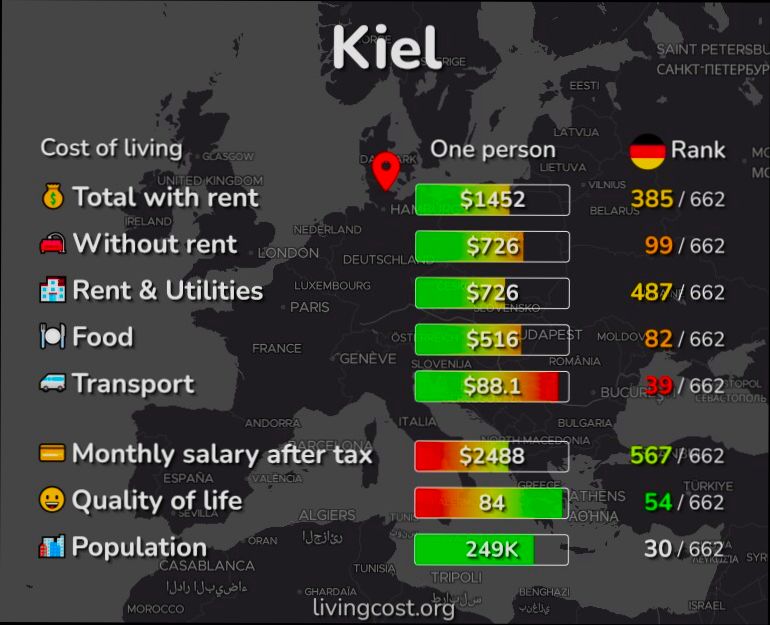
Understanding the cost of living in Kiel is essential when considering a move to this vibrant German city. The expenses you will encounter can vary widely depending on your lifestyle, location, and personal preferences. Here’s a breakdown of key cost elements to consider.
Housing Costs
Housing is typically one of the most significant expenses in Kiel. Rental prices can vary depending on the district:
- A one-bedroom apartment in the city center averages around €800 per month.
- If you prefer a location outside the center, that drops to about €600.
Transportation
Kiel has a well-connected public transportation system, but budgeting for travel can still add up:
- A monthly public transportation pass costs approximately €55.
- Gasoline prices hover around €1.55 per liter, so vehicle ownership can be costly in comparison to using public transport.
Food and Groceries
Grocery prices in Kiel are relatively reasonable. Here are some average costs:
- A loaf of bread costs around €2.50, and a liter of milk is about €1.00.
- Dining out at a mid-range restaurant will set you back between €15 to €25 per person for a meal.
Health and Insurance
Health insurance is mandatory in Germany and impacts the overall cost of living:
- Public health insurance typically costs around €350-€400 monthly for an employed individual.
- Private health insurance may vary significantly based on age and health status.
Utilities and Internet
Utilities can also be a considerable expense:
- Average monthly utilities for a standard apartment typically run about €200.
- Internet costs around €30 per month for a reliable connection.
| Expense Category | City Center | Outside Center |
|---|---|---|
| One-bedroom Apartment | €800 | €600 |
| Monthly Transportation Pass | €55 | N/A |
| Grocery (Bread) | €2.50 | N/A |
| Health Insurance (Public) | €350-€400 | N/A |
| Internet | €30 | N/A |
Real-world Examples
Living in Kiel might offer distinct experiences based on your choices. For instance:
- A 30-year-old professional renting a one-bedroom apartment downtown may spend close to €1,200 monthly when including rent, utilities, and transportation, while a student sharing an apartment outside the center could spend closer to €700.
- Families may budget differently; a family of four can expect to pay around €3,000 monthly, covering rent, food, utilities, and insurance.
Practical Implications for Readers
When assessing the cost of living, it’s crucial to create a detailed budget considering these factors.
- Utilize local resources or expat forums to find good deals on housing and services.
- Consider looking for shared accommodations if you’re trying to reduce your costs, especially within university neighborhoods.
Specific Facts and Actionable Advice
Moving to Kiel? Here are a few budget-friendly tips:
- Shop at local markets for fresher produce and potential savings on groceries.
- Consider using a bike to navigate the city efficiently and cut down transportation costs.
- Research various neighborhoods since living a little further from the city center often leads to significant savings in rent.
Quality of Life Factors in Kiel
When contemplating living in Kiel, understanding the various quality of life factors is crucial. These factors influence daily experiences and overall satisfaction while residing in this beautiful coastal city. Let’s delve into the key elements that contribute to the quality of life in Kiel.
Environment and Green Spaces
Kiel boasts numerous parks and recreational areas that enhance its livability. Over 30% of the city’s total area is dedicated to green spaces, offering residents plenty of opportunities for outdoor activities. Key parks such as the Küstenwald and Alter Botanischer Garten serve as serene getaways from urban life.
Education and Healthcare
Kiel is home to several institutions of higher education, including the renowned University of Kiel, which contributes to a vibrant academic environment. The city ranks favorably with an impressive 8:1 student-to-teacher ratio in many schools, ensuring personalized attention for students.
In terms of healthcare, Kiel provides access to quality medical facilities, with over 85% of residents expressing satisfaction with local healthcare services. The city is served by multiple hospitals and specialized clinics, ensuring that healthcare needs are promptly met.
Public Safety and Crime Rates
Kiel is generally considered a safe city, with crime rates well below the national average. Reports indicate that violent crime rates in Kiel are around 40% lower than in larger cities like Hamburg, making it an appealing choice for families. The presence of community policing initiatives reassures residents about their safety and fosters a secure living environment.
Transportation and Accessibility
Kiel offers excellent transportation options, making it easy to navigate the city and beyond. Public transport is efficient, with an extensive bus network covering the urban area. In fact, 75% of residents indicate they can reach major destinations within 30 minutes via public transport. For those who prefer cycling, over 200 kilometers of dedicated bike lanes promote eco-friendly commuting.
| Quality of Life Factor | Kiel Data | Comparison |
|---|---|---|
| Green Spaces | 30% of total area | Above average |
| Student-to-Teacher Ratio | 8:1 | Favorable |
| Healthcare Satisfaction | 85% satisfied | National average |
| Violent Crime Rate | 40% lower than Hamburg | Safer than larger cities |
| Public Transport Accessibility | 75% reach key destinations within 30 mins | Excellent |
Real-World Examples
Consider the story of Sarah, a mother of two, who moved to Kiel for its educational opportunities. She appreciates the city’s commitment to maintaining green spaces where her children can play and learn about nature. Sarah found a nearby public park that offers various family-friendly activities, highlighting how Kiel fosters a community-oriented lifestyle.
Similarly, John, a student at the University of Kiel, enjoys the vibrant campus life and the high level of support he receives from faculty. His experience mirrors the stats regarding student satisfaction in the region, creating an enriching environment for academic pursuits.
Practical Implications
When assessing your potential move to Kiel, think about how its abundant green spaces, high educational standards, and low crime rates can enhance your lifestyle. If you value safety and accessibility, the city’s public transport can significantly ease your daily commute.
Additionally, consider joining local community groups or activities to make the most of Kiel’s green spaces and educational opportunities. Engaging with your surroundings can greatly increase your quality of life and integration into the local community.
For those pondering a relocation, remember to prioritize areas that cater to your lifestyle preferences, like proximity to parks or educational institutions. Recognizing these quality of life factors can guide your decision, ensuring a fulfilling experience in Kiel.

Cultural Attractions and Activities
Kiel is not just a city of water but also one brimming with cultural gems and vibrant activities. You’ll find an assortment of museums, theaters, festivals, and historic sites that can enrich your lifestyle and provide plenty of opportunities for exploration and enjoyment.
Museums and Galleries
Kiel’s varied cultural scene features numerous museums and galleries:
- The Kunsthalle Kiel offers a stunning collection of modern art and hosts temporary exhibitions.
- The Museum of Maritime History immerses you in Kiel’s rich nautical heritage, showcasing ship models, navigational tools, and maritime art.
- Did you know that around 60,000 people visit the Kunsthalle annually? This is a testament to the city’s commitment to promoting art and culture.
Performing Arts
The city’s performing arts scene is alive and well, catering to diverse tastes:
- The Theater Kiel is a hub for opera, drama, and ballet, hosting over 300 performances every year. It’s a must-visit for culture lovers.
- Additionally, there are intimate venues like the Pumpe, which offer a platform for local artists and smaller productions, allowing for a more immersive experience.
Festivals and Events
Kiel also hosts a range of festivals that highlight its cultural diversity:
1. Kiel Week (Kieler Woche): This international sailing event, held annually in June, attracts over 3 million visitors. It combines sports with cultural activities, including concerts, exhibitions, and traditional fairs.
2. Kieler KulTour: This September festival showcases local cuisine, crafts, and performances, enhancing the communal spirit of the city.
Cultural Attractions Comparison
| Attraction Type | Name | Visitors per Year | Notable Features |
|---|---|---|---|
| Museum | Kunsthalle Kiel | 60,000 | Modern art exhibits, temporary art installations |
| Theater | Theater Kiel | 250,000 | Operas, ballets, and drama performances |
| Festival | Kiel Week | 3,000,000 | Combination of sailing events and cultural activities |
| Cultural Venue | Pumpe | 20,000 | Local artist performances and alternative shows |
Real-World Examples
Kieler Woche is not just a sailing event; it transforms the city into a vibrant hub of culture, where you can enjoy street performances, art installations, and live music. Also, in 2023, the Kunsthalle featured a remarkable exhibition showcasing contemporary artists from the region, bringing in visitors who appreciated both local talent and international influences.
Practical Implications for Your Cultural Calendar
As you plan your schedule, consider these action points:
- Engage with local artists by attending performances at the Pumpe, where you can discover fresh talent and unique shows.
- Sign up for events during Kiel Week to experience a blend of sports and culture.
- Regularly check the listings at the Theater Kiel for upcoming performances that fit your taste.
You might want to invest in a Kiel Card, offering discounts on museum entry and theater tickets, making cultural exploration more accessible.
With such a dynamic array of cultural attractions and activities, Kiel provides a rich tapestry of experiences that cater to artistic, musical, and festive interests, ensuring you’ll never run out of things to see and do.
Transportation and Commute in Kiel
Living in Kiel brings unique transportation options that can greatly enhance your daily commute. Understanding how to navigate the city effectively, as well as the various available modes of transport, can make a significant difference in your experience here.
Public Transport System
Kiel offers a robust public transport network primarily managed by the Kieler Verkehrs-Aktiengesellschaft (KVG). Here are some key features:
- Buses and Trains: The KVG operates many buses that connect various neighborhoods, making it easy for you to get around without a personal vehicle.
- S-Bahn Services: Kiel is also well connected through S-Bahn services that link to neighboring towns and cities, offering flexibility for commuters.
- Frequency and Accessibility: Buses and trains run frequently, with many routes operating every 10-15 minutes, especially during peak hours.
Cycling Infrastructure
Kiel is a bike-friendly city, making it an excellent place for cyclists:
- Dedicated Bike Lanes: Most major roads have dedicated bike lanes, ensuring your safety while commuting.
- Bicycle Rentals: If you don’t own a bike, rental options are widely available, with stations located throughout the city.
- Statistics: Approximately 30% of Kiel residents commute by bike, reflecting the city’s commitment to cycling.
Overall Transportation Costs
When considering transportation costs in Kiel, here’s a breakdown:
| Transport Mode | Monthly Cost (Approx.) | Coverage Area |
|---|---|---|
| Bus/Tram Ticket | €67 | City-wide |
| Monthly Bike Rental | €15 | Various bike rental stations |
| Train (S-Bahn) Ticket | €89 | Kiel and surrounding areas |
Real-World Examples
Many residents find that using public transport not only saves money, but time as well:
- Maria, a local teacher, finds the bus network ideal for her daily commute to work, stating, “I can get from my home to school in under 30 minutes without the hassle of parking.”
- Thomas, a student, prefers cycling. He enjoys the scenic routes while saving on transport costs, saying, “I love that biking lets me explore the city more while keeping me active.”
Practical Implications for Your Commute
To maximize your transportation experience in Kiel, consider the following tips:
- Schedule: Utilize the KVG app for real-time updates on bus and train schedules to plan your trips efficiently.
- Bicycle Maintenance: If you choose to cycle, regular maintenance is crucial. Local bike shops offer affordable services.
- Explore: Take advantage of weekend passes for public transport if you plan on commuting for leisure activities outside the city.
Additional Facts and Tips
- Discounted Rates: Students and seniors can often access discounted transport rates, making commuting even more affordable.
- Walking: Many areas, especially the center of Kiel, are pedestrian-friendly. This can be an enjoyable alternative for shorter distances.
- Safety: Public transport is generally safe, but it’s always wise to stay aware of your surroundings, especially during late hours.
With this detailed overview, you’ll find that the transportation and commuting options in Kiel cater to a variety of preferences and lifestyles, helping you move around the city easily and efficiently.
Demographic Trends and Insights
Understanding the demographic dynamics of Kiel can provide valuable context for potential residents. By examining the city’s population characteristics and trends, we can gain insights into the vibrant community that makes Kiel unique.
Population Growth and Age Distribution
Kiel’s population has been steadily growing over the years, reflecting its attractiveness as a place to live and work. As of the latest figures, the population stands at over 250,000, with a notable increase of around 5% since 2015. This growth is fueled by both domestic migration and international residents, particularly students and professionals.
When we look at age distribution, it becomes clear that Kiel has a youthful demographic. Approximately 25% of the population is aged 18-30, significantly influenced by the presence of universities and higher education institutions. This youthful energy also contributes to a vibrant cultural scene that many residents appreciate.
Educational Attainment
Kiel boasts a highly educated populace, with around 40% of residents holding a tertiary qualification. This is essential for those considering career opportunities in the area, particularly in sectors like technology, healthcare, and maritime industries. The emphasis on education helps foster innovation and economic growth within the city.
Migration Trends
Kiel is characterized by diverse migration patterns, which play a significant role in shaping its demographic landscape. For instance:
- About 15% of Kiel’s residents are international, primarily from EU countries like Poland, Spain, and Sweden.
- The city has a growing expat community, which enhances its multicultural environment.
Comparative Demographic Breakdown
| Demographic Aspect | Percentage/Statistic |
|---|---|
| Population Growth Since 2015 | 5% |
| Residents Aged 18-30 | 25% |
| Tertiary Education Holders | 40% |
| International Residents | 15% |
Real-World Examples
A notable representation of Kiel’s youthful population is during the annual Kieler Woche (Kiel Week), a sailing event that attracts thousands of participants and visitors, highlighting the city’s vibrant community spirit. Local universities often collaborate with the city to promote cultural exchanges, allowing both students and long-term residents to engage with diverse global perspectives.
On the flip side, the integration of a considerable international population can lead to challenges, like cultural differences or language barriers. Programs aimed at helping newcomers adapt can significantly improve community cohesion and foster a more welcoming atmosphere.
Practical Implications for Potential Residents
When considering a move to Kiel, it’s important to note the strong educational and cultural environment. Engaging with local universities can provide further opportunities for networking and personal growth. Additionally, understanding the youthful demographic may influence your choice in neighborhoods, with some areas being more vibrant and lively than others.
Lastly, staying informed about local integration programs can enhance your transition into Kiel’s diverse community and allow you to fully immerse yourself in the city’s unique culture.
For anyone looking to engage with Kiel’s residents, whether you’re a student or a professional, active participation in local events and educational settings is a great way to build connections and friendships in this dynamic demographic landscape.
Employment Opportunities in Kiel
When considering moving to Kiel, it’s essential to dive into the employment landscape. The job market in Kiel presents a mix of opportunities and challenges, making it crucial for potential residents to understand what to expect.
Kiel’s employment scene primarily revolves around a few key industries, which impact job availability. Here are some essential points to consider:
- Industry Focus: The Kiel economy predominantly centers around manufacturing and agriculture. With companies like TKMS building submarines and various local farms, your opportunities may largely depend on these sectors if that aligns with your career aspirations.
- Limited Sector Diversity: Unlike larger cities, Kiel doesn’t boast extensive job diversity. If you seek careers in tech or finance, you might find limited options, necessitating a commute to surrounding areas for those types of jobs.
- Average Commute: If you land a job outside Kiel, you’ll appreciate the relatively short average commuting time of 21 minutes, which is slightly shorter than the Wisconsin state average of 22 minutes. This can make daily travel a bit more manageable.
Here’s a comparative look at employment-related statistics for Kiel, Wisconsin, and the national average:
| Statistic | Kiel | Wisconsin | National |
|---|---|---|---|
| Average one-way commute | 21 min | 22 min | 26 min |
| Workers who drive to work (%) | 80.7% | 80.7% | 76.4% |
| Workers who carpool (%) | 13.2% | 8.3% | 9.3% |
| Workers who take public transit (%) | 0.0% | 1.9% | 5.1% |
| Workers who bicycle (%) | 0.9% | 0.8% | 0.6% |
| Workers who walk (%) | 2.0% | 3.3% | 2.8% |
| Working from home (%) | 3.1% | 4.2% | 4.6% |
Real-world examples shed light on the employment landscape in Kiel. Local businesses often seek workers with skills in trades, manufacturing, and agriculture. For instance, many employees find stable jobs with the numerous farms and production plants that dot the surrounding areas. This reliance on specific industries can limit career flexibility but may provide job security in those fields.
For job seekers, consider these practical implications:
- Networking: Engage with local community events or trade shows. Networking within your industry can reveal hidden job opportunities.
- Skill Development: Pursue vocational training aligned with available jobs, particularly in manufacturing or agriculture, to improve your employment prospects within Kiel.
- Flexible Transportation: Utilize the dominant driving culture, as 80.7% of workers commute by car. Having a vehicle will enhance your job search options significantly beyond Kiel.
As you weigh your decision to move to Kiel, keeping these employment trends in mind will help you navigate the job market better. Whether you’re looking at job stability in manufacturing or pursuing opportunities that may require commuting, understanding Kiel’s employment landscape can lead to more informed choices.
Recreational Benefits of Coastal Living
Living near the coast brings a treasure trove of recreational benefits that can profoundly enhance your lifestyle. The allure of sandy beaches, shimmering waters, and endless outdoor activities makes coastal living particularly appealing. Here’s a closer look at the unique recreational opportunities that come with this way of life.
Abundant Water Activities
Coastal living means you have access to a variety of water-based activities that can enrich your life:
- Water Sports: Engage in thrilling activities like surfing, kayaking, or paddleboarding. Many coastal towns regularly organize water sports events that are perfect for both beginners and enthusiasts.
- Fishing: Living by the coast often means having your fishing gear ready. Be it deep-sea fishing or casual angling by the shore, the opportunities are plentiful.
- Swimming: Proximity to the ocean allows swimming almost year-round in temperate zones. You can take a refreshing dip or just relax by the water’s edge.
Health Benefits of Coastal Recreation
Living near the water can lead to improved physical and mental well-being. Studies indicate that:
- Stress Reduction: A significant number of residents report lower stress levels due to the calming effects of ocean proximity. The mere sound of waves can lead to enhanced relaxation.
- Increased Physical Activity: Coastal living encourages outdoor exercise, whether through hiking coastal trails, jogging along the beach, or participating in community sports events. Fresh air and exercise significantly boost mental health, reducing the prevalence of anxiety and depression.
Community Engagement through Coastal Activities
Coastal communities often host a range of recreational events that foster social interaction and community spirit:
- Festivals: Events such as sailing competitions, beach clean-ups, and seafood festivals bring people together, creating fun and memorable experiences.
- Local Weddings and Gatherings: The picturesque coastlines provide beautiful venues for weddings and family gatherings, enriching community ties and traditions.
| Recreational Activity | Popularity (%) | Health Benefits |
|---|---|---|
| Water Sports | 72% | Engages cardio and strength |
| Swimming | 85% | Low-impact exercise |
| Beach Volleyball | 65% | Team play encourages social ties |
| Fishing | 58% | Promotes patience and focus |
Real-World Examples
The coastal city of Kiel is renowned for its annual Kiel Week, during which thousands of sailors and participants come together to partake in boat races and shore-side activities. This week-long celebration not only encourages outdoor pursuits but also enhances the local economy through tourism and cultural exchange.
Similarly, coastal areas like California thrive on beach sports, with surf culture deeply embedded in community life. Many regions leverage their coastlines by developing aquatic parks, encouraging both locals and tourists to engage in beach activities, directly correlating with improved community health and social bonds.
Practical Implications for Residents
By choosing to live in a coastal area, you’re not just getting a picturesque view; you’re embracing a lifestyle filled with varied recreational opportunities:
- Make Use of Local Facilities: Take advantage of nearby parks and recreational centers that host outdoor events, fitness classes, and more.
- Engage with the Community: Participate in local events or volunteer for coastal preservation projects, creating a sense of belonging while enjoying the beach.
By being active in your coastal community, you can maximize your enjoyment of the unique leisure opportunities available, promoting a healthier and happier lifestyle.