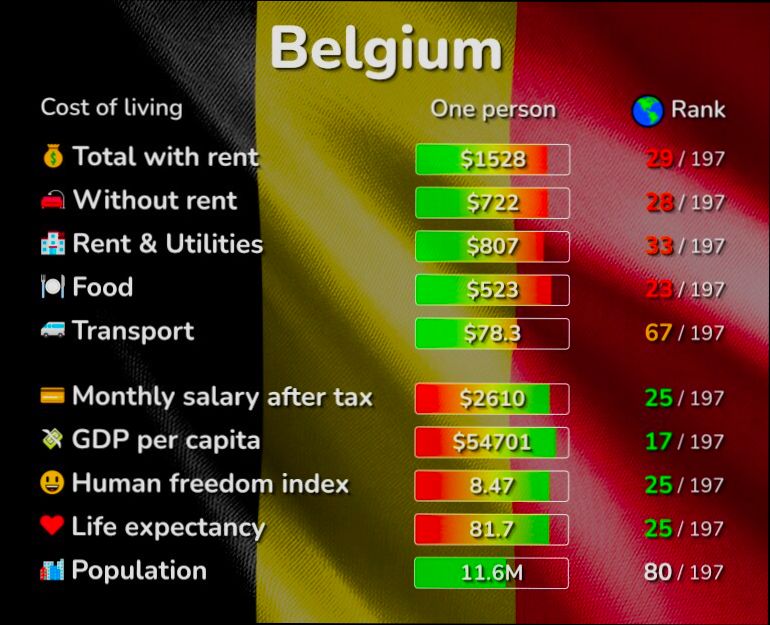
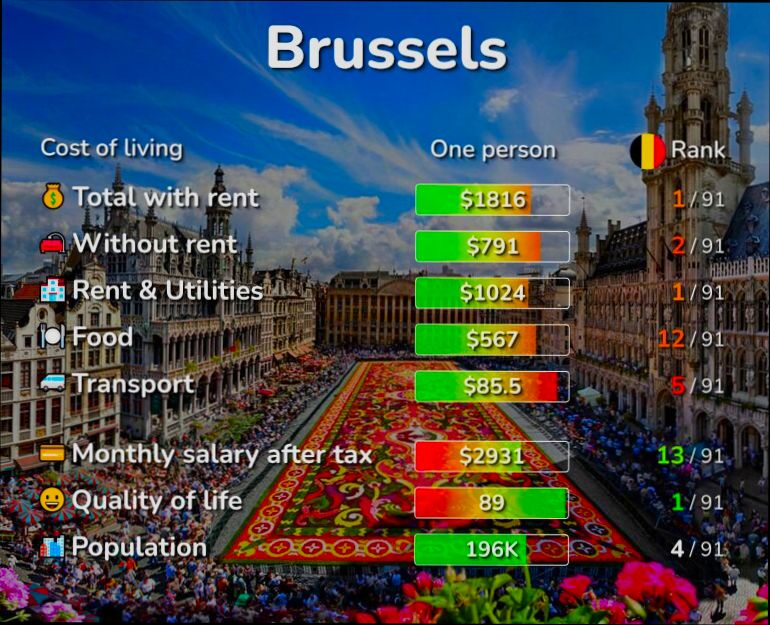
What is the Cost of Living in Belgium? If you’re dreaming of Belgian waffles, museums, and that charming medieval architecture, you’ll want to know what you’re diving into financially. On average, living in cities like Brussels and Antwerp can set you back around €1,300 to €2,500 per month, depending on your lifestyle. You’ll find that rent for a one-bedroom apartment in the city center can run you between €800 and €1,200, while utilities can add a solid €150 on top of that. It’s not all about big cities though; smaller towns like Ghent and Bruges can be more affordable, but don’t let the picturesque settings fool you—prices can still climb quickly.
When it comes to food, you can grab a decent meal at a mid-range restaurant for roughly €15-€25, but if you’re hitting up popular spots, expect to shell out a bit more. Groceries can also chip away at your budget, with bread costing around €2, milk close to €1, and fresh produce typically pricier than in neighboring countries. Plus, don’t forget about transportation: a monthly public transit pass in major cities hovers around €50. So, while Belgium offers you a treasure trove of experiences, it also comes with a price tag that varies quite a bit depending on where you settle down.
Housing Costs and Trends in Belgium
Navigating the housing market in Belgium can feel overwhelming, but understanding current trends and costs can simplify the process. Let’s delve into the specific factors influencing housing costs across the country.
Rising Property Prices
In recent years, Belgium has seen a significant increase in property prices, particularly in urban areas. According to recent statistics, the average price of a home in Belgium rose by about 5.2% from 2022 to 2023. This surge is primarily driven by increasing demand in cities like Brussels and Antwerp, where housing is particularly competitive.
1. Key cities and price increases:
- Brussels: Average property price now stands at approximately €300,000.
- Antwerp: Prices have escalated to around €250,000.
- Ghent: Home prices have jumped to about €275,000.
Rental Market Dynamics
The rental market presents its own set of trends. As of 2023, the average rent for an apartment in Belgium is around €950 per month, with considerable variation based on location.
- Rental prices by city:
- Brussels: Monthly rents can reach €1,200 for a two-bedroom apartment in the city center.
- Bruges: While it’s more affordable, the average rent is still about €850 for similar accommodations.
Housing Affordability Index
The housing affordability index in Belgium indicates that purchasing property has become more challenging. The Housing Cost Overburden Rate (HCOR) shows that approximately 17% of the population spends over 40% of their net income on housing costs, highlighting the financial strain many experience.
| City | Average Property Price | Average Rent (2-Bedroom) | HCOR (%) |
|---|---|---|---|
| Brussels | €300,000 | €1,200 | 20 |
| Antwerp | €250,000 | €1,000 | 15 |
| Ghent | €275,000 | €950 | 17 |
| Bruges | €240,000 | €850 | 12 |
Real-World Examples
Consider the story of a young couple looking to buy their first home in Brussels. They found that the rising prices have pushed their budget, originally set at €250,000, to now be nearly 20% below the average market price. This left them considering moving to nearby suburbs, where properties are priced closer to their budget.
Similarly, a family in Ghent faced difficulties when their rent increased by 10% in just one year, a common trend seen across many urban areas. They opted to explore older buildings in less sought-after neighborhoods to stay within their budget.
Practical Implications
Understanding these trends can help you make informed decisions:
- Budgeting for House Purchase: If you’re planning to buy property, consider saving for a larger down payment to better position yourself in a competitive market.
- Rental Strategies: Look at neighborhoods outside the main city centers, which can offer substantial savings on rent while maintaining reasonable access to public transport.
- Monitoring Market Trends: Keep an eye on local real estate reports; timing your purchase can lead to significant savings.
Actionable Advice
Stay aware of market shifts, as prices can fluctuate. Engaging with real estate professionals can provide insights into upcoming trends. Also, explore government programs that assist first-time homebuyers, as they may offer valuable financial support.
Monthly Expenses for Families in Urban Areas
When living in urban Belgium, monthly expenses for families can considerably impact your budget. Understanding these costs allows you to prepare adequately and make informed financial decisions. Let’s dive into what you can expect if you set up your home in one of Belgium’s urban centers.
Key Monthly Expenses Overview
Families residing in Belgium’s urban areas face a variety of monthly expenses, which can add up quickly. Here are some key figures to consider:
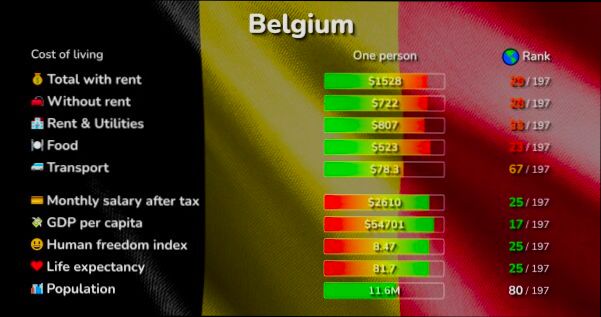
- A standard family of four typically incurs estimated monthly costs of around €3,342.60, excluding rent.
- Monthly utilities, including electricity, heating, cooling, water, and garbage collection, can cost around €195.78 for an apartment that spans 85 square meters.
- Internet service with speeds of 60 Mbps or more and unlimited data averages around €50.72.
Let’s break down more specific areas of spending that families often encounter.
Comparative Monthly Expenses Table
| Expense Category | Estimated Cost (€) | Description |
|---|---|---|
| Meal at an Inexpensive Restaurant | 20.00 | For a meal at a casual dining spot |
| Monthly Pass (Local Transport) | 49.00 | Regular public transport fare |
| Mobile Phone Plan | 20.69 | Includes calls and 10GB+ data |
| Childcare (Preschool) | 578.00 | Full-day private care for one child |
| Fitness Club Membership | 32.61 | Monthly fee for one adult |
Real-World Examples of Monthly Expenses
In Brussels, for instance, a family might dine out once a week at an inexpensive restaurant, spending approximately €20 per person. This equates to around €80 monthly just for one routine outing. Additionally, if you have a child in a private preschool, you can expect to allocate about €578 a month just for their care. Such expenses can significantly affect overall budgeting.
For transportation, a monthly pass costs approximately €49, which can be far more economical than individual tickets if you rely on public transit regularly. For families moving to urban areas looking for convenience, this is a vital expense to include in your monthly calculation.
Practical Implications for Readers
As you evaluate your monthly budget in urban Belgium, consider the following:
- Dining Out Expenses: If you plan on dining out frequently, budget accordingly. Prepare to spend around €80-100 monthly for family meals.
- Childcare Considerations: Evaluate public versus private options for childcare, as costs can range significantly. Setting aside €578 for preschool is essential.
- Transportation Choices: Weigh the benefits of a monthly transport pass versus individual trips, especially if you’re commuting frequently.
Make sure you also consider these expenses when planning your relocation by looking at your lifestyle and how you’ll manage day-to-day activities.
Specific Facts to Note
- Families should expect an average spending around €3,342.60 monthly—excluding rent.
- Incorporate estimated costs for utilities and mobile services, which can total up to €246.49 monthly if you account for both utilities and a mobile phone plan.
- Consider the necessity of public transportation in urban living, potentially saving significantly with a €49 monthly pass.
By understanding these elements, you can better navigate life in Belgium’s urban regions while effectively managing your family’s financial commitments.
Understanding Tax Implications on Living Costs
When considering living in Belgium, it’s essential to understand how taxes can influence your overall expenses. From income tax to VAT, various taxes can significantly impact your spending habits, making it crucial to grasp their implications on your cost of living.
Income Tax Rates
In Belgium, income tax operates on a progressive scale. This means that the more you earn, the higher the percentage of your income you pay in taxes. Here’s a quick overview:
- Up to €13,540: 25%
- €13,540 to €23,900: 40%
- €23,900 to €41,360: 45%
- Above €41,360: 50%
If you’re earning a modest salary, this progressive structure could lead to substantial deductions from your paycheck, directly affecting your shopping, dining, and entertainment budgets.
Tax on Goods and Services
Belgium has a standard VAT rate of 21%, but it’s important to note the different rates applicable to various goods and services:
- 6% VAT: Applies to essential goods like food, medicines, and books.
- 12% VAT: Applies to certain services, such as renovations and repairs.
These tax categories affect everyday purchases. For instance, when budgeting for groceries, the lower VAT makes a noticeable difference compared to non-essential items.
Property Taxes
If you’re renting or owning property, understanding the property tax is critical. The property tax rate is determined by the local municipality and typically ranges from 0.1% to 0.3% of the assessed value of the property. This can influence how much you spend each month on housing.
Comparative Overview of Taxes in Belgium vs. EU Average
| Type of Tax | Belgium (%) | EU Average (%) |
|---|---|---|
| Personal Income Tax | 50 | 42 |
| VAT | 21 | 20 |
| Property Tax | 0.2 | 0.1 |
As shown in the table, Belgium has higher personal income tax rates compared to the EU average, which may require you to reallocate your budget to accommodate these expenses better.
Real-World Example: Monthly Budget Impact
Let’s consider a scenario where a household has a gross monthly income of €4,000. After accounting for income tax deductions (about 45% on the portion above €2,500), their net income could fall to approximately €2,650.
Considering VAT on groceries, a family might spend €400 per month. Following the VAT application on their essential goods, this becomes a vital point in understanding how taxes reduce their disposable income for leisure or savings.
Practical Implications for You
When planning your budget in Belgium:
- Always account for the progressive nature of income tax and VAT implications on goods.
- Consider opting for essentials that are taxed at lower rates, especially for grocery shopping.
- Factor in property taxes if you plan to buy or rent.
By being aware of how taxes affect your living costs, you can make more informed decisions based on your financial situation. It encourages better financial planning, enabling you to enjoy your life in Belgium while managing your expenses effectively.
Maintaining awareness of these tax implications allows for smoother financial management, helping you optimize your budget for a more enjoyable living experience in Belgium. The knowledge of VAT on various goods can also empower you to prioritize your purchases, stretching your budget further as you navigate everyday expenses.
Cost of Living Comparisons Across Belgian Cities
Navigating the variances in living costs across different Belgian cities can help you make informed decisions, especially if relocating or considering a job offer. Each city presents its unique financial landscape, particularly affecting everyday expenses such as groceries, transport, and entertainment.
Cost of Living Highlights
When comparing the cost of living in Belgian cities, here are essential points to consider:
- Brussels is the priciest city in Belgium, with an average monthly cost of around €1,200 for a single person.
- Antwerp and Ghent follow closely, with costs averaging about €1,100 and €1,050 respectively.
- Liège remains the most affordable, with an estimated cost of living for a single person at €900.
Comparative Cost of Living Table
| City | Average Monthly Cost (Single) | Average Rent (1-Bedroom) | Grocery Costs (Monthly) | Public Transport (Monthly) |
|---|---|---|---|---|
| Brussels | €1,200 | €1,050 | €250 | €50 |
| Antwerp | €1,100 | €900 | €230 | €50 |
| Ghent | €1,050 | €860 | €240 | €45 |
| Liège | €900 | €700 | €210 | €40 |
Real-World Examples
For instance, in Brussels, a couple often spends upwards of €2,400 monthly, with significant fractions of their budget going towards dining and social activities, typically costing €300 each month at minimum. In contrast, a single professional in Liège can manage much of the same lifestyle at roughly €1,500, thanks to lower dining and rental costs.
Practical Implications
Understanding these cost variations can directly impact your financial planning:
- If you’re considering a move to Antwerp for work, you may need to adjust your budget slightly downward from Brussels, accounting for approximately €100 less on living expenses.
- For students or young professionals, opting for Liège could save you around €300 a month, allowing for more savings or leisure activities.
Actionable Advice
- Research Local Prices: Always check local prices for groceries, transport, and utilities in your targeted city.
- Consider Commute Options: Factor in potential transportation expenses, as they can significantly affect your total living costs.
- Explore Student Discounts: If you’re a student, many cities offer discounts that can lower your monthly financial obligations.
By keeping these cost factors in mind, you can make more strategic decisions based on your lifestyle and financial situation while considering where to live in Belgium.
Impact of Public Services on Daily Expenses
When we talk about the cost of living in Belgium, we can’t overlook the role that public services play in shaping our daily expenses. Public services, including healthcare, education, public transportation, and social security, influence how much you spend every month. Understanding their impact can help you budget more effectively and live comfortably.
Healthcare Costs
Belgium offers a high-quality healthcare system, funded in part by taxes. Statistically, about 50% of healthcare costs are covered by the state, significantly reducing out-of-pocket expenses. If you visit a doctor, you can expect to pay around €25 for a standard consultation, but you’ll receive a reimbursement of approximately 70%, making your real cost closer to €7.50 after the insurance kicks in. This system alleviates the financial burden on families, particularly those with chronic illnesses or young children.
Education Expenses
Education is another significant public service that can affect your daily budget. Public education in Belgium is free, yet additional costs can arise. For instance, school supplies might average around €100 per child each year, while extracurricular activities could add another €50-€200 per semester. However, the absence of tuition fees can save families thousands compared to private educational institutions.
Public Transportation Savings
When you rely on public transportation, you can notice a direct impact on your monthly expenditures. A monthly pass for public transport in cities like Brussels costs around €49, whereas driving a car, including fuel and parking, can easily exceed €200 monthly. If you switch to public transport, you could save roughly €150 every month, contributing positively to your overall cost of living.
Table of Public Service Expenses vs. Private Alternatives
| Service Type | Public Cost | Private Cost | Monthly Savings |
|---|---|---|---|
| Healthcare | €7.50 per visit | €40-€80 per visit | Up to €72.50 |
| Public Education | €0 (Tuition Fee) | €1,500+ per year | Up to €125/month |
| Public Transport | €49/month | €200+ (car costs) | Up to €151 |
Real-World Examples
Let’s consider Sophie, a single mother living in Ghent. She takes her two children to public school, which saves her approximately €3,000 annually compared to private schooling. Sophie also uses public transport, saving around €140 per month instead of maintaining a vehicle. Therefore, public services can create substantial savings in her budget, allowing her to allocate funds toward leisure and savings.
Practical Implications for Readers
If you’re moving to Belgium or currently living there, consider taking advantage of public services. Enroll in the public health system, utilize free educational resources, and opt for public transportation whenever possible. Doing so can greatly ease the financial pressure, enabling you to enjoy a better quality of life without excessive costs.
Actionable Advice
- To maximize savings, evaluate your healthcare expenditures and see if regular check-ups align with public health offers.
- Explore local public schools for your children to eliminate tuition costs and reduce supply expenses.
- Transition to public transport and calculate how much you can save by ditching your car, especially if you are in urban areas where public systems are efficient.
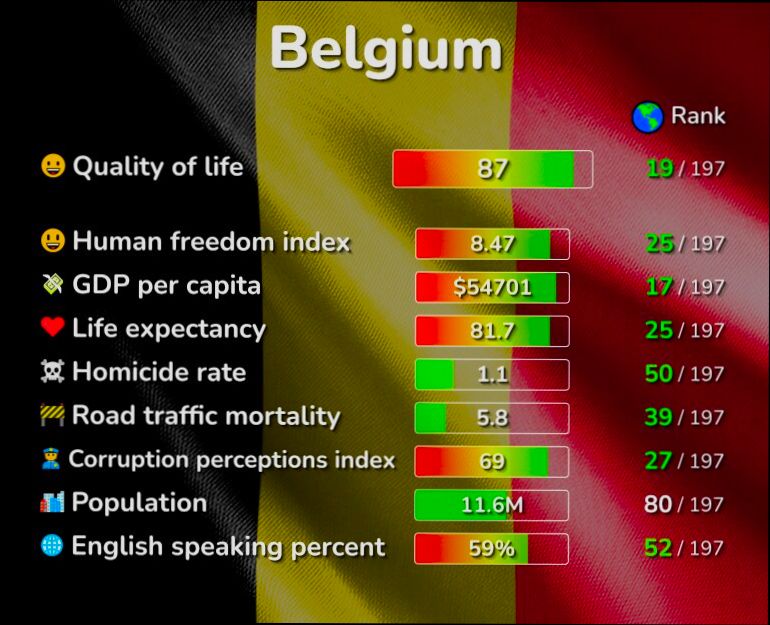
Benefits of Living in Belgium’s Affordable Regions
Choosing to reside in one of Belgium’s more affordable regions can unlock numerous advantages that not only enhance your quality of life but also positively impact your budget. With lower living costs compared to urban centers, you can enjoy a more comfortable lifestyle while taking advantage of the rich cultural and natural offerings Belgium has to offer.
Major Benefits to Consider
1. Cost-effective Housing Options
Living in affordable regions often means you can access bigger homes for lower prices. For instance, prices in areas like Namur can be significantly lower than in cities like Brussels, allowing families to enjoy larger living spaces without the hefty price tag.
2. Lower Daily Expenses
You might find that your daily expenses decrease substantially. Groceries, local markets, and dining options are often more reasonably priced, with research indicating that food costs in smaller towns can be up to 20% less than those in major cities.
3. Less Stressful Commutes
Affordable regions typically mean shorter commutes. Living in towns like Tournai or Mouscron can offer you a peaceful environment with easy access to major cities without the urban hustle and bustle. This not only saves time but can also help decrease transportation costs significantly.
4. Community and Lifestyle
Smaller towns often foster a stronger sense of community. You can engage in local events and activities, which can be more affordable compared to the commercialized options in urban centers. Many local events cater to families at little to no cost, fostering connections and social networks.
Comparative Table of Costs
| Expense Type | Urban Area (Brussels) | Affordable Region (Namur) |
|---|---|---|
| Average Housing Cost | €1,200/month | €800/month |
| Public Transport Cost | €50/month | €30/month |
| Grocery Cost | €350/month | €280/month |
| Dining Out (Dinner for 2) | €60 | €40 |
Real-World Examples
Consider the case of Sarah and Tom, a young couple who decided to move from Antwerp to Liège. They found that their monthly housing cost dropped by €300, allowing them to save for their future while still enjoying all the amenities the city offered. They report spending 15% less on groceries after discovering local markets, contributing to both their savings and enjoyment of fresh produce.
Another example includes a family of four who moved from Ghent to the outskirts of Charleroi. They discovered that their overall living expenses were reduced by approximately 30%, which allowed them to improve their lifestyle — from family vacations to extracurricular activities for their children.
Practical Implications for Readers
If you’re contemplating a move to Belgium’s affordable regions, consider budgeting for potential savings in both housing and daily expenses. Aim to explore lesser-known towns that can provide fantastic amenities at lower prices.
It’s practical to prioritize living in an area with good public transport links to larger cities. Additionally, consider visiting local markets or community events to fully immerse yourself in the culture while benefiting from lower expenses.
Overall, diving into Belgium’s affordable regions could not only ease your financial pressures but also enrich your lifestyle in ways you might not have anticipated.
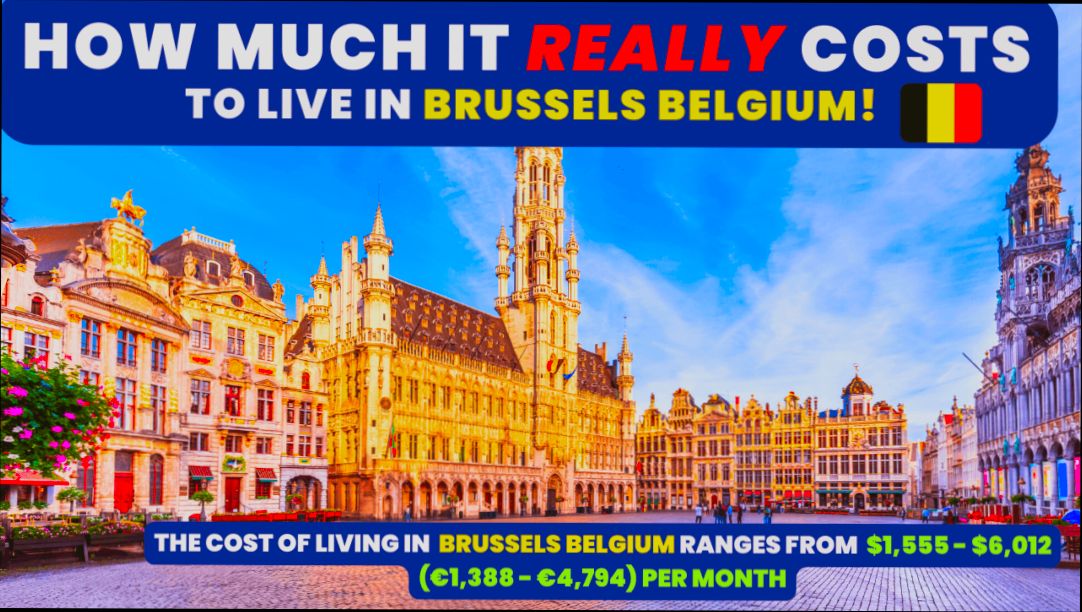
Recent Statistics on Belgium’s Cost of Living
Understanding the recent statistics around Belgium’s cost of living helps us gauge how expenses fluctuate across different aspects of everyday life. From groceries to transportation, various elements contribute to your overall budget. Let’s dive into some compelling figures and insights that paint a clearer picture.
Key Statistics to Note
- The average monthly cost for a single person in Belgium now stands at approximately €1,100, reflecting a gradual increase in urban living expenses.
- Basic utilities, including electricity, heating, and water, average around €200 per month for a standard apartment, which is essential when budgeting your living costs.
- Public transportation costs in major cities have increased by 10% over the last year, highlighting a trend of rising travel expenses for those relying on public services.
- The price for groceries has seen a notable spike, with an average grocery bill now around €300 per month, marking a 7% increase from the previous year.
Breakdown of Monthly Essentials
| Expense Category | Average Monthly Cost (€) |
|---|---|
| Rent (1-bedroom, city center) | 1,000 |
| Utilities (Electricity, Water, Heating) | 200 |
| Groceries | 300 |
| Public Transport | 50 |
| Miscellaneous (Dining, Entertainment) | 150 |
Real-World Examples
A young professional living in Brussels, for instance, finds their monthly budget ballooning due to several factors. They spend about €300 on groceries, €50 on public transportation, and their utility bills sum up to €200. This totals to €550 just on basic essentials, excluding rent or personal expenditures.
Another example is a family residing in Ghent, which reports monthly grocery costs significantly affecting their overall budget. They allocate about €600 monthly for groceries alone, showcasing how family size and needs can dramatically change living costs.
Practical Implications for Budgeting
With these statistics in mind, it’s crucial for anyone living in or moving to Belgium to plan their budget wisely.
- Budget for Changes: Consider setting aside extra for utilities, especially as rates can fluctuate with usage.
- Grocery Shopping: Be strategic about grocery shopping; prices vary widely by store, and bulk purchases can offer savings.
- Public Transport Needs: If commuting via public transport, factor in the 10% increase in fares when planning your monthly transport budget.
Actionable Facts to Keep in Mind
- Aim to allocate at least 30% of your income for rent, particularly in urban areas where living costs are higher.
- Regularly review your grocery spending habits and look for local markets or discount stores to save more.
- Stay informed on public transport fare changes to avoid surprises in your monthly expenses.
By keeping track of these recent statistics, you’ll be better equipped to manage your finances and enjoy the vibrant lifestyle that Belgium offers.