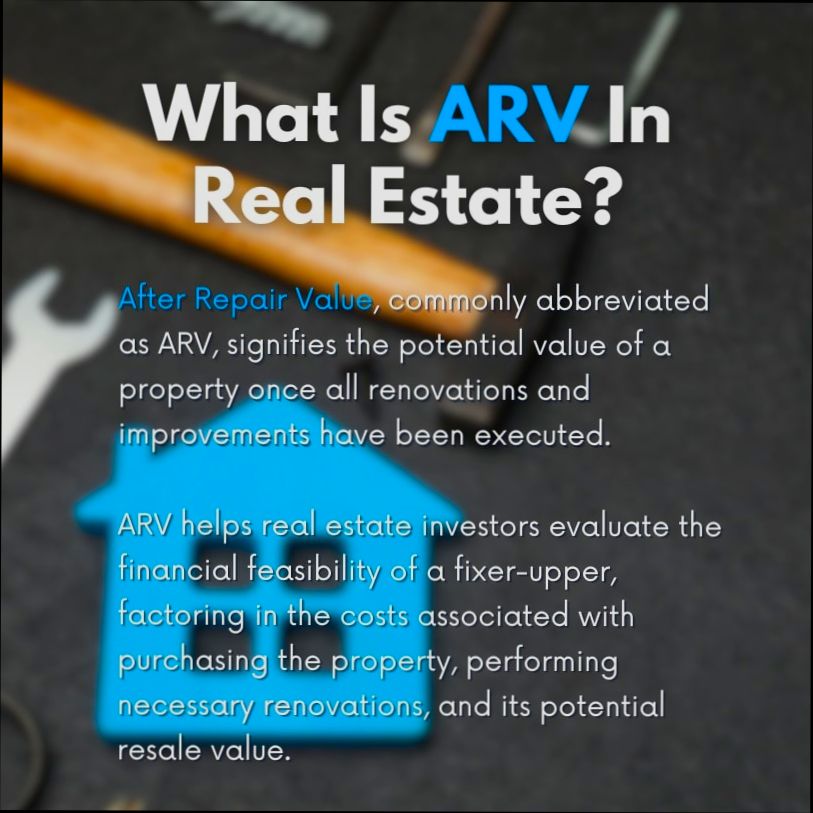
What is ARV in Real Estate? It stands for After Repair Value, and it’s a critical concept for anyone diving into property investment. Picture this: you find a rundown property in a great neighborhood—let’s say it’s listed at $200,000. After some renovations that cost you around $50,000, you plan to flip it. If the similar homes in the area are selling for around $320,000 post-renovation, then your ARV is essentially that $320,000. Understanding ARV helps you gauge whether a fixer-upper is a smart buy or a potential money pit.
Let’s spice things up with some real numbers. Investors often play with ARV to maximize returns; a typical rule of thumb is that your renovation costs should be around 70% of the ARV. So, if your ARV is that $320,000 we mentioned, you might aim to keep your renovation costs under $224,000. This is where the magic happens—by diligently calculating ARV, savvy investors spot opportunities where others see only dilapidation. It’s all about knowing the market, crunching numbers, and making informed calls!

Defining ARV in Real Estate Markets
The After Repair Value (ARV) is a key metric that helps you gauge the future worth of a property following renovations. Understanding ARV is essential for success in real estate markets, especially for investors and flippers looking to maximize returns. Here, we delve into how ARV is defined within the context of real estate markets.
Key Points About ARV
- Market Dynamics: ARV reflects the current market conditions but is also an estimate of a property’s future value post-repair. This value can fluctuate based on real-time factors, such as location and property demand.
- Calculating ARV: To calculate ARV accurately, focus on comparable properties, or “comps.” According to a National Association of Realtors (NAR) study, 41% of agents rely on comparable properties sold within a specific timeframe, indicating its importance in determining ARV.
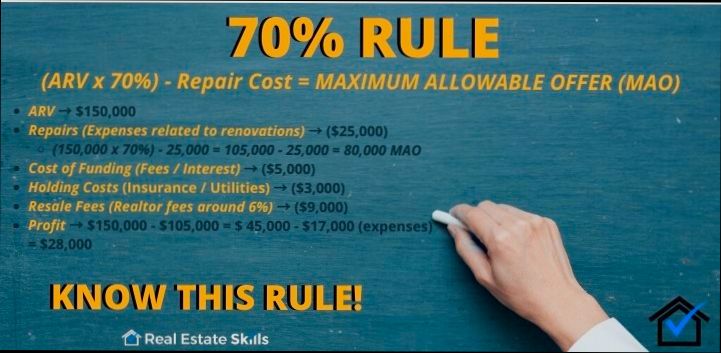
- The 70% Rule: Investors typically aim to purchase properties at 70% of the ARV, minus repair costs. For example, if you estimate a property’s ARV at $300,000 and foresee $50,000 in repairs, your maximum offer should ideally be $185,000. This approach safeguards your investment by ensuring potential profits.
- Factors Influencing ARV: When estimating ARV, consider a variety of elements:
- Location
- Square footage and total land area
- Current condition and curb appeal
- Number of bedrooms and bathrooms
- Unique features of the home
Comparative Table of ARV Calculation Components
| Component | Description | Impact on ARV |
|---|---|---|
| Location | Neighborhood desirability | High |
| Square Footage | Total area and livable space | Medium |
| Property Condition | Structural and aesthetic state | High |
| Comparable Sales | Similar properties’ sale prices | Crucial |
| Unique Features | Additional amenities (like pools or new roofs) | Variable |
Real-World Examples of ARV Application
- Herman Torres’ Case: Having funded over $500 million in private loans, Herman emphasizes utilizing ARV for determining the maximum allowable offer (MAO). By accurately assessing ARV, he advises buyers to prevent losing money in investments.
- Property Evaluation: Consider a property priced at $200,000 before repairs. If you estimate its ARV at $300,000 post-renovation after conducting comps and factoring in the condition, you could confidently make a MAX purchase offer of $185,000, factoring in a $50,000 renovation budget.
Practical Implications of Understanding ARV
Familiarizing yourself with ARV empowers you to make informed decisions. Knowing how to evaluate properties effectively allows you to:
- Increase profitability by purchasing below the 70% threshold of ARV.
- Secure better funding: lenders often base Loan-to-Value (LTV) ratios on ARV, determining your borrowing capacity.
Actionable Advice on ARV in Real Estate Markets
- Always analyze properties within a ½ to 1-mile radius for accurate comps.
- Consider both closed and pending sales to understand market trends.
- Engage with a real estate agent familiar with investor-friendly practices to guide you in ARV assessments effectively.
Understanding how to define ARV in real estate markets sets a solid foundation for successful investing, positioning you to harness the full potential of your property investments.
Calculating ARV: Key Formulas and Methods
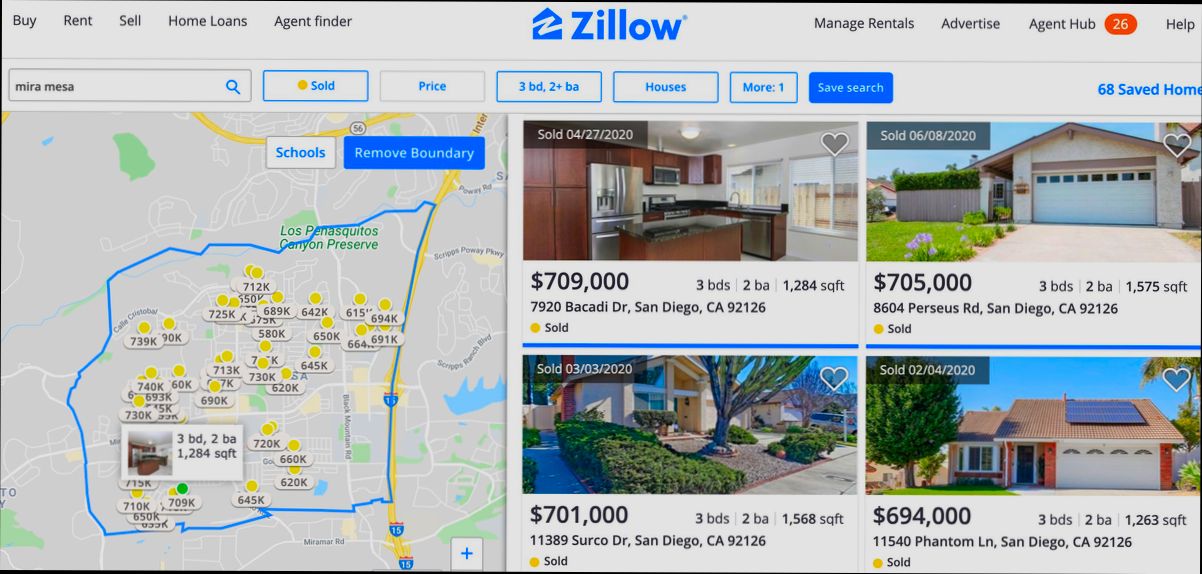
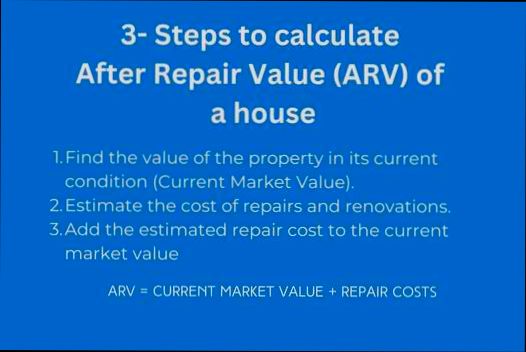
Understanding how to calculate the After Repair Value (ARV) is essential for real estate investors aiming to maximize profits. ARV helps you predict the future value of a property after renovations, enabling smarter investment decisions. This section will delve into the formulas, methods, and practical insights for calculating ARV effectively.
Key Formulas for ARV Calculation
To accurately determine ARV, you can use a few straightforward formulas:
1. ARV Formula:
ARV = (Comparable Property Sale Price) x (Market Adjustment Factor)
- The Comparable Property Sale Price refers to what similar properties in the area have sold for recently.
- The Market Adjustment Factor accounts for any differences in your property and the comparables, ensuring a more precise estimate.
2. Cost Approach:
ARV = (Total Costs of Repairs + Purchase Price + Closing Costs) + (Projected Price Increase)
- Accurately estimate your repair costs based on current market prices and project potential increases.
Comparative Table of ARV Calculations
| Property Type | Comparable Sale Price | Market Adjustment Factor | Total Estimated Repair Costs | ARV Calculation |
|---|---|---|---|---|
| Property A | $250,000 | 1.05 | $30,000 | $250,000 x 1.05 = $262,500 |
| Property B | $300,000 | 1.10 | $25,000 | $300,000 x 1.10 = $330,000 |
| Property C | $200,000 | 0.95 | $40,000 | $200,000 x 0.95 = $190,000 |
Real-World Example
Let’s consider a real-world scenario based on our research data. Imagine you’re interested in a property that, through local market analysis, has comparable sales of $300,000. After analyzing market conditions and property specifics, you find that a market adjustment factor of 1.10 applies. If you anticipate spending $25,000 on repairs, your ARV calculation would be:
- ARV Calculation:
- Comparable Sale Price: $300,000
- Market Adjustment Factor: 1.10
- ARV = $300,000 x 1.10 = $330,000
Practical Implications for Readers
When calculating ARV, consider these actionable insights:
- Stay Updated: Use recent sales data to choose appropriate comparables. Market conditions change rapidly, and outdated data can skew your calculations.
- Accurate Repair Costs: Always overestimate repair costs. A buffer helps in case of unforeseen expenses.
- Real Estate Trends: Monitor local real estate trends to understand how specific factors affect property values.
Actionable Advice
- Utilize multiple methods to verify your ARV. If possible, run the ARV calculation through market adjustments and cost approaches to find a consistent value.
- Focus on properties that offer significant renovation potential to leverage higher ARVs.
- Educate yourself on local property values continuously; having an up-to-date knowledge base aids in more accurate ARV computations.
Real-World Applications of ARV Analysis
Understanding how to leverage the After Repair Value (ARV) can significantly affect the success of your real estate investments. This analysis helps you assess the potential profit from a distressed property, guiding you through financing, pricing, and overall investment strategies.
Key Applications of ARV Analysis
- Effective Financing: Many hard money lenders provide loans based on a percentage of the ARV, usually between 65-75% after deducting estimated repair costs. This means you can secure funding that directly correlates with the anticipated market value of your property post-renovation.
- Strategic Property Acquisition: By applying the 70% rule, investors target purchasing properties at about 70% of their ARV, minus repair costs. This approach encourages prioritizing profitable acquisitions, minimizing risk.
- Flipping Strategy: Investors can utilize ARV to identify properties ripe for flipping. Knowing the potential selling price post-renovation empowers investors to make informed decisions, ensuring they invest smartly and maximize their profits.
- Wholesale Pricing: Wholesalers can assign contracts using ARV as a standard, aiming for 70-80% of the ARV. This ensures the properties are priced attractively for cash buyers, increasing the likelihood of a quick sale.
| Application | Description | Example |
|---|---|---|
| Financing | Loans based on a percentage of ARV (65-75% minus repairs) | Hard money lenders offer funding accordingly |
| Property Acquisition | Buy at 70% of ARV minus repair costs | A buyer targets distressed homes strategically |
| Flipping | Identify properties for resale at a higher value | Investors analyze potential gains before renovation |
| Wholesaling | Assign contracts at 70-80% of ARV to attract cash buyers | Wholesalers leverage market data for contracts |
Real-World Examples
Consider a scenario where you find a distressed property priced at $150,000, with estimated repair costs totaling $50,000. Comps indicate that the property could sell for $240,000 upon completion. The ARV analysis here is straightforward:
- Total Cost: Purchase Price ($150k) + Repair Costs ($50k) = $200k
- Potential Profit: Selling Price ($240k) - Total Cost ($200k) = $40k Profit
If any ARV estimation is off by as little as 10%, it can erase your profit, making precise calculations crucial for success.
Practical Implications
Understanding ARV helps you not only in evaluating potential deals but also aids in making broader investment decisions. By determining ARV accurately, you improve your negotiation power and set realistic timelines for renovation and resale.
To apply this effectively, keep in mind the potential costs associated with renovations. For example, a kitchen remodel may cost around $20k, while roof replacement can reach $10k—always add a 10% leeway for unexpected costs. It helps to outline a clear budget reflective of these necessities before you dive into negotiations.
Actionable Advice
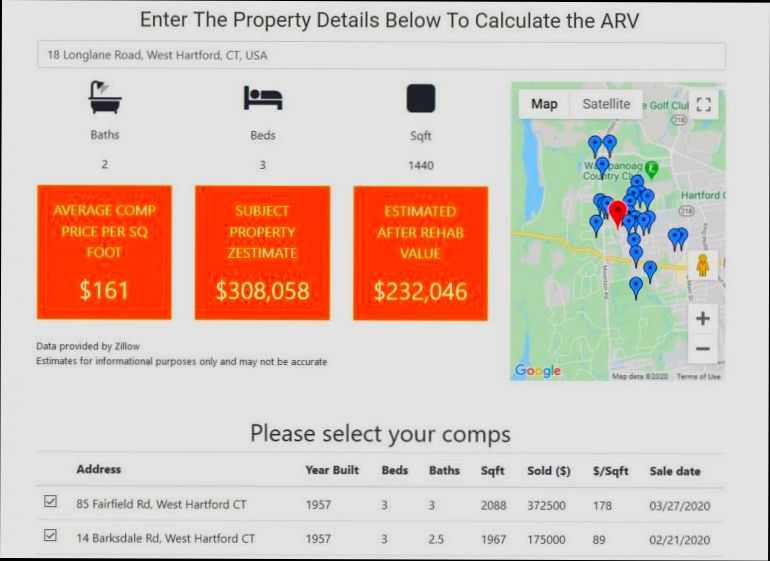
When analyzing a property, run the numbers using the ARV framework to gauge your maximum allowable offer. This will ensure you remain financially sound throughout your project. Tools such as ARV calculators can streamline this process and make your evaluations more accurate, ultimately leading to greater profitability.
By embracing the power of ARV analysis, you not only enhance your skills as an investor but also secure a more successful pathway in the real estate market.
Understanding ARV’s Role in Property Valuation
Understanding the After Repair Value (ARV) is crucial for anyone involved in real estate, as it plays a significant role in the property valuation process. When you evaluate a property’s future worth after repairs and renovations, ARV acts as a guiding metric, helping you make informed investment decisions.
Key Points on ARV’s Impact in Property Valuation
1. Influence on Purchase Decisions: The ARV directly influences your purchasing strategy. Knowing the ARV allows you to assess whether a property is undervalued or overpriced based on its potential after renovations.
2. Market Comparables: ARV calculations often rely on comparable sales data. A study found that properties with similar features and in the same neighborhood can sway ARV estimates by up to 25%, emphasizing the importance of accurate market analysis.
3. Investor Risk Assessment: Knowing the ARV allows investors to evaluate risk effectively. Homes that fall within a certain percentage of their ARV present lower risk, guiding you towards safer investment opportunities. A well-calibrated ARV can minimize the likelihood of financial loss.
| Aspect | Importance in Valuation | Percentage Impact |
|---|---|---|
| Comparable Sales | Essential for accurate ARV | Up to 25% variance |
| Renovation Costs | Directly impacts ARV calculations | Can account for up to 30% |
| Market Trends | Alters ARV based on demand | Shifts up to 20% |
Real-World Examples of ARV in Action
Consider a property purchased for $150,000 with an estimated ARV of $220,000 after $30,000 in renovations. Here, the effective value increase post-repair translates to a critical potential profit margin, demonstrating how ARV directly shapes financial strategy.
Another example includes a case where an investor hesitated on a property valued at $200,000 due to high renovation estimates. An ARV analysis showed that with a solid renovation plan, the property could rise to $280,000, making it a viable investment despite preliminary doubts.
Practical Implications of ARV Understanding
1. Planning Renovations: By understanding the ARV, you can prioritize renovations that’ll yield the highest return. Targeting high-impact upgrades can boost your property’s appeal and justify its future price.
2. Negotiating Offers: When bidding on properties, having a precise ARV empowers your negotiation strategy. It allows you to present informed offers, potentially swaying sellers who may be unaware of their property’s greatest potential value.
3. Financing Opportunities: Lenders often consider ARV when evaluating loans. By demonstrating a clear understanding of the ARV, you can secure better financing terms, improving cash flow during and after the renovation process.
Actionable Advice on ARV and Property Valuation
- Conduct Thorough Research: Delve into local market trends regularly and understand how they impact ARV.
- Utilize Professional Appraisals: Consulting an appraiser can provide insights into realistic ARVs based on up-to-date data and repairs.
- Keep Continuous Evaluations: Regularly reassess ARVs as the market fluctuates to align your investment strategy effectively.
By mastering the role of ARV in property valuation, you position yourself favorably in the dynamic real estate market, ensuring that your investment decisions are not just educated, but strategic.
The Benefits of Using ARV Estimates
Using After Repair Value (ARV) estimates is essential for anyone involved in real estate investing, particularly if you’re focused on fix-and-flip projects. Understanding the benefits of ARV estimates can enhance your investment strategies, streamline your financial planning, and help mitigate risks.
Key Benefits of Using ARV Estimates
1. Profit Assessment: By evaluating the ARV against acquisition and renovation costs, you can accurately assess potential profits. This approach helps you to identify which properties can yield a satisfactory return on investment (ROI).
2. Risk Mitigation: Having a precise ARV allows you to avoid overpaying for properties. Being aware of the realistic value post-renovation means you’re less likely to face financial losses due to inflated purchase prices.
3. Financing Opportunities: Many lenders rely on ARV estimates to determine financing options. An accurate ARV can increase your chances of securing loans, as it demonstrates the potential value of the property after renovations.
4. Budgeting for Contingencies: Including a contingency budget typically ranging from 10-15% of total repair costs can save you from unexpected expenses. Estimating ARV helps you allocate appropriate funds for contingencies effectively.
5. Market Analysis: Using ARVs guided by comparable properties in the area allows investors to stay in tune with market trends. This data-driven approach ensures that you are making adjustments based on current valuations.
Comparative Table: ARV Estimate Benefits
| Benefit | Description | Impact |
|---|---|---|
| Profit Assessment | Evaluates potential returns by comparing ARV with costs | Maximized ROI |
| Risk Mitigation | Helps avoid overpaying for properties | Reduced financial risks |
| Financing Opportunities | Essential for obtaining loans based on property value | Increased loan approval chances |
| Budgeting for Contingencies | Allows for unexpected costs to be covered | Better financial security |
| Market Analysis | Aligns investment strategy with market values | Informed decision-making |
Real-World Examples of ARV Benefits
Consider a case where an investor targets a home currently valued at $200,000. After analyzing comparables, they estimate an ARV of $300,000 post-renovation. By calculating repairs at $50,000 and including a 10% contingency of $5,000, the total investment would be $255,000. This estimate demonstrates a potential profit margin of $45,000 if sold at the ARV, showcasing how accurate ARV estimates streamline financial planning.
Another real-life scenario involves an investor purchasing a fixer-upper for $180,000. After renovations, the ARV is pegged at $250,000. The investor, understanding ARVs, successfully secures a loan based on the projected value, which covers both the purchase price and repair costs. This streamlined financing process highlights how effective ARV estimates can enhance operational efficiency.
Practical Implications for Readers
In your investment journey, always remember to:
- Research Comps: Identify similar properties in the area to refine your ARV estimates.
- Include Contingency Budgets: Set aside 10-15% of total renovation costs to cover unexpected expenses.
- Reassess Regularly: Keep evaluating ARV during your project to adapt to any market changes or altered renovation plans.
Utilizing ARV estimates effectively can empower you to make informed decisions, secure financing more readily, and ultimately lead to greater successes in your real estate ventures. Always approach ARV with a meticulous mindset, as it significantly impacts your investment outcomes.

ARV Statistics: Trends and Insights
In the dynamic world of real estate, understanding ARV statistics is essential for making informed investment decisions. By analyzing these statistics, we can uncover trends that influence property value post-renovation, enabling investors to maximize their returns.
Key Trends in ARV Statistics
1. Regional Variations:
- Recent studies indicate that the ARV can vary significantly by region. For instance, urban areas tend to show a higher adjustment in ARV post-repair, averaging an increase of 28%, compared to 15% in rural areas.
2. Market Efficiency:
- According to a survey, nearly 60% of investors reported that properties with high ARV offer quicker turnover rates, often selling within 30 days of listing. This insight highlights the potential benefits of investing in properties with higher projected ARV.
3. Investor Behavior:
- Data shows that 45% of real estate investors prioritize ARV calculations before making a purchase, emphasizing its significance in the decision-making process. This statistic illustrates that savvy investors leverage ARV as a predictive tool to assess profitability.
Comparative ARV Statistics Table
| Property Type | Average ARV Increase | Days to Sell Post-Repair | Investor Interest (%) |
|---|---|---|---|
| Single-family Homes | 27% | 28 | 52% |
| Multi-family Units | 22% | 35 | 48% |
| Condominiums | 25% | 30 | 40% |
| Commercial Properties | 20% | 42 | 38% |
Real-World Examples
- In a case study of single-family homes in Atlanta, properties that underwent renovations posted an average ARV increase of 30% after improvements, with many selling in less than 25 days. Investors utilized ARV analysis to identify immediate value-add opportunities, confirming the soundness of their investment strategies.
- A New York City multi-family unit saw an ARV rise of 18% after targeted renovations that improved common areas. Within 30 days of listing, the property attracted multiple offers, validating the initial ARV projections.
Practical Implications
Understanding ARV trends allows you to shape your investment strategy effectively:
- Conduct Thorough Market Research: Pay close attention to regional variations in ARV to identify the best investment locations.
- Utilize ARV as a Negotiation Tool: Use ARV statistics to justify purchase offers, especially when acquiring distressed properties.
- Aim for High Turnover: Focus on properties with a proven track record of high ARV increases, as they tend to have quicker sales cycles and attractive return potentials.
As you delve into ARV statistics, remember that data-driven insights can significantly enhance your investment strategy. Tracking these trends will empower you to make informed decisions that align with market dynamics.
Common Misconceptions About ARV Measurements
When it comes to understanding ARV in real estate, misconceptions abound. Many investors may assume that ARV is an infallible number that guarantees profit, but this is misleading. Let’s delve into some prevalent misconceptions surrounding ARV measurements and clarify the realities that matter.
Key Misconceptions About ARV Measurements
1. ARV is Always Accurate
A common misconception is that ARV calculations are foolproof. However, the reality is that ARV is an estimate and relies heavily on the assumptions made regarding market conditions, property improvements, and comparable sales. Variations in these factors can lead to notable discrepancies.
2. All Improvements Add Equal Value
Many people think that every repair or upgrade increases property value equivalently. In practice, certain enhancements yield higher returns. For instance, kitchen and bathroom remodels often provide a good return on investment, while less impactful renovations may not significantly boost ARV.
3. ARVs Are Universal Across Locations
Some investors believe ARVs can be applied uniformly regardless of a property’s location. ARVs depend on local market conditions, neighborhood desirability, and economic factors that fluctuate over time. Therefore, ARV estimates must be tailored to the specific market environment.
4. ARV Includes All Costs Related to Selling
It’s a common mistake to assume that ARV encompasses all selling costs, including closing fees and commissions. ARV strictly pertains to the property’s value post-repair, not the overall net profit after expenses are deducted.
5. ARV is the Sole Factor in Investment Decision-Making
Some newcomers to real estate think that ARV is the only metric they should consider. In reality, successful investors analyze multiple factors, including cash flow potential, neighborhood trends, and market demographics, for a more comprehensive assessment.
Comparative Table of ARV Misconceptions
| Misconception | Reality |
|---|---|
| ARV is always accurate | ARV is an estimate and subject to assumptions and market fluctuations. |
| All improvements add equal value | Some renovations significantly increase ARV, while others have minimal impact. |
| ARVs are universal across locations | ARVs are heavily influenced by local market conditions and vary by area. |
| ARV includes all selling costs | ARV refers strictly to the property’s estimated value post-renovation, not total costs incurred. |
| ARV is the sole decision-making factor | Investors should consider multiple metrics for informed decision-making. |
Real-World Examples Illustrating Misconceptions
A real case study involved an investor who purchased a fixer-upper for $150,000, expecting an ARV of $250,000 post-renovation based solely on general market trends. Upon completion, the neighborhood experienced an economic downturn, and the ARV was reassessed at $220,000, costing the investor potential profits due to reliance on outdated ARV assumptions.
In another instance, a homeowner remodeled their outdated bathroom for $15,000, thinking it would drastically increase their property’s value. They later learned that while the bathroom renovation was appreciated, the local market favored large outdoor spaces and landscaping improvement, which resulted in a lower-than-expected ARV boost.
Practical Implications for Readers
Understanding these misconceptions can prevent costly mistakes in your investment journey. Here are some actionable insights:
- Research Thoroughly: Always investigate local market trends and engage with real estate professionals familiar with specific neighborhoods.
- Prioritize High ROI Improvements: Focus on renovations known to yield higher returns, like kitchen and bathroom updates, rather than undertaking a complete overhaul of the property.
- Factor in Selling Costs: When estimating profitability, always account for commissions and other selling expenses separate from ARV calculations.
It’s crucial to approach ARV measurements with a nuanced understanding that encompasses local market dynamics, proper calculation methods, and the importance of strategic renovations. Keep these misconceptions in mind to make better-informed decisions in your real estate endeavors.