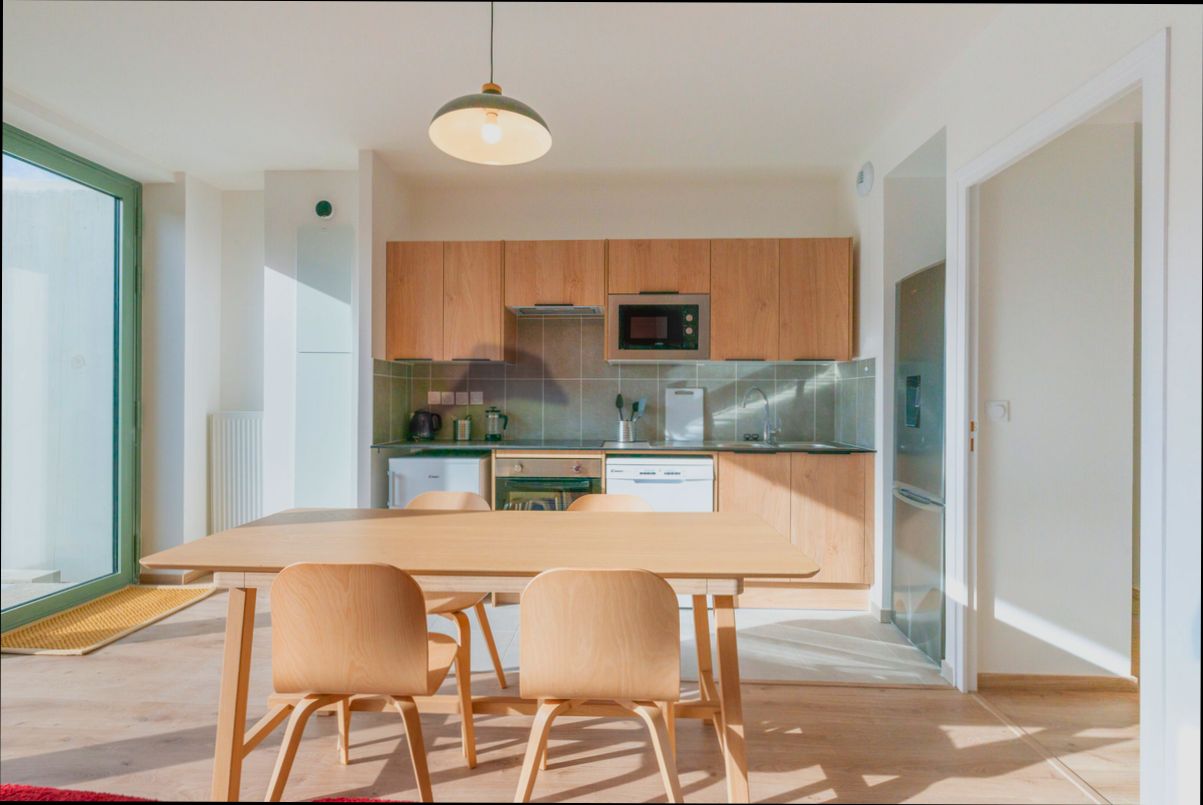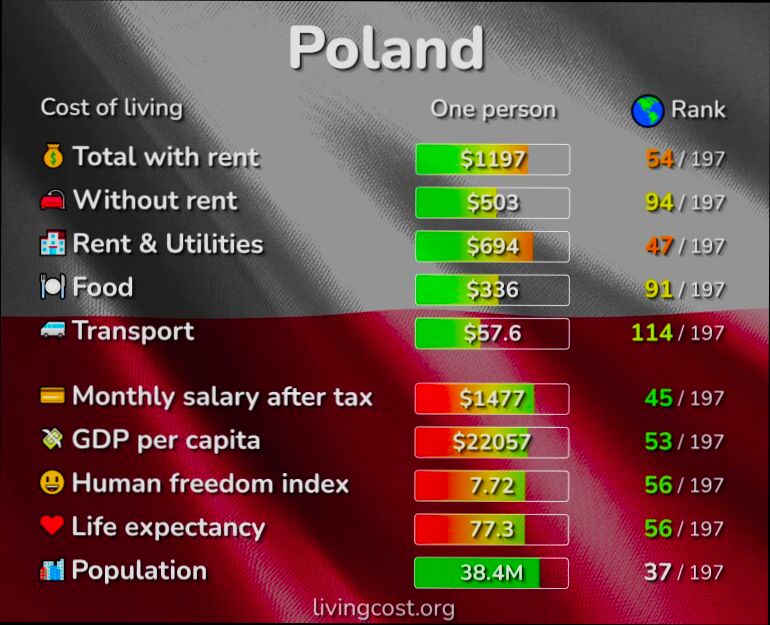
What are the Costs of Moving to Poland? Well, let’s break down what you really need to consider. First off, you’re looking at an average monthly rent of about 2,500 PLN (around $600) for a one-bedroom apartment in cities like Warsaw and Kraków. If you’re planning to live in the countryside, you might find even cheaper options, but keep in mind that amenities might be less accessible. On top of rent, factor in utilities — they can run you another 600 PLN ($140) each month. Plus, getting your belongings over can set the budget back anywhere from $1,000 to $6,000, depending on how much stuff you own and the distance you’re moving from.
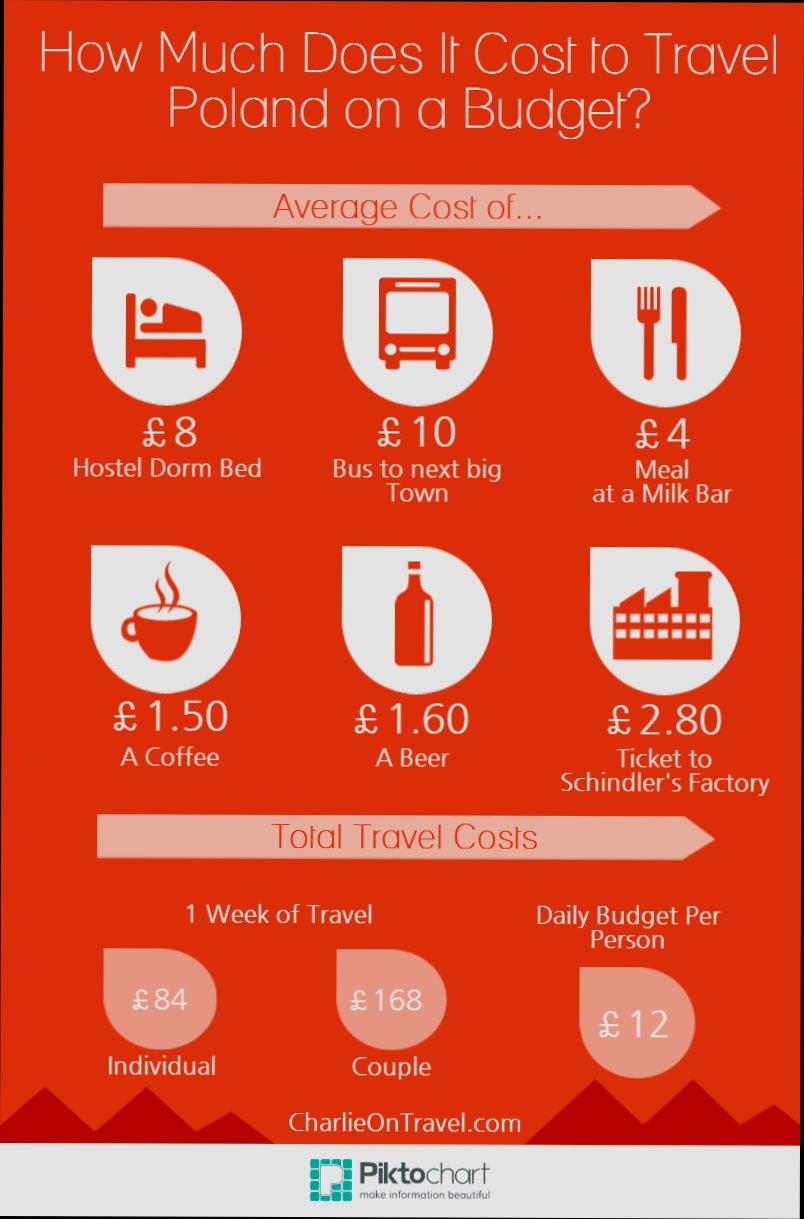
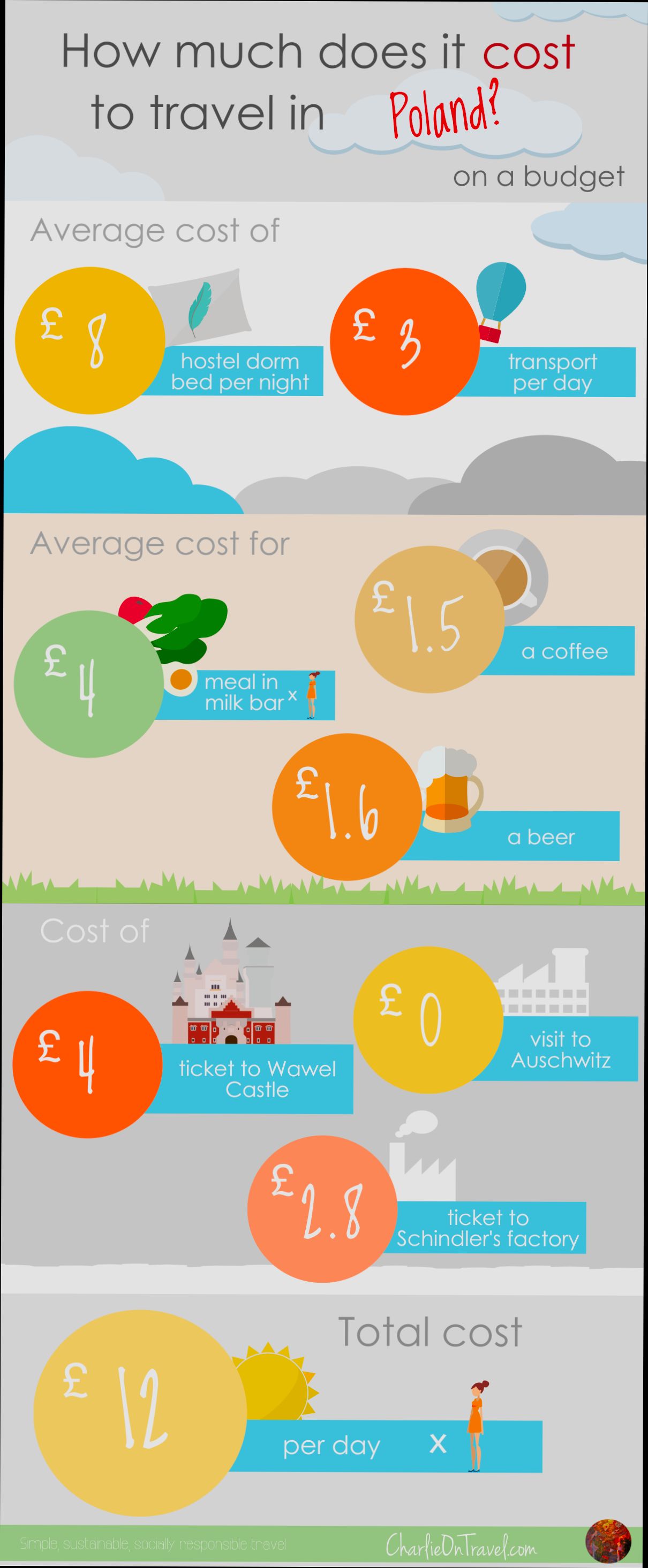
Let’s not forget about everyday expenses! A meal in a mid-range restaurant can cost you about 60 PLN ($15), while taking public transport is a steal at around 3 PLN ($0.70) per ride. If you’re bringing kids along, the tuition for international schools can range from 30,000 PLN ($7,200) to upwards of 60,000 PLN ($14,500) a year. When you add health insurance — which can be around 300 PLN ($70) monthly for a decent plan — the overall picture starts to shape up fast. So whether you’re landing in a vibrant city or a charming small town, knowing these costs upfront can make a big difference in your moving experience.
Housing and Rental Costs in Poland
When considering a move to Poland, understanding housing and rental costs is essential. It’s not just about finding a roof over your head; it’s also about budgeting wisely. Let’s dive into what you can expect when it comes to housing expenses in various Polish cities.
Average Rental Costs Across Major Cities
The average rental costs can vary significantly depending on the city you choose. Here’s a breakdown of some key figures:
- Warsaw: Average monthly rent for a one-bedroom apartment in the city center is approximately 3,300 PLN.
- Krakow: In Krakow, you can expect to pay around 2,400 PLN for a similar apartment in the city center.
- Wroclaw: Here, the average rent is about 2,800 PLN, making it a bit cheaper than Warsaw but still more than smaller cities.
Monthly Rental Prices Comparison
| City | One-bedroom Apartment (City Center) | Three-bedroom Apartment (City Center) |
|---|---|---|
| Warsaw | 3,300 PLN | 6,900 PLN |
| Krakow | 2,400 PLN | 4,800 PLN |
| Wroclaw | 2,800 PLN | 5,600 PLN |
| Gdansk | 2,600 PLN | 4,900 PLN |
| Lodz | 1,500 PLN | 3,200 PLN |
Factors Influencing Rental Costs
Several factors affect rental costs in Poland, including:
- Location: Urban centers like Warsaw and Krakow are pricier, while smaller cities like Lodz offer more affordable options.
- Proximity to Amenities: Being close to public transport, restaurants, and shopping can increase rental prices.
- Condition and Size of the Apartment: Newly renovated spaces will come at a premium, as will larger apartments.
Real-World Case Studies
Consider Anna, who recently moved to Wroclaw. She found a cozy one-bedroom apartment in a central location for about 2,800 PLN. Impressively, she had access to various essential services and public transport, making it ideal for her commute.
On the other hand, Michael relocated to Lodz and secured a larger three-bedroom apartment for just 3,200 PLN, significantly less than he’d pay in Warsaw. This allowed him to enjoy more space while staying within budget.
Practical Budgeting Insights
To make the most of your budget, consider these actionable tips:
- Research Neighborhoods: Explore various neighborhoods to find one that fits your lifestyle and budget.
- Negotiate Rent: Don’t hesitate to negotiate rent with landlords, especially if you’re looking at long-term leases.
- Consider Shared Living: If you’re open to it, sharing an apartment can significantly reduce costs, especially in more expensive cities.
Additionally, be mindful of additional expenses such as utilities, which typically range from 500 PLN to 800 PLN monthly, depending on usage and the season.
Quick Tips for Renting in Poland
- Use Popular Rental Websites: Sites like Otodom and Gratka are your best bet for finding current listings.
- Visit in Person: If possible, visits can help you gauge the neighborhood and the condition of the apartment first-hand.
- Get Acquainted with Local Laws: Familiarize yourself with tenant rights and responsibilities. Knowing your rights can save you from potential issues.
By understanding housing and rental costs thoroughly, you’ll be better prepared to find a suitable living arrangement in Poland that fits your financial plan.
Cost of Living Comparison with Other Countries
When considering a move to Poland, it’s essential to understand how the cost of living stacks up against other countries. This comparison helps you gauge how far your budget will stretch in Poland versus your current or prospective home.
Key Points on Cost of Living
- According to recent studies, the overall cost of living in Poland is approximately 30-40% lower than in many Western European countries, such as France or Germany. This significant difference can make a substantial impact on your lifestyle choices.
- Grocery prices are particularly favorable; for instance, essential items like milk and bread are about 25-30% cheaper than in the UK, making daily shopping more affordable.
- Utility costs also tend to be lower. On average, residents in Poland spend around 100-150 PLN per month less on utilities compared to those in Italy.
- Transport costs in Poland, including public transportation fares, are about 50% cheaper than in cities like Stockholm or Amsterdam, allowing you to explore the country without breaking the bank.
Cost of Living Comparison Table
| Category | Poland (PLN) | France (EUR) | Germany (EUR) | Italy (EUR) |
|---|---|---|---|---|
| Monthly Rent (1BR) | 3,300 | 1,200 | 1,000 | 900 |
| Meal at Restaurant | 50 | 15 | 12 | 15 |
| Groceries (Monthly) | 800 | 300 | 270 | 280 |
| Utilities (Monthly) | 400 | 170 | 180 | 160 |
| Public Transport Fare | 3.00 | 1.90 | 2.70 | 2.00 |
Real-World Examples
In a recent survey, expats reported that after relocating from the UK to Poland, they found their monthly expenses reduced by nearly 25%. For those who previously spent £1,500 in London, their budget shrank to about £1,125 in Warsaw, leading to a higher quality of life with additional savings for leisure activities.
Another notable case is a couple moving from Italy to Kraków. They found that the monthly expenses for dining out decreased by more than 40%, allowing them to enjoy more frequent outings without worrying about their finances.
Practical Implications for Readers
Understanding the cost of living comparison is crucial. You can enjoy a lifestyle in Poland that might be financially constrained elsewhere. With careful budgeting, you can afford more while earning the same amount, especially if you’re transitioning from a higher-cost country.
Consider these factors:
- Think about how much you currently spend and the potential savings when moving.
- Utilize online cost of living calculators before your move to ensure you’re making informed financial decisions.
When budgeting, take into account the initial setup costs but remember that ongoing costs will likely be lower, enabling you to save or allocate those funds for travel within Europe.

Understanding Visa and Immigration Fees
When planning your move to Poland, one important aspect you’ll need to navigate is the visa and immigration fees. This expense can vary greatly depending on the type of visa you require, your nationality, and the length of your stay. Let’s break down the key fees you might encounter and what they mean for your budget.
Types of Visa Fees
1. Short-Stay Visa (Schengen Visa): If you’re planning to stay in Poland for up to 90 days, this is the visa you’ll need. The fee for a Schengen visa typically ranges from 80 EUR for adults to 40 EUR for children aged 6-12.
2. Long-Stay Visa (National Visa): For stays over 90 days, you’ll usually apply for a National Visa. The application fee is around 340 PLN (approximately 75 EUR). This visa is essential for anyone looking to work, study, or join family members in Poland for an extended period.
3. Residence Permit: If you plan to settle in Poland longer, a residence permit is necessary. The application fee can be around 640 PLN (roughly 140 EUR), which covers both document processing and residence issuance.
Here’s a quick overview of the fees:
| Visa Type | Fee (in EUR) | Fee (in PLN) |
|---|---|---|
| Short-Stay Visa | 80 | 340 |
| Long-Stay Visa | 75 | 340 |
| Residence Permit | 140 | 640 |
Additional Fees to Consider
While the visa fees themselves are the main costs, there are additional items to factor into your budget:
- Document Translation and Legalization: Any documents not in Polish may require translation. Certified translations can cost around 100 PLN per document.
- Health Insurance: Proof of health insurance is often necessary when applying for a visa. A policy that meets the Schengen requirements can range from 40 to 100 PLN per month, depending on the cover.
- Application Fees for Family Reunification: If you’re bringing family members with you, additional fees might apply, usually around 100 PLN per dependent.
Real-World Example
For instance, say you’re a couple moving to Poland and each of you requires a National Visa. Your total visa costs could look something like this:
- Two National Visa applications: 2 x 340 PLN = 680 PLN
- Health insurance for both: 2 x 100 PLN = 200 PLN
- Translation of documents: 3 documents x 100 PLN = 300 PLN
Your total estimated visa-related expenses would be around 1,180 PLN (approximately 260 EUR).
Practical Implications for Your Move
Understanding these fees is critical in planning your move. Here’s what to keep in mind:
- Budget Appropriately: Make sure you account for all visa types you may need and any additional verification services.
- Prepare Documentation Early: Organizing paperwork in advance can prevent unexpected delays and additional costs.
- Seek Professional Assistance if Needed: Given that immigration processes can be complicated, hiring a consultant might be beneficial despite the extra fee.
Being aware of the visa and immigration fees will help you plan effectively for your new life in Poland and minimize any surprises along the way.
Healthcare Expenses for Expatriates
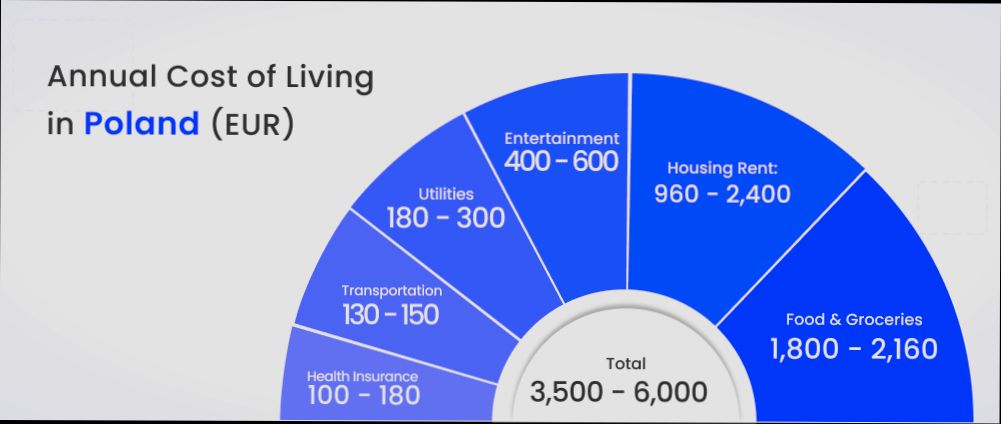
Navigating healthcare expenses as an expatriate in Poland can feel daunting, but understanding your options will make the process smoother. Healthcare in Poland is generally affordable compared to Western countries, yet expats often face unique challenges when choosing health insurance and accessing medical services.
Understanding Health Insurance Options for Expats
When moving to Poland, it’s crucial to assess your health insurance needs carefully. Most expatriates can choose between international and local health insurance plans, each with distinct benefits.
1. International Health Insurance Plans:
- These plans cater to those frequently traveling or living in various countries.
- Policies typically cover a wider array of services, including emergency care, specialist consultations, and maternity services.
- Premiums can vary significantly based on age, medical history, and coverage level.
2. Local Health Insurance Plans:
- Designed for those who plan to stay in Poland long-term.
- Usually more affordable but may have limitations in coverage and network providers.
Key Points to Consider
Before enrolling in a health plan, here are some essential aspects to keep in mind:
- Degree of Coverage: Look for policies that provide extensive coverage, including routine check-ups and emergency care.
- Geographic Restrictions: Understand where your policy is valid. Some international plans may have limitations on their coverage in specific regions.
- Claim Process: Opt for plans with straightforward claim processes to avoid frustration during medical emergencies.
- Access to Networks: Ensure your chosen insurance allows access to a wide network of providers, which can make appointments and treatments more convenient.
Comparative Table: Average Healthcare Costs
| Service Type | Average Cost (PLN) | Coverage under International Plans | Coverage under Local Plans |
|---|---|---|---|
| General Practitioner Visit | 150 | Yes | Yes |
| Specialist Consultation | 250 | Yes | May require additional fees |
| Emergency Room Visit | 600 | Yes | Often included |
| Hospital Stay (per day) | 800 | Yes (high-quality treatment) | Basic coverage varies |
| Prescription Medication (average) | 50 | Often partially covered | Fully covered under some plans |
Real-World Examples
Consider Sarah, an expatriate from the UK who relocated to Warsaw. She initially chose an international health insurance policy provided by Cigna Global. This policy allowed her to receive specialized care with minimal out-of-pocket expenses. However, she discovered that while routine check-ups were covered, certain elective procedures required authorization and took longer for approval.
In contrast, David, an expat from Canada, opted for a local health insurance plan. While his plan was cheaper, he faced longer waiting periods for specialist consultations and found that some services were only partially reimbursed.
Practical Implications for Expats
When selecting health insurance, weigh the benefits carefully against the costs. A more expensive international plan may provide better access to care and faster services, which can be crucial in emergencies. Moreover, familiarize yourself with the Polish healthcare system to make informed choices about local healthcare facilities and specialists.
Actionable Advice
- Before moving, research at least three health insurance providers to compare their coverage options and costs thoroughly.
- Always read the fine print of your insurance policy to understand exclusions and the claim process.
- Consider joining expatriate forums or groups in Poland to gain insights from others who have navigated the healthcare system.
Real-World Examples of Moving Budgets
When planning a move to Poland, it’s crucial to create a detailed budget that reflects not just the costs you anticipate but also those you might not expect. I’ve gathered some real-world examples that show how various expats budget their moves, which can help you craft a realistic financial plan.
Key Budget Categories to Consider
When considering a moving budget to Poland, keep these categories in mind:
- Transportation Costs: Depending on your current location, flights might vary dramatically. For example, a one-way ticket from New York to Warsaw can range from 2,500 PLN to 4,000 PLN.
- Furniture and Household Items: Many people opt to buy new furniture upon arrival. For a typical two-bedroom apartment, budget 8,000 PLN to 15,000 PLN to furnish it adequately.
- Initial Living Expenses: Make sure to account for at least one to two months of living expenses, including utilities, groceries, and transport. This could range from 3,000 PLN to 5,000 PLN.
| Expense Type | Estimated Cost (PLN) |
|---|---|
| One-way Flight | 2,500 - 4,000 |
| Furniture and Household Items | 8,000 - 15,000 |
| Initial Living Expenses | 3,000 - 5,000 |
Real Examples of Moving Budgets
1. Family Budgeting for Warsaw:
A family of four moving from London allocated around 35,000 PLN for their move. This included:
- 12,000 PLN for flights,
- 15,000 PLN for shipping their belongings,
- 8,000 PLN for setting up their new home, including deposits and rent for the first month.
2. Individual Relocation to Kraków:
An expat moving to Kraków set aside a budget of 22,000 PLN. His breakdown was:
- 3,000 PLN for flights,
- 10,000 PLN on rental deposits and the first month’s rent,
- 3,000 PLN for minor expenses like groceries and public transport,
- 6,000 PLN finally spent on internet setup and basic furniture.
3. Couple Moving to Wrocław:
A couple relocating to Wrocław wanted to be well-prepared. They planned a budget of 28,000 PLN:
- 4,000 PLN for flights,
- 6,000 PLN for shipping personal items,
- 4,500 PLN for a one-month rental deposit and living expenses,
- 13,500 PLN dedicated to furniture and other household necessities.
Practical Implications
Understanding these real-world examples gives you clarity on the potential costs of moving to Poland. By reviewing different scenarios, you can adjust your own budget accordingly.
- Ensure you account for unforeseen expenses, often some costs can arise during the actual move.
- Budget for at least 10-15% more than you anticipate for incidentals.
By carefully planning your moving budget with these insights, you will be better equipped to manage your finances effectively during this transition.

Potential Financial Benefits of Relocating
Relocating to Poland can offer a variety of financial benefits that might not be immediately apparent. By exploring these advantages, you can better understand how moving might enhance your fiscal landscape. Let’s dive into some of these benefits, showcasing how a move to Poland could be a strategic financial decision.
Tax Benefits and Deductions
One of the most notable financial perks of relocating to Poland is its favorable taxation system for expatriates. If you’re working remotely or have income from outside the country, you can take advantage of:
- Liberal tax deductions: You can potentially deduct expenses related to your relocation, including moving costs if you meet specific criteria.
- Lower income tax rates: Poland has a progressive tax system, with lower rates compared to many Western countries. The income tax starts at 17% and caps at 32%, which can be a significant reduction if you’re coming from a country with higher tax obligations.
Utility Cost Reductions
The utilities costs in Poland further highlight the financial benefits of relocating. You might find that your monthly expenses for essential services are notably lower. For example:
- Average electricity costs for a standard apartment in Poland are around 250 PLN monthly, compared to about 400 PLN in Western Europe.
- Water and heating expenses can also be significantly less, often totaling less than 300 PLN per month depending on the size of your residence and lifestyle habits.
Transportation Savings
In Poland, transportation offers an affordable public transit system, which could cut down your overall expenditure:
- Monthly public transport passes in major cities like Warsaw or Krakow are around 100-150 PLN, while gas prices are lower than those in many Western countries.
- The average cost of owning and maintaining a car can be up to 25% lower than in countries like Germany or the UK, particularly when factoring in vehicle-related taxes, insurance, and maintenance costs.
| Cost Category | Poland Average Cost (PLN) | Western Europe Average Cost (PLN) |
|---|---|---|
| Monthly Electricity | 250 | 400 |
| Water and Heating | 300 | 500 |
| Public Transport Pass | 100-150 | 200-250 |
Real-World Examples
Consider the story of Mark, who moved from the UK to Poland last year. He reported saving nearly 40% on his monthly living expenses, largely due to lower rent and utility bills. Mark also took advantage of Poland’s tax incentives, allowing him to reinvest savings into his business.
Another case is Laura, an expat teacher from Canada, who found that her overall cost of living decreased by about 30%. By using public transportation and enjoying a more budget-friendly dining scene, she managed to allocate more funds towards travel and personal interests.
Practical Implications for Readers
For those considering relocating, it’s vital to analyze your financial situation before making any decisions. With the potential for lower taxes, reduced utility expenses, and affordable transportation options, you could see substantial savings while enjoying a vibrant lifestyle in Poland.
If you’re planning to move, here are actionable steps you can take:
1. Research Tax Regulations: Ensure you understand the tax obligations versus benefits of moving to Poland.
2. Compare Utility Providers: Before moving, look into utility options and costs to gauge what to expect.
3. Calculate Transportation Alternatives: Assess whether using public transport could fit into your daily routine, allowing further savings.
Additionally, consider your potential earnings in Poland compared to your current income; you may find the balance tilting in favor of greater financial freedom. Engaging with a financial advisor who understands the implications of relocating can also yield tailored insights to maximize your benefits.
Statistical Insights on Moving Expenses
Understanding the costs associated with moving to Poland involves more than just housing and living expenses; delving into specific moving expenses can reveal significant insights. Let’s take a closer look at the statistics surrounding moving costs and how they can impact your overall budget.
Key Statistics on Moving Expenses
- The average cost of hiring a moving company for a domestic relocation within Poland is approximately 3,500 PLN. This can fluctuate based on the distance and specific services needed.
- If you’re moving internationally to Poland, expect to pay around 10,000 to 15,000 PLN for a standard 20-foot shipping container, depending on the origin country.
- For smaller moves, the cost of a typical packing service is around 1,500 PLN, which covers packing materials and labor.
- The average cost for temporary storage solutions during a move can be about 500 PLN per month, which is vital if your new residence isn’t ready right away.
| Move Type | Average Cost (PLN) | Description |
|---|---|---|
| Domestic Move | 3,500 | Standard fee for local relocations |
| International Move | 10,000 - 15,000 | Cost for a 20-ft shipping container |
| Packing Service | 1,500 | Includes materials and labor for packing |
| Temporary Storage | 500 | Monthly fee for storage solutions during transition |
Real-World Examples
In a recent survey, expatriates reported diverse experiences when relocating to Poland. One individual moving from the UK shared that their total moving expenses reached about 12,000 PLN, inclusive of international shipping and temporary housing. On the other hand, a family moving from within Poland noted a lower overall expense of 4,200 PLN, primarily focusing on local transportation and packing services.
Another case highlighted that those opting for self-service moves—where individuals handle their packing and logistics—could cut their costs by nearly 30% compared to full-service movers. This option can be particularly appealing for budget-conscious individuals.
Practical Implications
Understanding the financial aspects of moving expenses can help you strategize effectively. Here are some actionable insights:
- Plan Ahead: Research moving company quotes well in advance to compare rates and services, as they can differ significantly.
- Consider Packing Your Own Items: If feasible, packing your belongings can lead to substantial savings.
- Explore Storage Options: If time allows, look into multiple storage providers to find competitive rates that suit your temporary storage needs.
Paying attention to these moving expense statistics can empower you to make informed choices during your relocation process, ensuring that you stay within your budget while transitioning to life in Poland.