Pros and Cons of Living in Santa Maria CA can vary widely depending on what you’re looking for in a place to call home. On the upside, you’ve got the gorgeous Central Coast weather—averaging about 70 degrees year-round—which means you can enjoy outdoor activities almost any day. Plus, the local wine scene is impressive; with over 130 nearby wineries, it’s a paradise for wine enthusiasts. And let’s not forget about the cost of living—homes are typically more affordable compared to neighboring coastal towns like Santa Barbara, making it a more accessible spot for families and young professionals.
However, Santa Maria isn’t all sunshine and wine. The job market can be a challenge, with local employment opportunities often leaning heavily towards agriculture and manufacturing. If you’re in tech or creative fields, you might find the options a bit limited. Also, while it boasts a family-friendly vibe, some areas struggle with higher crime rates; in fact, neighborhoods like the City Center report crime rates above the national average. It’s a mixed bag, for sure, and understanding these nitty-gritty details can really help in deciding if Santa Maria fits your lifestyle.

Cost of Living Analysis in Santa Maria
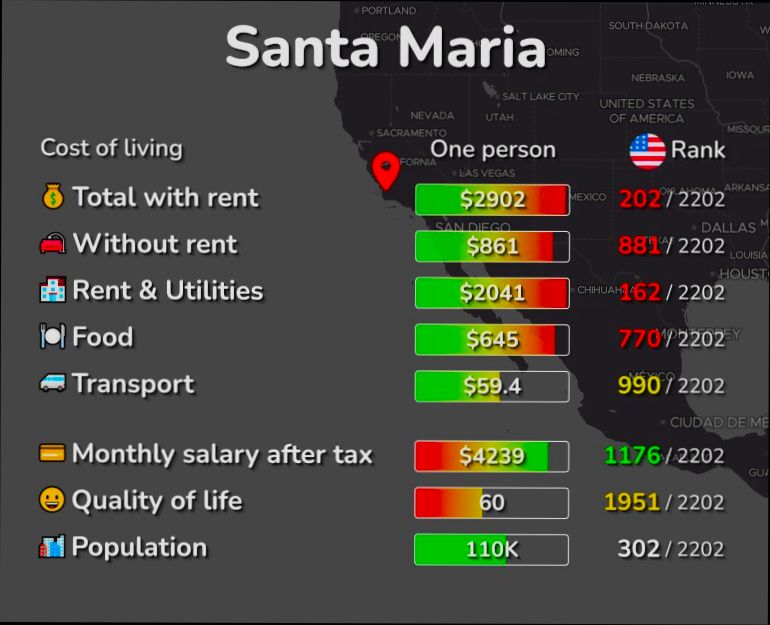
When you’re considering a move to Santa Maria, understanding the cost of living is crucial. Let’s dive into the numbers and see how they stack up against other areas, providing you with clarity on what to expect.
Housing Costs
Housing is typically the biggest factor in the cost of living. In Santa Maria, the median home price is approximately $530,000, which is about 5% lower than the California average. However, for renters, the median rent for a two-bedroom apartment sits around $2,200 per month. This rate can vary significantly depending on the neighborhood, so do your research on areas that fit your budget.
- Median Home Price: $530,000
- Median Rent (2-bedroom): $2,200
Utility Costs
When you factor in utilities, Santa Maria tends to have slightly lower costs compared to larger urban centers. On average, residents can expect to pay around $150 per month for basic utilities, which include electricity, heating, cooling, water, and garbage. Internet services add about $70, making the total utility expenses manageable.
| Expense Type | Average Monthly Cost |
|---|---|
| Basic Utilities | $150 |
| Internet | $70 |
| Total Utilities | $220 |
Groceries and Transportation
When it comes to groceries, you might spend approximately 6% more than the national average. Essential items like milk or bread do cost a bit extra due to local pricing. Transportation is also a key part of your budget. Gas prices tend to fluctuate but generally average around $4.50 per gallon, which could affect your overall commuting costs.
- Grocery Expenses: 6% above national average
- Average Gas Price: $4.50 per gallon
Real-World Example
To bring this to life, let’s consider a scenario. If you’re a family of four planning to live in Santa Maria, your projected monthly expenses could break down like this:
- Housing: $2,200 (rent)
- Utilities: $220
- Groceries: $800
- Transportation: $300 (assuming moderate commuting and gas price)
This puts you at about $3,520 just for basic living expenses, excluding entertainment or healthcare costs.
Practical Implications
Knowing these costs allows you to plan your budget effectively. If you’re moving from an area with a lower cost of living, such as the Midwest, you might find yourself needing to adjust your expectations and expenditures. It’s important to factor in not only housing but also your daily living expenses to avoid financial strain.
- Create a budget spreadsheet to track your spending.
- Explore neighborhoods to identify where you can save on housing.
- Consider local grocery stores versus chain supermarkets for better deals.
Santa Maria offers a unique balance of affordability relative to larger cities while providing a desirable quality of life.
The Climate’s Impact on Lifestyle
Living in Santa Maria, California, means enjoying a Mediterranean climate that greatly influences lifestyle choices and daily activities. With warm, dry summers and mild, wet winters, this climate presents a unique backdrop for outdoor living, recreational activities, and even community events.
Key Climate Characteristics
- Temperature Range: Average daytime temperatures in Santa Maria generally range from 60°F to 80°F.
- Precipitation: The city averages about 15 inches of rain per year, mainly occurring from November to March.
- Sunshine: Santa Maria enjoys approximately 300 sunny days annually, encouraging outdoor pursuits.
The impact of this climate on lifestyle is significant. Here are some ways it shapes everyday living:
- Outdoor Activities: With favorable weather conditions, residents often engage in outdoor sports, hiking, or beach outings. Parks such as Waller Park provide ample space for family gatherings and picnics.
- Gardening Opportunities: The mild winters allow for year-round gardening, with many locals growing fruits and vegetables. This not only encourages sustainable living but also fosters community through farmer’s markets.
- Health and Wellness: The abundance of sunny days promotes an active lifestyle, which is linked to better mental and physical health. Outdoor fitness programs thrive here.
Recreational Activities
| Activity | Frequency | Optimal Months |
|---|---|---|
| Hiking | Weekly | Year-round |
| Beach Visits | Bi-weekly | March to October |
| Outdoor Events | Monthly | Spring to Fall |
| Farmers Markets | Weekly | Year-round |
Real-World Examples
Many residents have adopted active lifestyles that revolve around the climate. For example, the Santa Maria Valley Highway 101 Bike Trail is popular for cyclists and joggers. Events such as the Santa Maria Valley Strawberry Festival make use of the pleasant weather, bringing the community together to celebrate local agriculture.
Additionally, with favorable climates, brewing companies like the Santa Maria Brewing Company thrive, hosting outdoor events that attract both locals and visitors. These activities foster a vibrant community spirit.
Practical Implications for Residents
If you’re considering a move to Santa Maria or enhancing your lifestyle there, take advantage of the climate by:
- Joining Outdoor Exercise Groups: Look for local running clubs, yoga in the park classes, or cycling groups.
- Participating in Seasonal Events: Engage in seasonal festivals and community gatherings that expand your social circles and enhance your community involvement.
- Exploring Gardening: Transform your backyard into a vegetable or flower garden to benefit from the year-round growing season.
Living in Santa Maria allows you to embrace a lifestyle enriched by a beautiful climate. By acknowledging how the weather influences daily activities and community interactions, you can significantly enhance your quality of life in this charming California city.

Cultural Diversity and Community Engagement
Cultural diversity and community engagement are integral aspects of life in Santa Maria, revealing the vibrant tapestry of experiences and identities that shape the community. In this section, we explore the multifaceted nature of this diversity and how it impacts engagement, collaboration, and overall community well-being.
Key Aspects of Cultural Diversity
Living in Santa Maria exposes you to a variety of cultural backgrounds, enriching community interaction. Here are some noteworthy statistics highlighting cultural diversity and its implications:
- 67% of job seekers prioritize workplace diversity, reflecting the importance of inclusive workplaces.
- Almost 50% of employees express a desire for companies to focus more on diversity initiatives, showing community members’ recognition of its value.
- An impressive 79% of candidates utilize social media to evaluate diversity, equity, and inclusion (DEI) efforts of local companies before seeking employment.
Cultural Diversity and Community Engagement Table
| Aspect | Statistic |
|---|---|
| Job Seekers Prioritizing Diversity | 67% |
| Employees Desiring Greater Focus on DEI | 50% |
| Candidates Using Social Media for DEI | 79% |
| Workers Experiencing Discrimination | 45% |
| Employees with D&I Policy | 55% |
Real-World Examples
Engaging with cultural diversity is not just about numbers; it’s also about real experiences. For instance, local organizations in Santa Maria often hold community events celebrating different cultural festivals, like Dia de los Muertos and Filipino Heritage Month. These celebrations not only showcase various traditions but also promote inclusivity and understanding among residents.
Additionally, reports indicate that arts and cultural practices can significantly enhance social cohesion. Local artists and groups collaborate on projects that highlight Santa Maria’s diverse heritage, fostering community connections and engagement, as noted in the WE-Making report by the National Endowment for the Arts.
Practical Implications for Community Members
For those residing in Santa Maria, embracing cultural diversity can enhance social interactions and personal connections. Here are a few actionable insights:
- Attend local cultural events to immerse yourself in the community’s rich heritage.
- Advocate for inclusive policies within your workplace and local organizations, especially considering that 55% of employees are in workplaces with a D&I policy yet still feel unsafe.
- Use social media platforms not just for entertainment but also to engage with community initiatives and support local DEI efforts.
Specific Facts and Advice
Remember, cultural diversity in Santa Maria is not just an abstract concept; it’s a tangible part of daily life. Take the time to evaluate how your actions contribute to community engagement. Engage with diverse groups, participate in discussions, and advocate for equitable practices in all areas of life. Understanding that 45% of American workers experience workplace discrimination can drive a personal commitment to fostering a more inclusive community atmosphere.

Employment Opportunities and Economic Growth
Living in Santa Maria, California, presents various opportunities and challenges in terms of employment and economic growth. Understanding the local economy can help you make informed decisions about your career prospects and financial wellbeing.
Key Employment Insights
- Diverse Employment Sectors: Santa Maria’s economy is anchored by several key sectors, including agriculture, manufacturing, and retail. In fact, agriculture alone accounts for a significant portion of the local economy, providing numerous jobs related to farming, food processing, and distribution.
- Unemployment Rate: The city’s unemployment rate has shown resilience, currently hovering around 4.5%. This figure is just below the national average, indicating a relatively stable job market.
- Average Salary Trends: The average income in Santa Maria is approximately $80,000 per annum, which is competitive for the region and reflective of the diverse job opportunities available.
Comparative Employment Data
| Employment Sector | Number of Jobs | Average Salary |
|---|---|---|
| Agriculture | 6,200 | $50,000 |
| Manufacturing | 4,800 | $70,000 |
| Retail | 5,500 | $35,000 |
| Healthcare | 3,200 | $65,000 |
| Education & Services | 2,700 | $55,000 |
Real-World Examples
- Local Companies: Notable employers in the area, like Santa Maria Valley Medical Center and various agricultural enterprises such as Ocean Mist Farms, demonstrate the diversity and growth potential of job opportunities. These companies regularly seek talent across multiple professions, providing ample opportunities for skilled workers.
- Economic Development Initiatives: Programs initiated by the city aim to foster growth in technology and green energy sectors. For instance, the Santa Maria Valley Chamber of Commerce has launched initiatives to attract tech startups, further diversifying job opportunities and enhancing economic growth.
Practical Implications for Residents
- Job Search Strategies: Leverage local resources such as job fairs, community centers, and online job boards dedicated to the Santa Maria area. Many sectors are actively hiring, especially in agriculture and healthcare.
- Networking Opportunities: Engage with local networking groups or chambers of commerce to expand your professional connections. Building a network can significantly impact job placement and growth in your chosen field.
- Upskilling and Education: Consider continuing education programs or certifications that align with the growing sectors in Santa Maria. These investments enhance your employability and can lead to higher income opportunities.
- Rising Homeownership: With a homeownership rate of 49.7% in Santa Maria, many residents prioritize economic stability and job opportunities to secure and maintain property investments. This trend reflects a commitment to growth and community investment.
Investing time in understanding Santa Maria’s employment landscape can propel your career forward and contribute to sustaining the local economy. Explore the local market and take proactive steps to position yourself for success in this growing community.

Benefits of Proximity to Natural Attractions
Living in Santa Maria, California, offers remarkable advantages due to its proximity to stunning natural attractions. This region is surrounded by vibrant landscapes, making it an ideal place for outdoor enthusiasts and nature lovers. Not only do these natural attractions provide recreational opportunities, but they also promote a healthy lifestyle and a strong sense of community.
Health and Well-being
Being near natural attractions like parks, beaches, and trails can significantly enhance your mental and physical well-being. Research indicates that spending time in these natural settings can reduce stress, improve mood, and even increase life expectancy. For instance, a survey revealed that individuals living close to parks are 30% more likely to engage in regular exercise compared to those who do not have easy access to outdoor spaces.
Recreational Opportunities
The diverse topography around Santa Maria offers an array of recreational activities:
- Hiking in the nearby Los Padres National Forest
- Surfing along the Pacific coastline
- Wine tasting in local vineyards
These activities not only promote an active lifestyle but also provide opportunities for social interaction and community engagement.
Economic Benefits
Natural attractions also play a significant role in local economies, bolstering businesses related to outdoor recreation. For example, businesses linked to outdoor activities such as kayaking, cycling tours, and guided hiking experiences have seen an increase in patronage by up to 25% during peak tourist seasons. As a resident, you’ll benefit from the vibrancy these attractions bring to Santa Maria.
Comparative Table of Natural Attractions
| Natural Attraction | Distance from Santa Maria | Activities Available |
|---|---|---|
| Los Padres National Forest | 30 miles | Hiking, camping, wildlife observation |
| Vandenberg Space Force Base | 14 miles | Educational tours, viewing launches |
| Santa Maria Valley Wine Country | 10 miles | Wine tasting, vineyard tours |
| Pismo Beach | 21 miles | Surfing, beach volleyball, hiking trails |
Real-world Examples
Numerous local events throughout the year spotlight the connection between Santa Maria and its natural surroundings. The Santa Maria Valley Strawberry Festival, for example, not only celebrates the region’s agricultural bounty but also incorporates outdoor activities such as strawberry picking and nature walks. These events foster community spirit while allowing residents to appreciate their beautiful environment.
Furthermore, many residents take part in local outdoor clubs that organize group hikes and outdoor classes, reinforcing how proximity to nature encourages community-building activities.
Practical Implications for Residents
Living near natural attractions can lead to:
- Increased opportunities for family-friendly activities that promote bonding and health.
- Better access to leisure activities that can fit into busy lifestyles, such as lunchtime walks or after-work hikes.
- An invigorated sense of community as residents come together for outdoor events and initiatives.
Engaging with the natural surroundings of Santa Maria offers more than just a pleasant atmosphere; it creates pathways for healthier living, economic growth, and community connectivity. So, if you’re considering a move, take full advantage of all the natural beauty right outside your doorstep!
Traffic Patterns and Commuting Challenges
Living in Santa Maria comes with its own unique traffic patterns and commuting challenges. If you’re considering a move to this vibrant city, it’s essential to understand how commuting can impact your daily life.
Key Traffic Insights
One of the most significant factors influencing traffic patterns in Santa Maria is the city’s growth in population and employment opportunities. According to recent data, approximately 25% of residents commute outside of Santa Maria for work, particularly to nearby cities like Santa Barbara and San Luis Obispo. This commuting trend often leads to congestion during peak hours, especially on major arteries like Highway 101 and the Santa Maria River Bridge.
- Peak Rush Hours: Typically, traffic peaks between 7 AM–9 AM and 4 PM–6 PM, leading to longer travel times.
- Travel Time to Major Employers: For those commuting to the employment hubs, average travel times can vary from 30 minutes to an hour, depending on traffic conditions.
- Public Transportation Usage: Only about 5% of the population relies on public transport, primarily due to limited routes and schedules, which adds to the reliance on personal vehicles.
Comparative Traffic Patterns Table
| Factor | Santa Maria | Typical California City |
|---|---|---|
| Percentage of Commuters | 25% | 35% |
| Average Travel Time (mins) | 30-60 | 20-45 |
| Peak Hour Traffic Congestion | High | Moderate to High |
| Public Transport Usage (%) | 5% | 15% |
Real-World Examples
A few neighborhoods within Santa Maria showcase the traffic challenges faced by residents. For instance, those living near the Oakley and Betteravia corridors often find themselves in significant traffic during the morning commute due to limited alternative routes. Additionally, major events held in town, like the Santa Maria Valley Strawberry Festival, can create temporary but extensive congestion, impacting daily commutes.
Some locales have launched community initiatives aimed at improving traffic flow, such as discussions around the construction of new local connectors and improved traffic signal timing. However, as the population continues to grow, these initiatives will be crucial for maintaining efficient travel.
Practical Implications for Commuters
For you as a commuter, it might be beneficial to:
- Plan Commute Times: Adjusting your travel schedule to avoid peak hours can lead to shorter travel times.
- Explore Carpooling Options: Given that only 25% of residents commute outside the city, carpooling can significantly alleviate congestion and reduce travel costs.
- Stay Informed on Local Traffic Updates: Utilizing apps or local news sources for real-time traffic updates can help you avoid bottlenecks.
With proactive planning and awareness of the traffic patterns, you can better navigate the commuting challenges that come with living in Santa Maria.
Educational Institutions and Their Performance
When considering a move to Santa Maria, it’s essential to examine how the local educational institutions perform, as the quality of education can significantly influence family decisions and property values. The educational landscape in Santa Maria includes a mix of public and private schools, as well as community colleges and higher education institutions that serve both young learners and adult students.
Key Performance Metrics
- Graduation Rates: Santa Maria High School District boasts a commendable graduation rate of around 90%, reflecting the commitment of local schools to keep students engaged and motivated.
- Standardized Testing: Students in Santa Maria perform at or above the state average on standardized tests, which is a positive indicator of academic achievement. For example, 85% of students in the district meet or exceed the state standards in math.
- Teacher-Student Ratios: The average teacher-student ratio across elementary schools in the district is approximately 25:1, allowing for individualized attention and support.
| School Type | Average Graduation Rate | Std. Test Avg. (Math) | Teacher-Student Ratio |
|---|---|---|---|
| Public Elementary Schools | N/A | 85% | 25:1 |
| Santa Maria High School District | 90% | 80% | 22:1 |
| Community Colleges (e.g., Allan Hancock College) | N/A | Varies | N/A |
Real-World Examples
One notable example in the Santa Maria area is the performance of Santa Maria High School, which has made strides in improving its technology curriculum. Over the past few years, they’ve integrated more STEM (Science, Technology, Engineering, and Math) programs that have engaged students and received positive community feedback. Furthermore, the local community college, Allan Hancock, offers a range of vocational training programs that cater to adults seeking skill enhancements. This dual approach to education supports both youth and adult learners.
Practical Implications
For families moving to Santa Maria or individuals considering educational opportunities, the city’s educational institutions offer various strengths:
- Programs for Diverse Needs: Families can find schools tailored to different educational needs, including special education programs and language immersion.
- Community Engagement: Schools often host community events that foster parent-teacher interaction, encouraging a collaborative environment for student success.
Actionable Insights
- If you’re a parent, visit schools during open house events to understand their teaching philosophies and community involvement.
- Consider the extracurricular programs available, as these can greatly enhance a child’s educational experience and social development.
- For adult learners, look into courses offered at Allan Hancock College, especially in fields tied to the local economy, like agriculture and healthcare, to boost job prospects.