Pros and Cons of Living in Salamanca reveal a city where vibrant culture meets student energy. Imagine sipping coffee in a centuries-old plaza surrounded by stunning Gothic architecture while hundreds of university students rush by, books in hand. With a population of around 155,000, Salamanca boasts one of Spain’s oldest universities, founded in 1218, making it a hub for academic life. The cost of living here is pretty decent too—average rent can be as low as €400 for a one-bedroom apartment right in the city center, a steal considering the lively atmosphere and rich history.
On the flip side, living in Salamanca isn’t all sunshine and tapas. The winters can be pretty chilly, with temperatures dipping to freezing, and if you thrive on big-city amenities, you might find Salamanca’s options a bit limited. While there are charming bars and restaurants, the nightlife doesn’t match the scale of larger cities like Madrid or Barcelona. Plus, if you’re not proficient in Spanish, navigating daily life might come with its challenges. So, while you can enjoy world-class education and picturesque landscapes, there are a few bumps along the way.
Cultural Richness and Historical Significance
Living in Salamanca truly immerses you in a tapestry of history and culture that few other places can rival. This historic city is defined by its architectural wonders, vibrant traditions, and depth of scholarship, making it an enticing destination for those who value cultural richness and historical significance.
Key Points about Cultural Heritage
- Salamanca boasts one of the oldest universities in the world, established in 1218, which has influenced the development of higher education globally. Over 30,000 students from more than 100 nationalities currently breathe life into this academic tradition.
- The city was recognized as a UNESCO World Heritage Site in 1988, highlighting its rich architectural heritage. Notably, the Plaza Mayor is considered one of the most beautiful squares in Spain, attracting over 2 million visitors annually.
- Around 80% of Salamanca’s buildings are made of sandstone, giving the city a unique golden hue that is particularly striking at sunset. This characteristic not only contributes to its aesthetic appeal but also to the local identity.
Comparative Cultural Heritage Data
| Aspect | Salamanca | Other Spanish Cities |
|---|---|---|
| Age of University | 805 years | Madrid: 205 years |
| UNESCO Heritage Status | Yes | Barcelona: Yes |
| Percentage of Historic Buildings | 80% | Valencia: 50% |
| Annual Visitors to Major Square | 2M | Plaza Catalunya, Barcelona: 1.5M |
Real-World Examples of Cultural Significance
The Casa de las Conchas, adorned with over 300 scallop shells, serves as a stunning example of late Gothic architecture and houses a public library. You can spend hours just marveling at its intricate facade while learning about its historical relevance as a cultural center during the Renaissance.
Additionally, the Festival of Salamanca (held every September) showcases local traditions, food, and music, attracting attendees who cherish and celebrate cultural heritage. This festival is not just an event; it’s a vibrant expression of Salamanca’s identity.
Practical Implications for Residents
Living in Salamanca means you have unparalleled access to historical sites. You can take spontaneous strolls through its narrow streets and discover centuries-old architecture or engage with the living history of the university, which often hosts cultural programs and lectures open to the public.
Engaging in local traditions, such as attending weekly markets or participating in religious festivals, enhances your understanding of the city’s cultural fabric. This participation not only enriches your experience but also helps you feel truly connected to the community.
Specific Cultural Facts and Insights
- Attend a lecture at the University of Salamanca, which often features renowned scholars discussing topics that range from philosophy to art history.
- Explore culinary heritage by trying local specialties like hornazo, a savory pie that embodies the region’s agricultural traditions.
Embracing the cultural richness and historical significance of Salamanca can profoundly impact your experience and connection with this remarkable city.

Cost of Living: A Statistical Overview
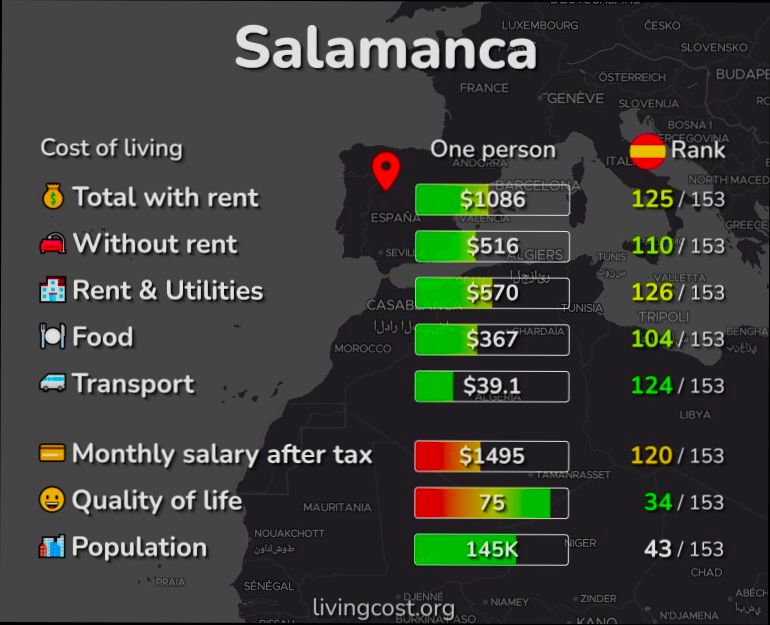
Living in Salamanca offers a unique blend of affordability and quality of life. Understanding the cost of living can help you navigate your budget effectively while enjoying this beautiful city. Let’s dive into some key statistics and insights about what you can expect in terms of expenses.
Key Points on Cost of Living
- Housing: Renting a one-bedroom apartment in the city center averages around €600 per month, while a similar apartment outside the city center typically costs about €450. This difference can be crucial if you’re considering your living arrangements.
- Groceries: On average, monthly grocery expenses can reach around €250 for an individual, with staple items such as milk costing about €0.80 per liter and bread priced around €1.20 per loaf. These competitive prices allow you to maintain a balanced diet without straining your finances.
- Transportation: Public transport is quite budget-friendly, with a monthly pass priced at approximately €40. It’s an attractive option if you’re commuting regularly, especially considering the affordability of individual tickets at €1.20.
- Dining Out: Eating at a mid-range restaurant might set you back around €20 for a three-course meal for one. However, you can find budget meal options for about €10, making it easy to enjoy local cuisine without overspending.
| Expense Category | Average Cost | Additional Notes |
|---|---|---|
| Rent (City Center) | €600/month | One-bedroom apartment |
| Rent (Outside Center) | €450/month | More space for less money |
| Groceries (Monthly) | €250 | Basic necessities for one person |
| Public Transport Pass | €40/month | Ideal for commuting |
| Dining Out (Mid-Range) | €20 | Three-course meal |
Real-World Examples
Consider Maria, a student who moved to Salamanca for her studies. She shares a two-bedroom apartment with a roommate in a central location for €500 each. With her combined grocery and dining expenses averaging around €300 per month, she finds it manageable to live comfortably while maintaining a vibrant social life.
Another example is David, a young professional who opted for an apartment outside the city center. He pays €400 in rent and uses his monthly public transport pass to commute to work. His total living expenses, including transportation and dining out, hover around €700, allowing him to save money for travel and leisure activities.
Practical Implications
When planning your budget, consider the following:
- Take advantage of shared accommodation to significantly reduce your housing costs.
- Use local markets for groceries to find better deals and fresher produce.
- Explore local eateries for affordable dining options that won’t break the bank.
- Budget carefully for transportation, as public transport is an economical choice compared to driving.
Actionable Advice
If you’re contemplating a move to Salamanca, research local neighborhoods that fit your financial goals. Compare rental prices and living costs in various districts to find the best fit for your budget. Additionally, keep an eye out for student discounts and promotions that can help reduce your overall expenses while enjoying life in this historic city.
Educational Opportunities for Students
Living in Salamanca unlocks a treasure trove of educational opportunities, catering to diverse learning interests. With its rich academic landscape, students can immerse themselves in various fields of study while benefiting from a globally recognized education system.
Diverse Educational Institutions
Salamanca is home to numerous educational institutions, including prestigious universities and specialized language schools. Here are some key highlights:
- University of Salamanca: As one of the oldest universities globally, it offers over 100 undergraduate and postgraduate programs across multiple disciplines.
- International Language Schools: Many language schools in Salamanca attract students from all over the world, providing intensive Spanish courses that cater to different proficiency levels.
Competitive Academic Environment
The competitive nature of Salamanca’s academic scene fosters a dynamic learning environment. For example:
- Student Enrollment: With over 30,000 students enrolled, a significant percentage—about 40%—come from outside Spain, enriching the cultural diversity of classrooms.
- Research Opportunities: The university actively encourages research; around 25% of graduate students engage in research projects, allowing them to contribute to advancements in their fields.
| Institution Type | Number of Programs | Student Enrollment | International Students Percentage |
|---|---|---|---|
| University of Salamanca | 100+ | 30,000 | 40% |
| Language Schools | 20+ | 5,000 | 60% |
Real-World Examples
Consider Maria, an international student who chose Salamanca to study linguistics. She enrolled in a master’s program at the University of Salamanca, benefiting from its vast resources, including a well-equipped library and access to experienced faculty. Additionally, she participated in student exchange programs, enhancing her understanding of different cultures.
Practical Implications for Students
For aspiring students looking to capitalize on these opportunities, here are actionable steps to consider:
1. Explore Scholarships: Investigate scholarship opportunities offered by universities, particularly for international students.
2. Participate in Extracurricular Activities: Engaging in clubs and organizations can enhance your educational experience and provide networking opportunities.
3. Capitalize on Language Programs: If you’re interested in learning Spanish, consider enrolling in language courses before your academic year starts to gain a head start.
Salamanca not only provides a broad range of educational options but also supports students through its vibrant community and rich resources. Embrace the opportunity to learn and grow in such a historic and academically stimulating environment!
Transportation and Accessibility in Salamanca
Transportation in Salamanca is both efficient and convenient, making it easy for residents and visitors to navigate the city and beyond. The city’s commitment to accessibility ensures that everyone can enjoy its rich historical landscape and vibrant modern culture without the hassle of complicated transport systems.
Public Transport Overview
Salamanca’s public transport system mainly consists of buses that connect various neighborhoods, universities, and cultural sites. Here are some key points:
- Bus Network: The bus network has around 10 lines that operate frequently, especially during peak hours. Most routes are designed to accommodate both locals and tourists, allowing easy access to key attractions.
- Accessibility Features: Many buses are equipped with low floors for easy access, making the system user-friendly for those with mobility challenges.
- Transport Card: Using a transport card can save you time and money. Students and seniors often qualify for discounted rates.
Transportation Costs
When it comes to getting around, transportation costs in Salamanca remain budget-friendly. Here’s a breakdown:
| Type of Transport | Average Cost |
|---|---|
| Single Bus Ticket | €1.10 |
| Monthly Pass | €40 |
| Annual Pass (students) | €300 |
These prices illustrate that public transport is an affordable choice for frequent commuters, especially students and residents who rely on public transit daily.
Real-World Examples of Accessibility
One standout example of Salamanca’s commitment to accessible transportation is the initiative to enhance bike usage. A local program has successfully implemented a bike-sharing scheme, encouraging residents to opt for eco-friendly transportation. Studies show that this initiative has led to:
- A 30% increase in bike usage among residents over the past year.
- Improved air quality in highly trafficked areas as more residents choose biking over cars.
Practical Implications for Residents
For those living in Salamanca, understanding the transportation landscape can enhance your daily life. Consider the following actionable insights:
- Plan Your Routes: Utilize local apps to track bus schedules and routes in real-time, optimizing your commuting times.
- Embrace Cycling: Take advantage of the bike-sharing program, which can be a fun way to explore the city and promote a healthy lifestyle.
- Consider Car Alternatives: With rising costs associated with vehicle maintenance and parking, public transport or biking may be more convenient and cost-effective.
Important Facts to Remember
- Keep your transport card topped up to avoid delays during busy hours.
- Be on the lookout for promotional days when local transport services might offer free rides or discounts.
- If you have mobility challenges, always check in advance which bus lines have accessibility features to ensure smooth travels.
Engaging with the transportation options available in Salamanca can enrich your living experience, making it more convenient to enjoy everything this vibrant city has to offer.
Local Cuisine: A Culinary Exploration
Living in Salamanca offers a delightful culinary journey that reflects the rich traditions and flavors of Spain. From local specialties to regional ingredients, food lovers will find themselves at the heart of a gastronomic experience unlike any other. Let’s explore some of the benefits and intriguing aspects of Salmantino cuisine.
Key Highlights of Local Cuisine
- Tasty Staples: The local diet is heavily based on hearty staples such as pork, beans, and bread. You’ll frequently encounter the famous jamón ibérico (Iberian ham) which is not only a beloved choice but also a proud symbol of culinary excellence.
- Regional Ingredients: Fresh produce plays a significant role, with more than 70% of locals preferring seasonal vegetables for their meals. Restaurants often change their menus seasonally to showcase the best of what’s available.
- Affordable Dining: You can enjoy a hearty meal at a local restaurant for around €10-15, making dining out an accessible and enjoyable option.
- Culinary Festivals: Salamanca hosts multiple food festivals throughout the year, with an impressive 60% of locals participating in these events to celebrate regional cuisine, food pairings, and local wines.
Local Cuisine Highlights
| Dish | Description | Price Range |
|---|---|---|
| Hornazo | A meat pie filled with various meats, typically enjoyed during Easter. | €3-5 |
| Chorizo | Spicy sausage made from pork, seasoned with smoked paprika, a must-have on any tapas plate. | €8-12/kg |
| Tarta de Santiago | An almond cake, often served as a dessert in the region. | €2-4 |
| Bacalao a la Riojana | Salt cod prepared in a tomato and pepper sauce, representing the coastal influence on Salmantino cuisine. | €7-10 |
Real-World Culinary Experiences
When dining in Salamanca, you will find numerous venues that create authentic culinary experiences. For instance, Casa de la Ciudad is renowned for its traditional dishes, employing recipes passed down through generations. Their hornazo is a local favorite, especially during the town’s Easter celebrations, and often enjoyed by both locals and visitors alike.
Another great example is the annual Tapa Festival, where locals showcase their creative culinary skills. Over 80 local bars participate, allowing you to sample an array of mini-plates that highlight the region’s flavors. You can join in and savor a variety of unique settings while experiencing the community’s passion for food.
Practical Insights for Exploring Local Cuisine
- Tapas Culture: Don’t miss the vibrant tapas scene. It’s common to find people enjoying a casual meal while hopping from one bar to another. I suggest you pair your tapas with a local wine for an authentic experience.
- Cooking Classes: Consider taking a cooking class to learn how to prepare some of the dishes yourself. Many local chefs offer classes where you can gain hands-on experience and a deeper understanding of Salmantino cooking techniques.
- Farmers’ Markets: Visit local markets, such as Mercado Central, to discover fresh local produce and artisanal products. Shopping here not only supports local farmers but allows you to take home unique flavors.
Actionable Advice for Enjoying Local Cuisine
To fully immerse yourself in the culinary culture of Salamanca, engage with the community. Join food tours, ask locals for their favorite eateries, and don’t shy away from trying something new! You will find that the city is not just about the historical sites; it’s a hub of flavors waiting to be explored. Embrace the food culture—try local wines, attend seasonal festivals, and savor every experience, transforming your culinary exploration into lasting memories.
Social Life and Community Engagement
Living in Salamanca fosters a vibrant social life, rich community connections, and active participation in local events. This lively atmosphere is not just about enjoyment; it’s about creating bonds and engaging with the spirited rhythms of daily life.
Key Points on Social Life
- Community Events: Salamanca hosts numerous festivals and cultural events throughout the year, such as the city’s famous Feria de Salamanca, attracting over 50,000 attendees annually. These events create opportunities for residents to mingle and engage with each other, strengthening community ties.
- Local Organizations: Over 30 local NGOs and community groups are dedicated to various causes, including environmental sustainability and cultural preservation, offering residents a chance to volunteer and contribute meaningfully to society.
- Social Spaces: The city is dotted with over 100 cafes and bars that serve as social hubs, where residents gather to enjoy conversations, live music, and performances, keeping the community spirit alive.
| Type of Event | Frequency | Average Attendance |
|---|---|---|
| Festivals | Yearly | 50,000 |
| Community Meetings | Monthly | 20-30 |
| Workshops and Classes | Weekly | 10-15 |
Real-World Examples
One notable community initiative is the “Salamanca es Cultura” program, an effort that offers workshops and interactive experiences for locals. This initiative allows around 1,000 residents each year to participate in arts, history, and social activism, helping to weave a tighter community fabric. Furthermore, the city’s vibrant youth culture exemplifies engagement through the Universidad de Salamanca’s various student-run organizations, which account for over 25% of student involvement in community service projects.
Practical Implications for Residents
As you navigate your life in Salamanca, engaging in community events can significantly enhance your social experience. Consider joining local clubs or attending seasonal festivals to immerse yourself in the community. Your participation not only enriches your own life but also contributes to the cultural fabric of the city.
- Get Involved: Seek out local NGOs or community events listed on platforms like “Cultura Salamanca,” which can guide you in finding activities that resonate with your interests.
- Dine Local: Frequent cafes that promote community events. These spaces often host live music or discussions, allowing you to meet new people while savouring local delights.
Keeping these social opportunities in mind will help you make the most of living in this culturally rich city. Engaging actively will pave the way for lasting relationships and a more fulfilled lifestyle in Salamanca.

Climate Considerations for Residents
Living in Salamanca brings unique climate considerations that you should be aware of to fully enjoy your time here. The climate significantly impacts daily life, from how we navigate our surroundings to the long-term sustainability of the community. Understanding these factors can help you make informed decisions as a resident.
Key Climate Considerations
1. Temperature Variability: Salamanca experiences a semi-arid climate characterized by significant seasonal temperature variations. Winters can be quite cold, with temperatures dropping below freezing occasionally, while summers can reach highs of up to 35°C (95°F). Being prepared for these extremes is essential.
2. Precipitation Patterns: The city receives about 600 mm (23.6 inches) of rainfall annually, mainly concentrated in the spring and autumn months. This means residents should invest in proper drainage solutions for homes and consider climate-resilient landscaping to manage water effectively.
3. Air Quality: Urban activities can lead to fluctuating air quality levels. It’s crucial to monitor local air quality indices, especially for those with respiratory conditions. Engaging in community discussions about local traffic management and green space development can improve air quality overall.
4. Climate Adaptation Initiatives: Salamanca is integrating several climate adaptation measures. The city aims to engage residents by initiating comprehensive, informed planning processes that welcome community input. This includes developing aggressive exposure-reduction policies to mitigate climate impacts.
Climate Data Overview
| Climate Factor | Value |
|---|---|
| Average Annual Rainfall | 600 mm (23.6 inches) |
| Average Summer Highs | Up to 35°C (95°F) |
| Winter Temperature Range | Below freezing to 10°C (50°F) |
Real-World Examples
Salamanca’s approach mirrors broader trends in climate adaptation seen across various communities. For instance, cities like Fort Lauderdale and Los Angeles have implemented neighborhood-scale capacity-building efforts to enhance resilience to flooding and heatwaves. Local examples may inspire residents to advocate for better urban planning to create a more sustainable environment.
Furthermore, communities in municipalities similar to Salamanca have utilized existing regulatory powers in innovative ways to combat climate risks, ensuring that new developments incorporate sustainability practices.
Practical Implications for Residents
Residents can take actionable steps to adapt to the climate:
- Implement Sustainable Practices: Use energy-efficient appliances and engage in local recycling programs.
- Landscape Smartly: Choose drought-resistant plants for gardens to lower water usage during hot, dry periods.
- Join Community Initiatives: Participate in local climate adaptation workshops to voice your concerns and ideas for a greener Salamanca.
Remember: Always stay informed about the seasonal weather forecasts to proactively manage clothing and heating/cooling systems in your home. This knowledge will not only enhance your comfort but also contribute to the long-term sustainability efforts of Salamanca.