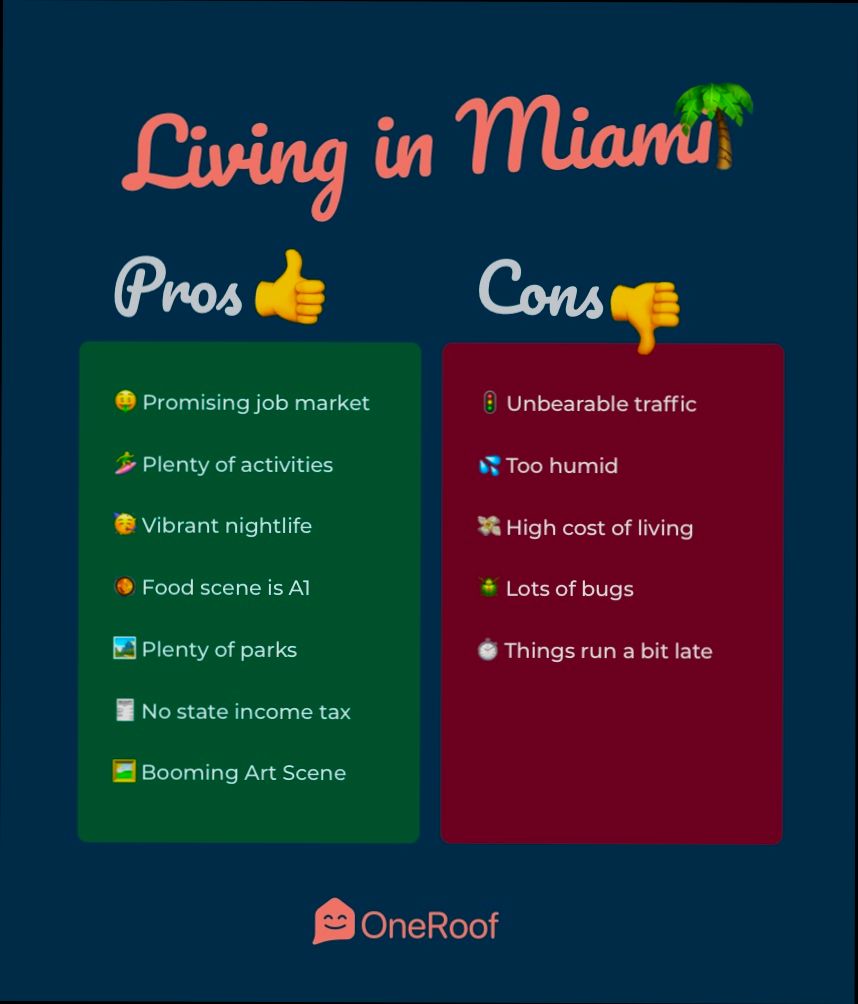
Pros and Cons of Living in Miami FL can feel like a rollercoaster ride, with every twist and turn offering something new to consider. On the plus side, Miami boasts some of the most stunning beaches in the country, with over 15 miles of coastline that attracts sunshine seekers year-round. We’re talking about an average temperature of 77°F, making it a paradise for outdoor lovers. Plus, the vibrant art scene, particularly during events like Art Basel, showcases everything from street murals to world-class galleries, bringing culture right to your doorstep. And let’s not forget the food! With a blend of Latin American flavors and fresh seafood, the culinary scene here is as dynamic as the city itself.
But it’s not all palm trees and sunshine. The cost of living in Miami can be a shocker—housing prices skyrocketed by nearly 20% over the last couple of years, pushing many into tight budgets. Traffic? Don’t even get me started. Navigating I-95 during rush hour feels like an endurance test, with commute times averaging around 30 minutes—if you’re lucky. And while the nightlife is legendary, it can get a bit overwhelming, especially if you’re looking for a quiet evening after a long week. So, whether you’re dreaming of sun-soaked days or grappling with hectic urban living, Miami definitely serves up a mixed bag of experiences.
Cost of Living and Housing Data in Miami, FL
When considering a move to Miami, FL, understanding the cost of living and housing data is crucial. This vibrant city offers a unique lifestyle, but it also comes with specific financial implications that you should weigh carefully. Let’s dive into the specifics of what you can expect financially when living in Miami.
Key Cost of Living Insights
- Overall Cost of Living Index: Miami’s cost of living index stands at approximately 119.3, making it about 19.3% higher than the national average. This encompasses essentials such as groceries, healthcare, and transportation.
- Housing Costs: The median home price in Miami is around $500,000, whereas renting a one-bedroom apartment in the city can set you back about $2,600 per month. This is an elevation from previous years, where prices saw an increase of roughly 10%-15% annually.
- Utilities: Monthly utility costs in Miami average around $130, which is significantly higher than the national average of about $100. This increase is influenced by the city’s warm climate, leading to higher air conditioning usage.
- Transportation Costs: Public transportation isn’t the only way to get around; however, owning a vehicle can mean gas prices around $3.30 per gallon, which is comparable to the national average but can add up considering Miami’s traffic patterns.
Comparative Housing Costs in Key Areas
| Area | Median Home Price | Average Rent (1BR) | Utility Costs (Monthly) |
|---|---|---|---|
| Downtown Miami | $650,000 | $3,100 | $150 |
| Miami Beach | $750,000 | $3,700 | $170 |
| Coral Gables | $750,000 | $3,400 | $160 |
| Kendall | $400,000 | $2,200 | $140 |
| Little Havana | $350,000 | $2,000 | $130 |
Real-World Examples of Cost Implications
Consider a young professional relocating to Downtown Miami for work. They might find themselves paying around $3,100 per month for a modern one-bedroom apartment but will enjoy the convenience of nearby offices, restaurants, and nightlife. On the other hand, if you’re a family looking to save, opting for a suburb like Kendall could mean a more manageable rent of $2,200 while still providing access to good schools.
If you’re budgeting as a retiree planning to settle in Coral Gables, be prepared for a higher upfront investment with median home prices around $750,000. However, the availability of luxury amenities and tranquil parks can offer great long-term satisfaction.
Practical Implications for Moving to Miami
As you plan your move, keep these actionable financial tips in mind:
- Create a Detailed Budget: Given the high cost of living, it’s essential to plan your monthly expenses meticulously. Factor in all necessities from housing to transportation and leisure.
- Explore Various Neighborhoods: Different areas offer variable pricing, so look beyond popular districts. Suburbs like Kendall may provide a good quality of life at a lower cost.
- Research Utility Packages: Evaluate potential costs for internet and phone services, as they can differ significantly, impacting your overall living expenses.
Be aware that Miami’s cost structure may appear daunting, but understanding these specific aspects can help you adjust your expectations and find the right fit for your lifestyle.
Climate Challenges and Weather Patterns
Living in Miami presents unique climate challenges and weather patterns that are crucial for anyone considering moving here. The city is known for its tropical climate, but ongoing climate change is intensifying the frequency and severity of various weather conditions.
Rising Sea Levels and Flooding
Miami is one of the cities most vulnerable to rising sea levels due to climate change. According to NASA, global average sea levels rose by about 3.3 millimeters annually over the past few decades, and Miami’s low-lying coastal geography makes it particularly susceptible to flooding.
- Rising Sea Levels: Projections estimate that levels could rise by as much as 1 to 2 feet by 2050.
- Flood Frequency: King tides and heavy rains can cause flooding multiple times per year, disrupting daily life and impacting property values.
Increased Storm Activity
The Caribbean is susceptible to hurricanes, and climate change is expected to increase their intensity. For Miami, this means:
- Hurricane Season: Typically runs from June to November, where an average of 6 hurricanes occur annually, with potential for more intense storms.
- Infrastructure Strain: Enhanced storm surges have lead to costly repairs and heightened insurance premiums.
Temperature Swings
Warming temperatures associated with climate change also pose challenges.
- Average Increase: Miami has experienced a temperature increase of approximately 2°F over the last century.
- Heat Waves: The city faces increasing instances of extreme heat days, which can reach over 95°F, making heat safety a priority for residents.
Comparative Table of Climate Data
| Climate Challenge | Current Impact | Projection for 2050 |
|---|---|---|
| Rising Sea Levels | +3.3 mm/year | Up to +2 feet |
| Hurricane Events | Average 6 hurricanes/year | Increased intensity expected |
| Average Temperature Rise | +2°F in the last century | Further increases expected |
| Heat Wave Frequency | Rising instances of temperatures > 95°F | Additional heat days projected |
Real-world Examples
Take the example of the 2017 hurricane season when Hurricane Irma impacted Miami directly, causing widespread flooding and power outages. The city’s storm surge barriers and drainage systems were put to the test, emphasizing the need for robust infrastructure to withstand climate-related events.
In another incident, the recent king tide event in 2021 illustrated the vulnerability of streets like Ocean Drive, which were submerged, demonstrating the immediate effects of sea-level rise on urban areas.
Practical Implications for Residents
As you navigate life in Miami, consider these actionable insights regarding climate challenges:
- Flood Preparedness: Invest in flood insurance and stay informed about local evacuation routes and emergency services.
- Energy Efficiency: With increasing temperatures, upgrading to energy-efficient cooling systems can mitigate utility costs during heat waves.
- Community Engagement: Get involved in local initiatives aimed at improving coastal resilience and urban planning to better accommodate climate change effects.
Facts to Keep in Mind
- Daily Weather Monitoring: Stay updated with apps or websites that provide real-time weather alerts, especially during hurricane season.
- Heat Awareness: Maintain hydration and awareness of heat-related illnesses, particularly for vulnerable populations like the elderly.
By staying informed and proactive, you can navigate Miami’s unique climate challenges effectively.
Cultural Diversity and Vibrant Lifestyle
Living in Miami, you’re immersed in a melting pot where over 60% of the population identifies as Hispanic or Latino, significantly contributing to the city’s rich tapestry of cultures. Miami is renowned not just for its diverse communities but also for the vibrant lifestyle they create. Whether you’re indulging in the culinary delights of Little Havana or admiring the art in Wynwood, there’s always something happening that reflects this unique cultural blend.
Key Points
- Diversity in Languages: Approximately 72% of Miami-Dade County residents speak a language other than English at home, showcasing the city’s linguistic richness. Spanish, Creole, and Portuguese are among the most commonly spoken languages, which fosters an environment of inclusiveness and multicultural interaction.
- Cultural Celebrations: Annually, Miami hosts over 100 cultural festivals, celebrating everything from music and dance to food and fashion. Events like the Calle Ocho Festival, which draws over a million people, emphasize the city’s Latin cultural heritage.
- Global Cuisine: With over 5,000 restaurants representing a breadth of cuisines, Miami is a food lover’s paradise. Offering everything from traditional Cuban sandwiches to Peruvian ceviche, the city’s dining scene is directly tied to its cultural diversity.
| Culture/Community | Percentage of Population | Key Festival/Event |
|---|---|---|
| Hispanic/Latino | 70% | Calle Ocho Festival |
| African American | 18% | Black History Month |
| Caribbean | 10% | Caribbean Carnival |
| Asian | 5% | Asian Culture Festival |
Real-World Examples
Imagine savoring a delectable Arepa from a food truck in Doral while listening to live salsa music. Miami’s food trucks are a celebration of cultural fusion, where flavors from Colombia, Venezuela, and the Caribbean are all represented. Events like “Taste of Haiti” bring communities together through food, art, and music, showcasing the diverse cultural contributions of local residents.
Another example is the vibrant Wynwood Walls, an outdoor gallery featuring murals created by artists from across the globe. This destination stands as a testament to Miami’s commitment to celebrating artistic voices from various cultures, making it a canvas for self-expression and creativity.
Practical Implications
Living in Miami means you can actively participate in an array of cultural experiences that cater to diverse interests. Whether you want to join a Zumba class focused on Latin music at a local community center or attend an art exhibition showcasing contemporary African artists, the options are endless. Engage in cultural workshops or language classes to expand your understanding of different communities.
- Attend local events or workshops to immerse yourself in the cultural experiences Miami offers.
- Explore neighborhood festivals that align with your cultural interests to connect with like-minded individuals.
As you embrace life in Miami, consider diving into its rich cultural scene. Visiting farmers’ markets featuring local vendors from various backgrounds can also enhance your understanding of Miami’s multicultural fabric, allowing you to support the local economy while enjoying unique products. Living here offers not just a place to reside but a lifestyle that’s vibrant, enriching, and diverse.

Job Market Opportunities in Miami
Miami offers a dynamic job market that reflects its diverse economy and growing population. With a plethora of industries flourishing, job seekers can find various opportunities tailored to their skills and interests. Let’s delve into some specific aspects of the job market in this vibrant city.
Exciting Job Growth Sectors
Miami’s economic scene is thriving with considerable job openings across multiple industries, indicating strong market demand. The job outlook for several fields is as follows:
- Healthcare: Anticipated job growth of 27%, driven by the aging population and the increased demand for medical services.
- Technology: Projected growth of 25%, spurred by a surge in tech startups and digital transformation initiatives.
- Finance and Banking: Expected growth at a rate of 6%, as Miami continues to attract businesses for its favorable tax structure.
These statistics highlight that specific sectors are expanding faster than average, making them ripe for job seekers.
Job Market Trends
Florida’s overall job opening rate continued to stay steady at 5.0%, parallel to the 5.3% national average. This stability, alongside an estimated 518,000 job opportunities in January 2024, underscores the local economy’s resilience and strength. As the population grows, the demand for skilled professionals will likely increase, especially in high-demand fields.
| Industry | Job Outlook | Reasons for Growth |
|---|---|---|
| Healthcare | 27% | Aging population and increasing medical needs |
| Technology | 25% | Rise of tech startups and new digital services |
| Hospitality & Tourism | 20% | Recovery of the tourism sector post-COVID-19 |
| Finance & Banking | 6% | Economic expansion and favorable tax climate |
Real-World Examples
A few companies exemplifying Miami’s job opportunities include:
- The University of Miami: A large employer in the healthcare education sector, continuously hiring for various roles ranging from medical professionals to administrative support as their programs expand.
- Magic Leap: This tech startup focuses on augmented reality and is at the forefront of Miami’s tech growth, frequently seeking talent in software engineering and product development.
These local success stories highlight the exciting job landscape as industries adapt and evolve within Miami.
Practical Implications
If you’re considering entering the job market in Miami, focus on high-growth industries like healthcare or technology. Networking within industry-specific events and utilizing local job boards can boost your chances of landing a position. Moreover, sharpening skills relevant to expanding sectors, such as data analysis or digital marketing, can greatly enhance your employability.
Actionable Advice
- Explore opportunities with Miami-based companies that are showing robust growth.
- Keep an eye on certifications or training programs relevant to industries like healthcare and tech.
- Utilize local resources such as the Miami-Dade County Job Center to connect with potential employers and learn about workshops or job fairs aimed at helping you find suitable employment.
Public Transportation and Accessibility Issues
Living in Miami presents some unique challenges when it comes to public transportation and accessibility. While the city has made strides in improving its transport infrastructure, several areas still require significant upgrades to enhance mobility for residents and visitors alike.
Key Public Transportation Insights
- Transit Options: Miami’s primary public transportation services include Metrobuses, Metrorail, and the Metromover. However, the bus system operates on a limited schedule and may not cover all neighborhoods effectively, leading to limited access.
- Ridership Statistics: Approximately 64% of Miami-Dade County’s residents rely on personal vehicles, indicating that public transportation still plays a lesser role in daily commuting, often due to perceived inefficiencies.
- Coverage Gaps: Only 25% of the population lives within half a mile of a public transit stop, which raises barriers for those who rely on these services, including elderly residents and those without cars.
Comparative Accessibility Table
| Transportation Mode | Average Wait Time | Coverage Area % | Accessibility Features |
|---|---|---|---|
| Metrobuses | 15-30 minutes | 75% | Limited wheelchair access |
| Metrorail | 15-20 minutes | 30% | Good wheelchair access |
| Metromover | 5-10 minutes | 10% | Fully accessible |
Real-World Examples
The community has raised concerns over the limited reach of public transportation. For instance, a group of residents in Little Havana campaigned for extended bus routes to connect their neighborhood with downtown jobs, demonstrating an active push for greater accessibility. Additionally, areas like Overtown have faced challenges with public transit availability, leading to mobility issues among low-income residents who depend on these services to access employment opportunities.
Practical Implications for Readers
If you are considering a move to Miami or live there already, it’s crucial to evaluate how public transportation fits into your daily life. Understanding the limitations of bus schedules or the necessity of a personal vehicle can impact commuting times significantly.
Actionable Insights on Accessibility
- Utilize Mobile Apps: Download transportation apps like Transit or Citymapper to stay informed about real-time arrivals and service alerts, enhancing your experience on public transit.
- Advocate for Transportation Improvements: Join local community forums or advocacy groups focused on improving public transportation access, particularly in underserved neighborhoods.
- Consider Proximity: When choosing a neighborhood, prioritize locations that are near public transit routes, even if it’s less than half a mile, to reduce reliance on private vehicles and improve your overall mobility.
Safety Concerns and Crime Statistics
When considering a move to Miami, it’s crucial to address safety concerns and examine the crime statistics in the area. Understanding the landscape of safety in Miami helps you make informed decisions about where to live and how to protect yourself and your property.
Key Crime Statistics
- Overall Crime Rate: Miami’s overall crime rate is approximately 15% higher than the national average, making it important for residents to stay vigilant.
- Violent Crime: The violent crime rate in Miami is about 8.5 incidents per 1,000 residents, which is significantly above the national average of 4.0 incidents per 1,000 residents.
- Property Crime: Property crime, which includes burglary and theft, also sees a substantial rate of about 30.1 incidents per 1,000 residents.
- Most Affected Areas: Certain neighborhoods, like Overtown and Liberty City, report higher crime rates, often struggling with violent incidents and property crimes.
Crime Rate Comparison Table
| Type of Crime | Miami (per 1,000 residents) | National Average (per 1,000 residents) |
|---|---|---|
| Violent Crime | 8.5 | 4.0 |
| Property Crime | 30.1 | 22.0 |
Real-World Examples
In recent years, Miami has faced several high-profile incidents that highlight its safety concerns. For instance, the police reported a string of burglaries in affluent neighborhoods like Coral Gables, which prompted homeowner associations to invest in security upgrades and neighborhood watch programs. Additionally, during a community forum, residents expressed anxiety over rising gang activity in certain locales, leading to increased patrols and community engagement initiatives.
Practical Implications for Residents
As a resident of Miami, you might want to consider the following practical implications regarding safety:
- Neighborhood Safety Audits: Regularly review crime maps and stats for your specific area to assess safety and consider engaging with local neighborhood watch programs.
- Home Security Measures: Investing in quality security systems can deter property crime. Even basic setups with cameras and motion sensors can enhance safety.
- Community Involvement: Engage in community events and forums focused on crime prevention, as these can provide valuable resources and build connections with fellow residents.
By staying informed and proactive about crime statistics and safety measures, you can make the most of your Miami experience while ensuring your well-being and that of your loved ones.
Recreation and Leisure Benefits in Miami
Miami is not just a vibrant city; it’s a playground teeming with recreational and leisure activities that cater to all lifestyles. From sun-soaked beaches to exhilarating nightlife, residents enjoy a plethora of ways to unwind and engage in leisure pursuits. Let’s explore some of the fantastic recreation and leisure benefits this city has to offer.
Diverse Outdoor Activities
Miami’s warm climate ensures that outdoor activities are available year-round. Residents enjoy:
- Beaches: Miami boasts over 15 miles of pristine beaches, perfect for swimming, sunbathing, and beach sports.
- Parks and Recreation Areas: The city is home to around 130 parks that offer facilities for picnicking, walking, and various sports.
- Water Sports: Opportunities for kayaking, paddleboarding, and jet skiing abound, particularly in Biscayne Bay and along the coast.
Cultural and Artistic Engagements
Miami offers a rich cultural scene that contributes significantly to recreational activities. Residents can engage in:
- Art Walks: The Wynwood Walls host monthly art walks, showcasing local and international artists.
- Museums: Institutions like the Pérez Art Museum and the Frost Museum of Science offer leisure activities such as workshops and family-friendly events.
Vibrant Nightlife
Miami is renowned for its nightlife, ensuring there’s never a dull moment after the sun sets. With:
- Clubs and Lounges: The city features countless clubs, from the world-famous LIV at the Fontainebleau to quieter lounges like Ball & Chain in Little Havana.
- Restaurants and Bars: Enjoy dining experiences from casual to gourmet, with options for every palate.
Comparative Table of Recreational Offerings in Miami
| Type of Activity | Examples | Frequency |
|---|---|---|
| Beaches | South Beach, Key Biscayne | Year-round |
| Parks | Bayfront Park, South Pointe Park | Daily |
| Art Events | Wynwood Art Walk, Art Basel | Monthly/Annual |
| Water Sports | Jet Skiing, Paddleboarding | Year-round |
| Nightlife | Clubs, Bars, and live music venues | Weekends & Holidays |
Real-World Examples
Take the Miami Beach Boardwalk, which stretches for miles alongside the beach. It’s popular among joggers, cyclists, and families seeking a leisurely stroll with picturesque views. On weekends, locals flock to the Miami Design District for monthly design celebrations to immerse themselves in art, fashion, and gourmet food.
Another example is the popular Miami Open, an annual tennis tournament that attracts top players and a massive crowd, combining sport and socializing in a unique way.
Practical Implications for Residents
Living in Miami means having access to activities that can enhance your well-being and social life. Outdoor enthusiasts can take advantage of the extensive park system for exercise, while art lovers have numerous options for cultural enrichment. Moreover, the nightlife scene is not just a way to unwind but also offers great networking opportunities.
Engaging With Miami’s Recreational Scene
Whether you’re a sunbather, an artist, or a nightlife aficionado, Miami’s recreation and leisure benefits cater to your interests. Embrace outdoor living by exploring the city’s beaches and parks or indulge in the local art scene to enrich your cultural experience. Join social groups based on your hobbies or interests to connect with like-minded individuals and make the most of what Miami has to offer!