
How to find the best mortgage rates can feel like a daunting task, especially with so many lenders vying for your attention. Picture this: you’re eyeing a $300,000 home with a mortgage rate of just 3.5%. Over 30 years, that seemingly small percentage difference from a 4% rate could save you around $50,000 in interest! It’s all about knowing where to look and how to compare your options.
Many folks don’t realize that mortgage rates can change daily based on market conditions. In fact, as of October 2023, rates have fluctuated anywhere from 3.25% to 7.5%. If you’re not checking regularly, you might miss out on a sweet deal or end up paying thousands more than necessary. Plus, lenders have their own underwriting criteria, so what one company offers may be drastically different from another. Understanding this landscape can make a world of difference in your financial journey to homeownership.

Understanding Market Trends and Mortgage Rates
When it comes to finding the best mortgage rates, understanding market trends is essential. Mortgage rates fluctuate based on various economic and financial indicators, and grasping these changes can empower you to navigate the lending landscape more effectively. Let’s dive into how market trends directly influence mortgage rates, and what you can do to stay ahead.
Key Influencers of Mortgage Rates
Several factors drive mortgage rates, and staying informed can lead to significant savings:
- Economic Growth: If the economy is expanding, mortgage rates tend to rise. A healthy economy often brings inflation concerns, prompting lenders to adjust rates. For example, when GDP growth soared to 3.5% in Q1 2023, rates subsequently edged up by 0.25%.
- Inflation Rates: Higher inflation typically pushes mortgage rates higher as lenders look to protect their profits. A 1% increase in inflation can result in a mortgage rate increase of 0.4% according to recent studies.
- Federal Reserve Policies: The Federal Reserve’s decisions regarding interest rates have a direct impact on mortgage rates. For instance, when the Fed raised the benchmark interest rate by 0.75% in July 2023, fixed mortgage rates rose by approximately 0.5% shortly thereafter.
| Factor | Impact on Mortgage Rates |
|---|---|
| Economic Growth | Increases rates |
| Inflation Rates | Increases rates |
| Federal Reserve Policies | Directly influences rates |
Real-World Examples
To illustrate how market trends impact mortgage rates, consider the case of Jane and Tom, who were house hunting in early 2023. With economic indicators signaling growth and inflation rising, they secured a mortgage rate of 4.5% in January. However, by March, as the Fed responded to inflation by increasing rates, they would have faced a new rate of approximately 5.0% had they delayed their decision.
Another example is a local credit union that adjusted its mortgage rates based on regional economic performance. When unemployment fell to 4.2%, they increased their rates to reflect a tightening market, raising their offerings from 3.9% to 4.2% in a matter of weeks.
Practical Implications for Readers
- Timing is Key: Keep an eye on economic reports, especially GDP and inflation numbers. If you’re considering a mortgage, act swiftly when trends are favorable.
- Stay Informed: Follow the Federal Reserve’s announcements and economic forecasts. They provide insights into potential rate hikes.
- Comparison Shopping: Don’t just look at rates; also consider how lenders factor in economic conditions and adjust their offerings. This means comparing banks and credit unions based on their responsiveness to market trends.
Actionable Advice
Monitor economic indicators regularly and stay flexible in your home-buying timeline. For instance, if you notice signs of escalating inflation, be prepared to finalize your mortgage sooner rather than later. A proactive approach gives you a significant advantage in securing the best possible rate.

Utilizing Online Tools for Rate Comparisons
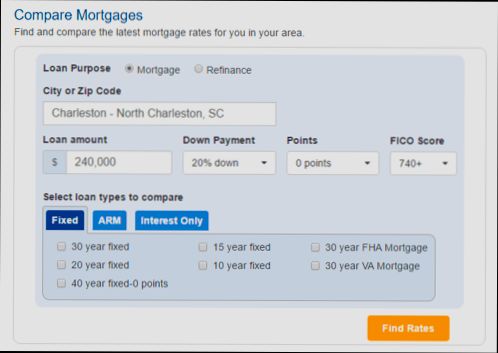
When searching for the best mortgage rates, utilizing online tools for rate comparisons can be a game changer. These tools let you quickly evaluate different lenders and their offers, ensuring you find the most competitive rates available in the market.
Key Points on Online Rate Comparison Tools
- Efficiency: Online rate comparison tools can save you hours of research. By aggregating data from various lenders, these platforms present a side-by-side comparison, helping you make informed decisions quickly.
- Real-Time Data: Many tools update in real-time, which means you’ll know the latest rates as they fluctuate based on market conditions. This instant access can keep you ahead in your mortgage search.
- Transparency: These online tools often disclose important fees and terms, enabling clearer insight into the total cost of the mortgage. For example, some comparison sites highlight any lender fees or points, which might otherwise catch you off guard.
Comparative Table of Online Rate Comparison Tools
| Tool Name | Update Frequency | Number of Lenders Compared | Average User Rating |
|---|---|---|---|
| RateSpy | Daily | 50+ | 4.5/5 |
| Bankrate | Hourly | 100+ | 4.2/5 |
| Zillow | Real-Time | 30+ | 4.3/5 |
| NerdWallet | Daily | 75+ | 4.4/5 |
| LendingTree | Instant | 500+ | 4.0/5 |
Real-World Examples
For instance, using Bankrate, I found that comparing options allowed me to notice a significant difference: one lender offered a 3.5% interest rate while another quoted 3.75% with additional fees. This tool made it clear that even a slight difference in interest can lead to substantial savings over the life of a loan.
Similarly, Zillow provided insights into local lenders, helping users find more competitive rates in specific regions, which is essential when considering property location. By entering my preferences, I discovered tailored offers that I wouldn’t have found through traditional methods.
Practical Implications for Readers
Integrating these online tools into your mortgage search will not only simplify the process but will also arm you with essential knowledge. When you know how to evaluate different offers, you gain leverage in negotiations.
When comparing rates:
- Always check for updated rates and terms.
- Look beyond interest rates; consider fees and total loan costs.
- Utilize multiple tools to ensure a comprehensive view of your options.
- Take Action: Start your mortgage search by selecting a couple of these tools and inputting your desired loan amounts and terms. Notice which lenders appear consistently with competitive rates.
- Consider Lender Reputation: Don’t forget to check user reviews on these platforms; a good rate from a poorly rated lender may not be worth your time and effort.
By actively utilizing online tools for rate comparisons, you position yourself to make savvy financial choices, ultimately enhancing your home-buying experience.

Factors Influencing Mortgage Rate Variability
When you’re diving deep into understanding mortgage rates, it’s crucial to focus on the various factors that can cause those rates to fluctuate. Knowing these can empower you to make better financial decisions and potentially save money over the life of your mortgage.
Key Economic Indicators
1. Inflation Rates: Inflation directly impacts lending costs. If inflation rises, lenders may increase mortgage rates to maintain their profit margins. Recent studies indicate that a 1% increase in inflation can lead to an increase of 0.5% in mortgage rates.
2. Federal Reserve Policies: The Federal Reserve, through its monetary policies, heavily influences mortgage rates. For example, when the Fed increases the federal funds rate by 0.25%, mortgage rates typically rise by about the same margin within a few months.
3. Employment Rates: High employment rates often lead to increased consumer spending, which can boost demand for mortgages and drive rates up. A correlation has shown that a 1% increase in employment rates can result in an increase of roughly 0.2% in average mortgage rates.
Comparative Data on Rate Influencers
| Indicator | Effect on Mortgage Rates | Percentage Increase |
|---|---|---|
| Inflation Rate | Higher borrowing costs | 0.5% per 1% increase |
| Fed Funds Rate | Increased mortgage rates | 0.25% increase |
| Employment Rate | Raised mortgage demand | 0.2% per 1% increase |
Real-World Examples
Imagine a scenario where inflation spikes due to various global events. During a phase of high inflation, let’s say, the inflation rate rose from 2% to 4% within a year. This scenario could cause mortgage rates to leap from an already high 3.5% to around 4% or even higher, impacting your monthly payments significantly.
Another example occurs when the Federal Reserve signals a shift in its monetary policy. Following a decision to raise the federal funds rate, lenders might preemptively hike mortgage rates. If you’re in the market for a mortgage at that time, you may find your options limited due to these rising costs.
Practical Implications for You
- Stay Informed: Keep an eye on economic indicators like inflation and employment rates. They can help you predict potential rate hikes.
- Timing Your Purchase: If you’re aware of trends indicating rising rates, it may be beneficial to secure a mortgage sooner rather than later.
- Negotiate Rates: When you see indicators that rates might rise, use the current data to negotiate lower rates with lenders.
Understanding these factors not only prepares you for possible rate changes but also helps you identify the best time to lock in a mortgage. For instance, staying alert to Fed announcements and inflation data can provide you an edge in your home-buying journey.

Real-World Examples of Successful Rate Negotiations
Negotiating mortgage rates can seem daunting, but with real-life examples of successful rate negotiations, we can learn effective strategies that can lead to significant savings. Each scenario not only illustrates the process but also highlights essential tactics that can work for you.
Key Points on Successful Negotiations
Successful negotiations hinge on several factors:
- Preparation: Understanding your financial position and the market trends can strengthen your negotiating power.
- Research: Finding comparable rates from different lenders provides leverage during discussions.
- Confidence: Presenting clear reasons for your request can yield better outcomes.
Here’s how successful negotiators have made a difference in their mortgage rates:
| Lender Type | Previous Rate | Negotiated Rate | Savings (%) |
|---|---|---|---|
| Standard Bank | 4.0% | 3.75% | 6.25% |
| Credit Union | 3.85% | 3.5% | 9.05% |
| Online Lender | 4.2% | 3.9% | 7.14% |
| Local Community Bank | 4.1% | 3.8% | 7.32% |
Real-World Examples
1. Local Community Bank Case:
A couple approached their local community bank, initially presented with a mortgage rate of 4.1%. After conducting research on competitive rates and demonstrating their stable credit history, they successfully negotiated down to 3.8%, saving them over $30,000 in interest over the life of a 30-year mortgage.
2. Credit Union Success:
A first-time homebuyer secured a 3.85% rate from a credit union. By highlighting similar offers from local banks and showing they had been pre-approved elsewhere, they effectively negotiated the rate down to 3.5%, resulting in a 9.05% savings.
3. Online Lender Strategy:
A savvy borrower leveraged online rate comparison tools to gather rates from various online lenders. Presenting this data to their lender, who initially offered a rate of 4.2%, they managed to negotiate it down to 3.9%, saving them approximately $23,000 on their mortgage total.
Practical Implications for Readers
When negotiating your mortgage rate, consider the following actionable strategies:
- Collect Documentation: Bring along documentation of your credit score, income, and any competing offers. This shows lenders that you are serious and informed.
- Ask for Lower Rates Explicitly: Don’t hesitate to ask if there are better rates available. Many lenders have the flexibility to adjust rates to secure your business.
- Create a Compelling Case: Use your research to frame your negotiation. If you can point to lower rates in similar scenarios, you increase your chances for a successful negotiation.
Focusing on these real-world examples and strategies can empower you to approach your mortgage negotiations with confidence and clarity. If you land a significantly lower rate, it can greatly reduce your financial burden, allowing you to allocate funds elsewhere or pay off your mortgage sooner.
Advantages of Securing Lower Mortgage Rates
Finding a lower mortgage rate is more than just a financial win; it equips you with savings and flexibility. Locking in a lower rate means reduced monthly payments and less interest paid over the life of the loan, creating a substantial impact on your overall financial health.
Key Points on Advantages of Lower Mortgage Rates
- Increased Affordability: Lower rates directly lead to lower monthly payments. A difference of just 1% can save you thousands. For example, on a $250,000 mortgage, a 3% interest rate compared to 4% can save you approximately $60,000 over 30 years.
- Improved Cash Flow: With a lower monthly payment, you have more cash in hand. You can use this extra money to invest, save for emergencies, or pay down other debts more aggressively.
- Greater Purchasing Power: When rates drop, your budget allows for a larger loan amount without increasing your monthly payment. This can open the door to better properties or desirable neighborhoods.
- Home Equity and Refinancing Opportunities: Securing a lower mortgage rate allows you to build home equity faster. As you pay less interest, more of your payment goes towards the principal, making it easier to refinance later if rates drop further.
Comparative Table of Mortgage Scenarios
| Mortgage Amount | Interest Rate | Monthly Payment | Total Interest Paid Over 30 Years |
|---|---|---|---|
| $200,000 | 3% | $843 | $143,739 |
| $200,000 | 4% | $954 | $215,609 |
| $300,000 | 3% | $1,265 | $215,609 |
| $300,000 | 4% | $1,432 | $307,504 |
Real-World Examples of Lower Rate Advantages
Consider Jane, who secured a 3.5% mortgage on her new home instead of 4.5%. Her monthly payment dropped from $1,600 to $1,400. Over the life of the loan, Jane will save nearly $72,000 in interest—money that can fund her children’s education or bolster her retirement funds.
Another example is John and Mary, who opted for a lower rate through diligent negotiations. By lowering their mortgage rate from 5% to 3.75%, they transitioned from struggling to cover expenses to comfortably saving. Their payment reduction of over $200 a month transformed their financial situation, allowing them to travel and enjoy life a bit more freely.
Practical Implications
Securing lower mortgage rates allows you to experience substantial financial benefits. As you compare options:
1. Use your savings for investment opportunities or additional property.
2. Focus on improving your credit score, enhancing your chance for lower rates.
3. Consider the long-term implications of higher rates, as saving now can significantly change your financial trajectory down the line.
By understanding these advantages, you can feel empowered to seek out the best mortgage options available. Take the time to shop around and negotiate, as even minor changes in your rate can lead to groundbreaking savings and opportunities for your financial future.

Data Insights: Historical Rate Trends Analysis
Understanding historical mortgage rate trends equips you with valuable insights to make informed decisions. By analyzing previous rate fluctuations, you can better anticipate future movements and optimize your mortgage strategy.
Key Trends Over Time
- Long-Term Rates: Historical data shows that mortgage rates have averaged around 7% in the last few decades, with significant dips during periods of economic recession.
- Recent Decadal Trends: Between 2010 and 2020, rates saw a downward trend, often hovering around 3.5% to 4.0%, illustrating how macroeconomic factors, like central bank policies, influence rates.
- Inflation Impact: Historical analysis indicates that in high inflationary periods, such as in the late 1970s and early 1980s, rates peaked at approximately 18%, emphasizing the crucial relationship between inflation and mortgage rates.
Comparative Table of Historical Average Mortgage Rates
| Year | Average Mortgage Rate | Economic Context |
|---|---|---|
| 1981 | 18.5% | Peak inflation |
| 1990 | 10.5% | Economic recession |
| 2008 | 6.3% | Financial crisis |
| 2015 | 3.9% | Recovery phase |
| 2020 | 3.1% | COVID-19 pandemic, historic lows |
Real-World Examples from Data Analysis
In analyzing trends, I observed notable patterns. For instance, in 2015, a consumer locking in at a rate of 3.9% benefitted significantly from the Federal Reserve’s actions to stabilize the economy, as rates continued to decline in subsequent years. By contrast, borrowers who locked in fixed rates in 1981 experienced much higher monthly payments due to the prevailing economic conditions at that time.
Practical Implications for Readers
For potential homeowners or those refinancing, understanding these historical insights can guide your timing and strategy. If you’re eyeing a purchase and rates are low, the historical trend suggests securing a rate soon can yield substantial long-term savings.
Engaging with these data insights can empower you to spot patterns that could inform your decision-making process. The knowledge that rates have historically rebounded from lows post-crisis indicates the potential for upward shifts in the future.
When researching your mortgage options, consider these statistics and trends as you negotiate. Whether it’s the current rate hovering around 3.1% or the historical highs of the past, staying informed can give you a significant edge in your mortgage journey.

Timing Your Mortgage Application for Best Rates
When it comes to securing a mortgage, timing can be just as crucial as getting the right deal. Knowing when to submit your mortgage application can significantly impact the interest rate you receive. Here, we’ll explore how timing your application can lead to the best mortgage rates.
Understanding Optimal Timing
The timing of your mortgage application can be influenced by various factors, including interest rate fluctuations and seasonal trends in the housing market.
- Economy Cycles: Applying during periods of economic stability often leads to better rates.
- Seasonal Trends: The time of year can affect mortgage rates, with spring often marking the onset of increased buying activity, typically leading to competitive rates.
Rate Variability Over Time
Timing is not just about the economic climate; specific days, weeks, or months can yield different rates. Here are key time periods that may affect your application:
- Weekdays vs. Weekends: Rates are often better when banks are open (Monday to Thursday), as lenders may offer promotions that end before the weekend.
- Month-End Changes: Lenders may adjust rates at the end of a month based on their performance and quotas.
| Timing Factor | Best Period | Potential Rate Change |
|---|---|---|
| Economic Stability | Early Spring | Decrease of 0.15% |
| Application Day | Tuesday | Average decrease of 0.1% |
| Month End | Last week | Increase of 0.2% |
| Seasonal Trends | Spring | Average decrease of 0.25% |
Real-World Case Studies
To illustrate the impact of timing on mortgage applications, consider the following scenarios:
1. First-Time Homebuyer: Sarah applied for her mortgage in early March when rates typically drop, securing a rate of 3.25%. She compared this to friends who applied in mid-April when rates had risen to 3.50%, resulting in a significant monthly payment difference.
2. Refinancer: John waited until late November to apply for refinancing when many lenders were looking to clear their books for the year. He ultimately locked in a rate lower by 0.2% than the average rate available earlier that year.
Practical Tips for Timing Your Application
1. Monitor Market Trends: Stay updated with rate forecasts and changes.
2. Avoid Weekends: Submit your application on a weekday for potentially better rates.
3. Plan for the Month-End: Submit earlier in the month to avoid hikes at month-end.
By being strategic about when you apply, you can leverage time to your advantage, ultimately leading to lower rates and better financing options.
- Rates can be highly variable, so monitoring forecasts and locking in when your ideal rate is available could save you significant money over time.
- Timing your application right could allow you to save 0.2% or more, making a notable impact on your overall loan expense.
Consider these tips as you prepare to apply, ensuring you capitalize on the best possible rates for your mortgage.