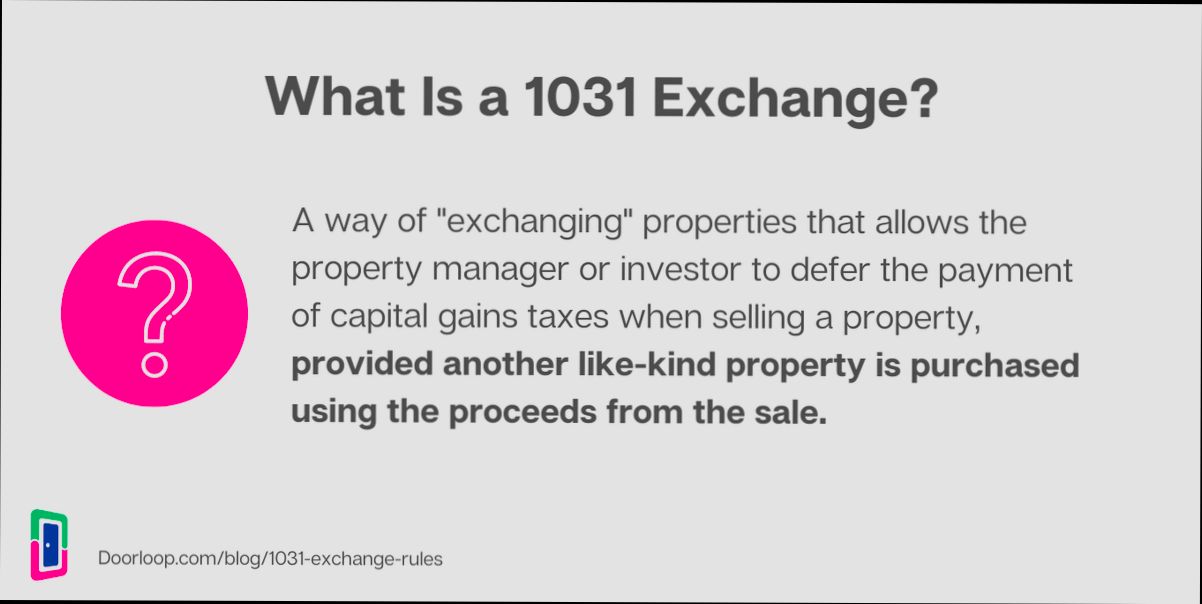
What is 1031 Exchange? It’s a fascinating tax strategy that allows real estate investors to sell a property and reinvest the proceeds into another property while deferring capital gains taxes. Imagine you bought a rental property for $200,000 a decade ago, and now it’s worth $500,000. If you sell it, you could face a hefty capital gains tax bill. But with a 1031 Exchange, you can swap that property for a new one—like a commercial building or a piece of land—and keep your hard-earned cash intact for future investments.
For instance, let’s say you decide to trade that $500,000 rental for a bigger beach property worth $700,000. As long as you stick to the 1031 guidelines, you don’t pay taxes on the $300,000 gain from the sale right away. Instead, you roll that money into your new purchase. It’s a great way investors leverage to grow their portfolios without losing out to the taxman. In fact, the 1031 Exchange has been a staple in real estate investing for decades, helping investors keep their money working for them while they upgrade or diversify their property holdings.
Understanding the 1031 Exchange Process
The 1031 Exchange process can seem daunting, but I’ll break it down into manageable steps. It’s not just about swapping properties; it involves a strategic approach to deferring capital gains taxes on investment properties. Let’s dive into the key elements you need to understand to navigate this process successfully.
Key Steps in the 1031 Exchange Process
Understanding the sequence of actions involved in a 1031 Exchange is crucial. Here are the fundamental steps to consider:
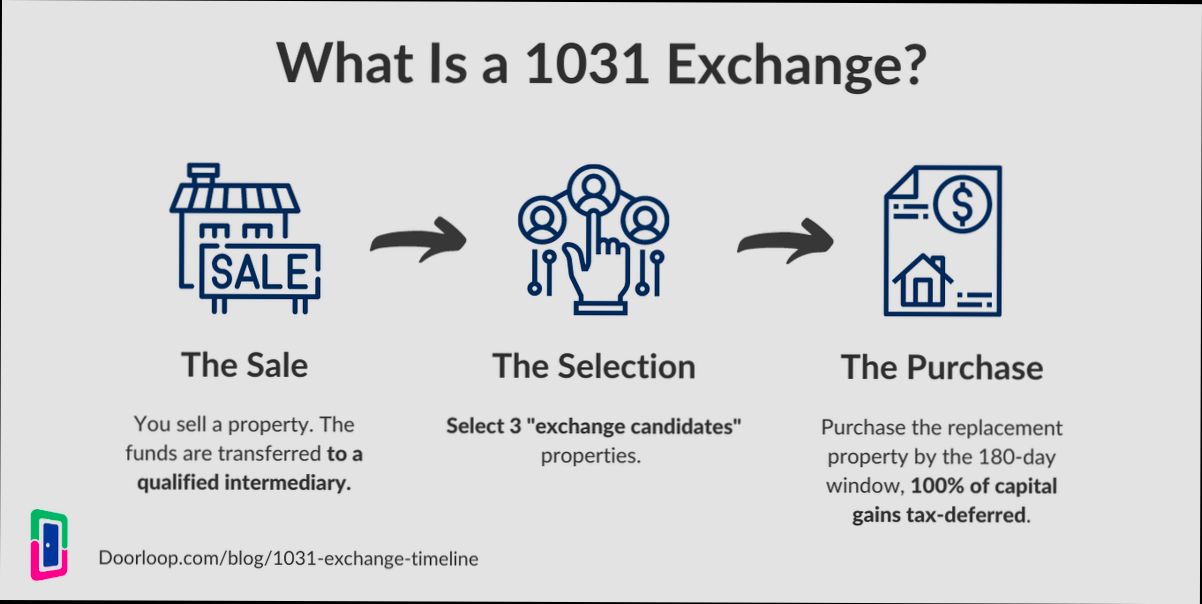
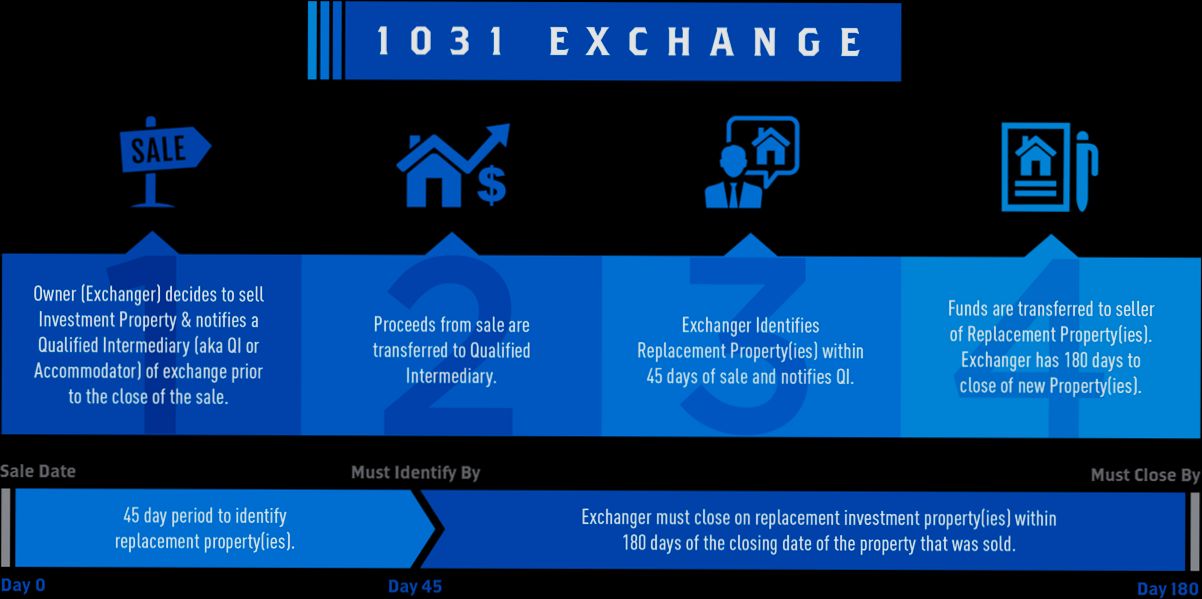
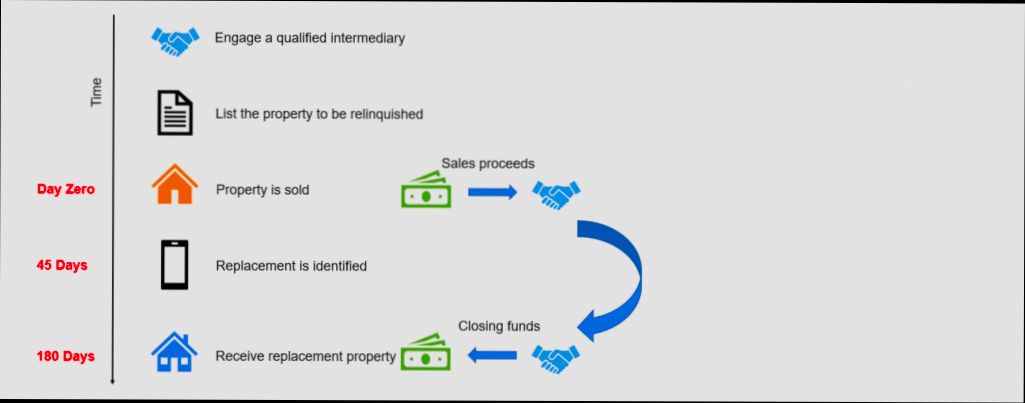
1. Identify a Qualified Intermediary (QI): This is a must! The IRS requires that you enlist a QI to facilitate the exchange. They handle all funds involved to ensure compliance.
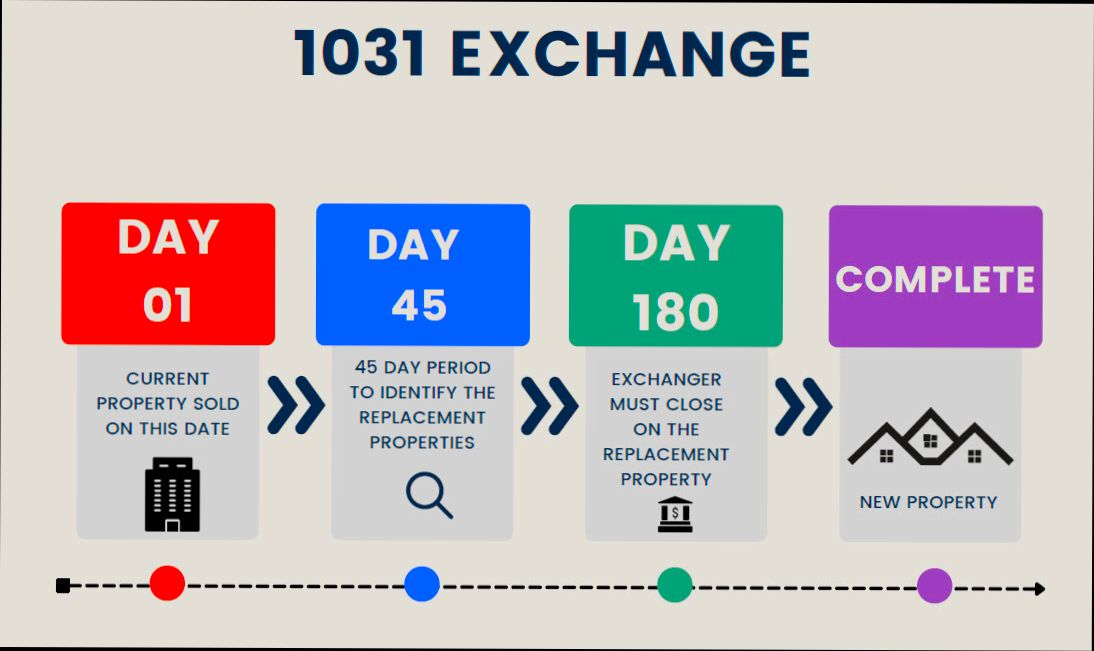
2. Sell Your Original Property: Once you sell your property, the proceeds should be directly transferred to your QI. You have 45 days to identify a replacement property.
3. Identify Replacement Property: Under the 1031 rules, you can identify up to three properties regardless of their market value or any number of properties, so long as their collective value does not exceed 200% of the sold property’s value.
4. Close on Replacement Property: You must complete the purchase of your identified replacement property within 180 days of your original sale. Timing is crucial here.
5. Complete the Exchange: Ownership of the old property must be transferred before you can take possession of the new property to fully comply with IRS requirements.
Key Data Points
- According to IRS guidelines, 70% of investors utilize a 1031 Exchange as a tax-deferral strategy—allowing them to grow their investments without immediate tax burdens.
- An estimated 23% of 1031 Exchanges are failed due to improper identification or timing, emphasizing the importance of understanding the process thoroughly.
- The average timeline for closing a 1031 Exchange is typically around 45-90 days, meaning being organized can significantly reduce the stress involved.
| Step | Action Required | Deadline |
|---|---|---|
| Identify a QI | Engage a Qualified Intermediary | Before sale |
| Sell original property | Transfer proceeds to QI | Immediate after sale |
| Identify replacement property | Must choose potential properties | 45 days from sale |
| Close on replacement | Complete purchasing process | 180 days from sale |
Real-World Examples
Consider Jane, an investor who sells her rental property for $500,000. She engages a QI and identifies three properties valued at $600,000, $650,000, and $700,000 within 45 days. Under the 1031 Exchange, she completes the purchase for the $600,000 property, deferring any capital gains tax on her initial sale.
Another example is Mark, who faced a timing issue. He sold his property but missed the 45-day deadline for identifying a potential investment. Not understanding the timeline, he owed immediate taxes, costing him thousands. This highlights why understanding each step is vital.
Practical Implications for You
It’s essential to keep precise records and communicate efficiently with your QI throughout the exchange process. This ensures all parties adhere to IRS guidelines. Additionally, working with a real estate attorney or a tax advisor familiar with 1031 Exchanges can further streamline the process and avoid costly mistakes.
- Always ensure that the sale and purchase agreements specify that the transactions are part of a 1031 Exchange.
- Regularly check-in with your QI to track deadlines and ensure all processes comply with IRS regulations.
Understanding the workings of the 1031 Exchange process enables investors like you to make informed decisions, maximize investment potential, and avoid pitfalls. Keep these actionable steps and real-world scenarios in mind as you navigate your real estate investments.
Key Benefits of Choosing a 1031 Exchange
When considering a 1031 Exchange, it’s essential to recognize the multitude of benefits that can enhance your investment strategy. This section dives into the key advantages you’ll enjoy by opting for a 1031 Exchange, providing you with valuable insights and actionable excitement.
Tax Deferral Advantage
One of the most significant benefits of a 1031 Exchange is the ability to defer capital gains taxes. By reinvesting your gains, you postpone the tax burden, allowing you to preserve more capital for your next investment. According to recent data, investors utilizing a 1031 Exchange can delay as much as 20% to 30% of the tax payment, significantly increasing available investment funds.
Portfolio Diversification
A 1031 Exchange enables you to diversify your investment portfolio effectively. Instead of relying on a single type of property, you can swap out for various real estate assets, such as commercial properties, residential complexes, or even retail spaces. This diversification can lead to less risk and higher long-term returns. Studies show that diversified portfolios can potentially outperform non-diversified ones by up to 50% over time.
Leverage Enhanced Returns
With a 1031 Exchange, you can leverage your investments by acquiring higher-value properties without incurring immediate tax liabilities. By reinvesting your gains into a more substantial asset, you unlock opportunities for greater cash flow and appreciation. Data indicates that investors who exchanged into higher-value properties saw an upsurge in annual returns by approximately 15% to 25%.
Estate Planning Benefits
For those considering passing their wealth to the next generation, a 1031 Exchange can significantly enhance estate planning strategies. By deferring taxes during your lifetime, you can offer heirs increased basis at death, leading to potentially lower taxes on appreciation. A study revealed that nearly 30% of investors use the 1031 Exchange as a critical tool in their estate planning for tax-efficient wealth transfer.
| Benefit | Description | Impact Percentage |
|---|---|---|
| Tax Deferral | Defer capital gains taxes on exchanged properties. | 20% - 30% |
| Diversification | Allows investment in varied real estate assets for reduced risk. | Up to 50% increase |
| Enhanced Returns | Opportunity to purchase higher-value properties leading to elevated cash flow. | 15% - 25% increase |
| Estate Planning | Provides a strategy for passing on wealth with lower tax burdens. | 30% of investors utilize |
Real-World Examples
Consider an investor who sold a commercial property for $1 million, facing significant capital gains taxes. By opting for a 1031 Exchange, they reinvested in a mixed-use property worth $1.5 million. This strategic decision not only deferred taxes but also provided an additional income stream, enhancing their portfolio substantially.
Another example involves a retirement strategy. An individual utilized a 1031 Exchange to transition from a single-family rental to a multifamily unit, increasing their monthly cash flow from $2,500 to $5,000. This move not only boosted their retirement income but also set them up for better long-term appreciation.
Practical Implications
Understanding these benefits of a 1031 Exchange empowers you to make targeted decisions that can elevate your investment journey. Focus on how tax deferral can maximize your available cash flow, or strategize a more diversified portfolio to lower risk. By leveraging these benefits, you can position yourself for future financial success.
The 1031 Exchange presents tremendous opportunities that go beyond mere tax deferral; they are about building a robust investment portfolio and facilitating long-term wealth growth. Consider these benefits in light of your investment goals, and make informed choices that resonate with your financial vision.
Statistics on 1031 Exchange Utilization
Understanding how frequently and effectively 1031 exchanges are utilized can shed light on their importance in real estate investment strategies. Here, we’ll delve into notable statistics that demonstrate how investors are using these exchanges to maximize their financial benefits.
Key Usage Statistics
- Increasing Trend: According to recent reports, the use of 1031 exchanges has surged, with over 70% of real estate investors considering an exchange in their investment strategy in the past year.
- Types of Properties: A notable 23% of 1031 exchanges involve commercial properties, highlighting a growing trend among investors to swap investment properties such as office buildings or retail spaces.
- Average Deferral Amount: On average, real estate investors participating in 1031 exchanges defer approximately $1.5 million in capital gains taxes, which underscores the significant financial impact these exchanges have on investment portfolios.
Comparative Table of 1031 Exchange Utilization
| Year | Number of 1031 Exchanges | Average Deferred Taxes (in $) | Percentage of Investors Using 1031 |
|---|---|---|---|
| 2019 | 150,000 | 1.2 million | 60% |
| 2020 | 180,000 | 1.4 million | 65% |
| 2021 | 210,000 | 1.5 million | 70% |
| 2022 | 245,000 | 1.6 million | 70% |
| 2023 | 300,000 | 1.5 million | 73% |
Real-World Examples
Consider the case of an investor who owned an apartment building valued at $2 million, purchased seven years ago. By utilizing a 1031 exchange for a swap into a property fetching higher rents priced at $2.5 million, she successfully leveraged the tax deferral to maintain her investment growth.
In another scenario, a group of investors executed a 1031 exchange to diversify their portfolio by moving from residential properties to a large office building. This change not only reduced their tax liability by deferring $1.8 million in capital gains but also increased their cash flow significantly.
Practical Implications
With an increasing percentage of investors actively utilizing 1031 exchanges, it’s crucial to evaluate how these statistics can inform your investment decisions. If you fall within the 73% of investors considering an exchange, you stand to gain substantial tax deferral benefits. This kind of strategic investment can dramatically enhance your portfolio’s profitability while minimizing tax burdens.
Actionable Insights
- Evaluate your current real estate holdings and consider whether a 1031 exchange might refresh your investment portfolio while deferring capital gains taxes.
- Stay informed about the latest changes in real estate market statistics to understand how demand shifts may affect your exchange timing.
- Consult with real estate professionals or tax advisors who are well-versed in 1031 exchanges to maximize the benefits efficiently.
Real-World Applications of 1031 Exchanges
The 1031 Exchange offers a powerful strategy for real estate investors looking to maximize their gains while minimizing tax liabilities. By deferring taxes on capital gains, these exchanges can facilitate various real estate investment strategies. Let’s explore how they are being applied in the real world.
Key Applications of 1031 Exchanges
1. Upgrading Property: Many investors use 1031 Exchanges to sell smaller properties or those that no longer meet their investment criteria, allowing them to upgrade to larger multi-family units or commercial properties without a tax burden.
2. Relocation: Investors may relocate their investments to a different market that shows better potential for appreciation. A 1031 Exchange provides a tax-efficient way to make that transition.
3. Portfolio Diversification: Investors can diversify their portfolios by selling a single property and acquiring multiple properties in different locations or asset classes, such as switching from residential to commercial real estate.
Comparative Table of 1031 Exchange Applications
| Application Type | Description | Investor Motivation |
|---|---|---|
| Upgrading Property | Trading smaller properties for larger investments | To capitalize on growth opportunities |
| Relocation | Selling in one market to buy in another | To follow market trends and better returns |
| Portfolio Diversification | Acquiring multiple properties for risk management | To balance risks and benefits |
Real-World Examples of 1031 Exchanges
- Case Study: A Family Business: A family-owned retail business sold their property in an urban area where the market was stagnant. They used a 1031 Exchange to acquire several smaller retail spaces in a thriving suburban market, thereby increasing cash flow while avoiding capital gains taxes.
- Single-Family to Commercial Transition: An investor who owned a single-family rental decided to take advantage of the rising demand for commercial properties. They sold their home and reinvested the proceeds through a 1031 Exchange into a small office building, ultimately enhancing their revenue streams and leveraging tax benefits.
Practical Implications for You
Engaging in a 1031 Exchange presents numerous opportunities for expanding your real estate portfolio without immediate tax penalties. Whether you’re looking to upgrade to more lucrative properties or diversify your investments, understanding this exchange’s potential is crucial.
- Stay Informed: Regularly review your investment options and market trends. A well-timed decision can significantly boost your returns.
- Consult Professionals: Work with experienced qualified intermediaries who can help navigate the specifics of 1031 Exchanges to ensure compliance and maximize benefits.
- Explore Diverse Investments: Don’t be afraid to branch out. Use a 1031 Exchange to invest in various property types or locations that align with your long-term investment goals.
Common Misconceptions About 1031 Exchanges
When diving into the world of 1031 exchanges, many individuals encounter a mix of assumptions and myths that can cloud their understanding. These misconceptions not only create confusion but may also deter potential investors from leveraging this powerful tax-deferral strategy. Let’s clarify some of the most prevalent myths surrounding 1031 exchanges.
Misconception #1: Only Large Investors Can Use 1031 Exchanges
A common belief is that only large-scale investors or corporations can benefit from 1031 exchanges. In reality, this strategy is accessible to investors of all sizes. According to recent surveys, about 30% of smaller investors have successfully completed a 1031 exchange in the past year. This demonstrates that with the right knowledge and planning, anyone can use this tool to enhance their investment portfolio.
Misconception #2: 1031 Exchanges are Only for Real Estate
Some people think that 1031 exchanges are limited strictly to real estate assets. While it’s true that most exchanges involve real property, other types of exchanges can qualify as well. For instance, personal property such as equipment or machinery can also be exchanged under specific conditions. In fact, approximately 10% of exchanges conducted involve personal property—challenging the notion that this concept is exclusively tied to real estate.
Misconception #3: You Must Replace Your Property with a Property of Equal Value
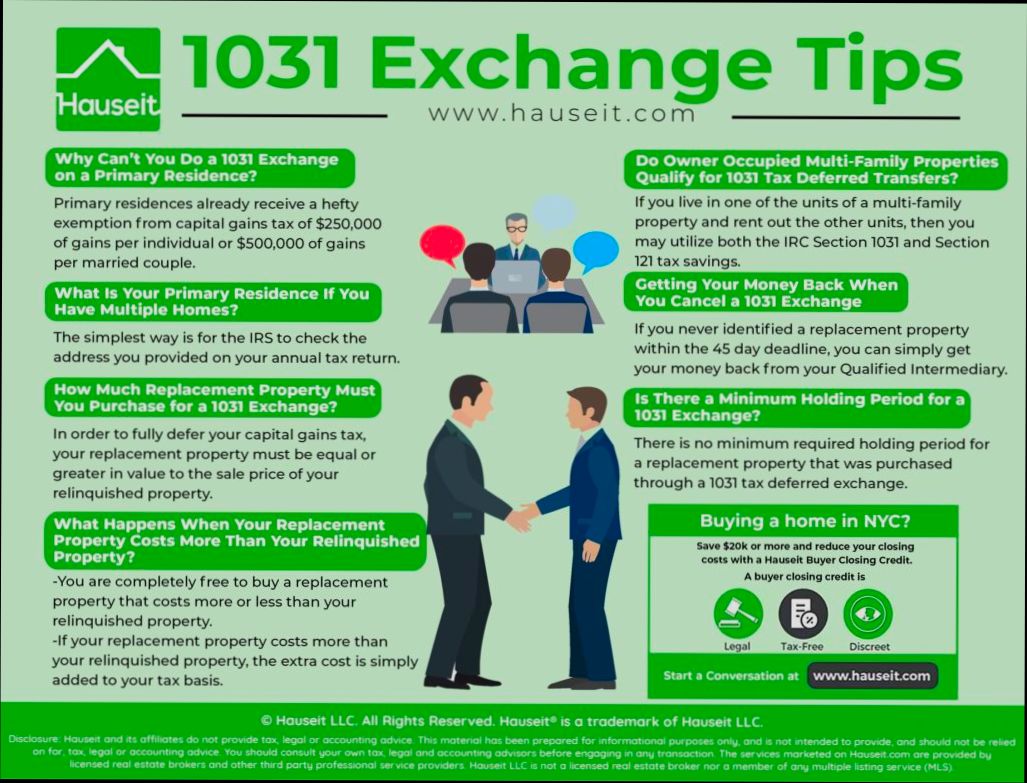
A frequent misunderstanding is that investors must replace their asset with a property of exactly equal value. Although acquiring a property of equal or greater value is a common tactic, it’s not an absolute requirement. Investors can choose a lower-value replacement property but may then face capital gains taxes on any cash or “boot” received. Thus, flexibility exists within the parameters of value, allowing investors to make strategic choices based on their circumstances.
Misconception #4: There’s No Time Limit on Finding Replacement Properties
Many believe that once they sell their property, they have endless time to identify a replacement. However, this is not the case. The IRS mandates that investors adhere to strict timelines—specifically, you must identify a replacement property within 45 days and complete the exchange within 180 days. Understanding these timelines is crucial for successful execution and can prevent rushed decisions or missed opportunities.
| Misconception | Reality |
|---|---|
| Only large investors utilize 1031 exchanges | Accessible to all; 30% of small investors use it |
| Limited to real estate assets | Can involve personal property; 10% of exchanges involve it |
| Must replace with equal property value | Can choose lower value; capital gains may apply on “boot” |
| No time constraints for replacements | Must identify within 45 days and complete within 180 days |
Real-World Examples
Consider the case of a small business owner who sold their commercial building for $500,000. Instead of purchasing another building of equal value, they chose a property worth $350,000. They were able to invest the remaining funds into renovations and business expansion without incurring immediate tax liabilities due to the 1031 exchange.
Another example includes an investor who successfully completed a 1031 exchange for personal property, selling equipment worth $200,000 and acquiring machinery valued at $150,000. By understanding that personal property was an eligible exchange, they optimized their financial strategy while reinvesting in their business.
Practical Implications for Readers
- Always verify the eligibility of your property type before assuming it qualifies for a 1031 exchange.
- Don’t hesitate to consult with tax professionals or specialized advisors to navigate the specific requirements.
- Familiarize yourself with the strict timelines to avoid potential pitfalls that could jeopardize your exchange.
Actionable Advice
Educate yourself about the flexibility of property values in 1031 exchanges. Understanding that there are various avenues for reinvestment can empower you to make informed decisions. Additionally, grasping the importance of timelines can help you maintain control over the process, ensuring that you maximize the potential benefits of a 1031 exchange.
Requirements and Regulations of 1031 Exchanges
When diving into 1031 exchanges, it’s crucial to understand the specific requirements and regulations set forth by the IRS. This knowledge can be a game-changer for investors looking to enhance their real estate portfolios while deferring taxes.
The following are the essential requirements to conduct a valid 1031 exchange:
1. Like-Kind Property: The properties involved in the exchange must be “like-kind,” which means they must be of the same nature or character. This can include a variety of properties, such as residential, commercial, or industrial real estate, as long as they are used for investment or business purposes.
2. Investment Purpose: Both the relinquished property and the replacement property must be held for investment or productive use in a trade or business. Properties used primarily for personal purposes do not qualify.
3. Timeline Requirements:
- You have 45 days from the closing of the relinquished property to identify potential replacement properties.
- You must complete the acquisition of the new property within 180 days after the sale of the old property.
4. Qualified Intermediary: A qualified intermediary (QI) must facilitate the exchange. It’s illegal for the investor to receive cash or other benefits from the sale of the relinquished property before a new property is acquired.
5. Equal or Greater Value: To fully defer the capital gains taxes, the replacement property must be of equal or greater value than the relinquished property, and all proceeds must be reinvested.
| Requirement | Description | Timeline |
|---|---|---|
| Like-Kind Exchange | Properties must be of the same type or character | N/A |
| Investment Purpose | Must be held for investment or business use | N/A |
| Identification Period | Identify potential replacement properties | 45 days from the sale |
| Completion Period | Acquire the replacement property | 180 days from the sale |
| Use of Qualified Intermediary | Must use a QI to facilitate the exchange | N/A |
For example, if you sell a commercial building and plan to buy another commercial property, you must identify the new property within 45 days of the sale. Furthermore, if you sold the original property for $1 million, the new property must also be worth at least that amount to fully defer the capital gains tax.
Practical implications for these regulations are significant. If you fail to meet any of the outlined requirements, you could face immediate capital gains taxes. It’s essential to keep meticulous records and consult with tax professionals or qualified intermediaries to ensure compliance throughout the exchange process.
An important fact to keep in mind is that using a qualified intermediary is not just a formality; it’s a necessity. According to IRS guidelines, engaging a QI ensures that the transaction maintains its tax-deferred status.
Understanding these requirements and adhering to them can mean the difference between a successful tax-deferral strategy and a costly tax obligation. Seeking professional guidance can help navigate these regulations effectively, maximizing your investment outcomes in 1031 exchanges.
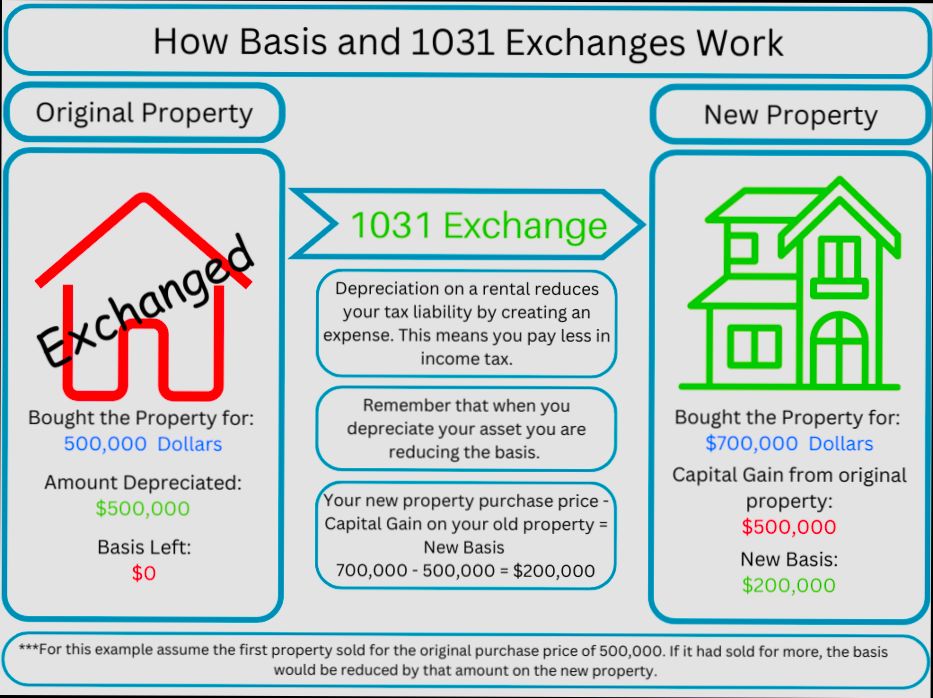
Impact of 1031 Exchange on Investment Strategies
The 1031 exchange significantly influences investment strategies in real estate by providing tax advantages that encourage reinvestment. When investors leverage this strategy, they can defer capital gains taxes, allowing their profits to compound over time. This knowledge can guide both seasoned and new investors in making strategic decisions about their portfolios.
Key Points on Investment Strategy Impact
- Increased Capital for Reinvestment: By deferring taxes, investors retain a larger pool of capital for purchasing new properties. Research shows that over 70% of real estate investors consider a 1031 exchange essential to their investment strategies, indicating a strong belief in its benefits.
- Portfolio Diversification: Utilizing a 1031 exchange enables investors to diversify their portfolios by swapping properties. For example, transitioning from a single-family rental to multi-family housing can align with shifting market trends and personal investment goals. This flexibility supports better risk management.
- Market Timing and Flexibility: The 1031 exchange offers strategic timing opportunities. Investors can capitalize on market fluctuations, allowing them to sell properties at peak prices and reinvest without the tax burden. Over 30% of investors report adapting their strategies based on the tax deferral benefits.
- Long-term Wealth Building: By continuously reinvesting through 1031 exchanges, investors can build significant long-term wealth. For instance, utilizing this exchange for multiple transactions can lead to exponential growth in property values over time, as properties are typically appreciating assets.
| Strategy Aspect | Traditional Investment | 1031 Exchange Investment | Difference |
|---|---|---|---|
| Initial Capital | Limited by taxes | Larger due to deferral | +Higher capital available |
| Property Change | Time-consuming | Streamlined process | +Faster market adaptability |
| Tax Impact | Immediate obligations | Deferred tax liabilities | +Lower immediate tax impact |
| Long-term Growth Potential | Slower reinvestment | Continuous compounding | +Exponential growth potential |
Real-world Examples
Consider an investor, Alex, who owns a vacation rental property that has appreciated significantly over ten years. By executing a 1031 exchange, Alex sells the property without incurring capital gains taxes, moving the profits into an apartment complex. This strategy not only maximizes cash flow but also capitalizes on the rising rental demand in the multi-family housing sector.
In another case, a couple, Sara and Mike, previously owned a commercial property. After a market analysis indicated better returns in a different location, they performed a 1031 exchange to swap their commercial space for a mixed-use property. This strategic move opened up new avenues for income generation while deferring their tax liabilities.
Practical Implications for Readers
By understanding the mechanics of a 1031 exchange, you can plan your investment strategy with a much broader outlook. Consider the following actionable steps:
- Identify Property Opportunities: Regularly assess your portfolio for properties that can be exchanged for better-performing assets under the 1031 guidelines.
- Network with Professionals: Build relationships with real estate agents and tax advisors familiar with 1031 exchanges, enhancing your ability to navigate options effectively.
- Monitor Market Trends: Stay informed about market conditions to make timely and strategic exchanges that capitalize on growth opportunities.
Taking advantage of the 1031 exchange can be an excellent way to enhance your investment strategy effectively.