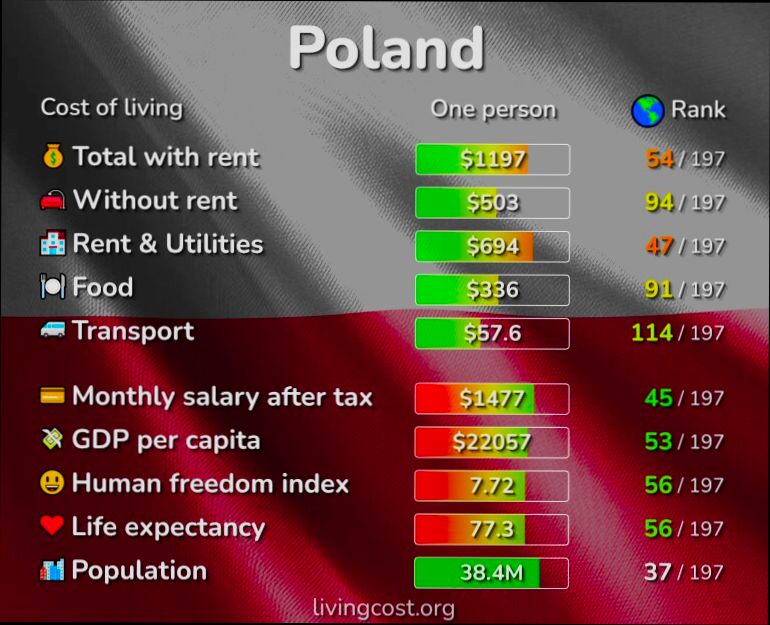
What is the Cost of Living in Poland? Well, let’s dive right into it! If you’re living in Warsaw, for example, you might shell out around 3,100 PLN (about $750) for a decent one-bedroom apartment in the city center. But venture a bit into the suburbs, and that price can drop to around 2,200 PLN ($520). Eating out is also a treat—grab a tasty pierogi for around 25 PLN ($6), while a meal for two at a mid-range restaurant can set you back about 150 PLN ($36).
Transportation in Poland? Super affordable! A monthly public transport pass in cities like Kraków or Gdańsk will cost you around 110 PLN ($26), making getting around a breeze without breaking the bank. Groceries are friendly to your wallet too; you could snag a dozen eggs for just 10 PLN ($2.30) or a kilogram of apples for about 4 PLN ($0.90). Overall, living in Poland might just surprise you with how much you can get for your money, whether you’re sipping coffee in a local café or riding the tram across town.
Understanding Poland’s Housing Costs
When diving into the housing market in Poland, it’s essential to grasp the nuances that come with it. From property prices to rental costs, several factors influence how much you’ll need to spend. Let’s break down the key components of housing costs in Poland to give you a clearer understanding.
Monthly Rent by City
Renting can be a significant part of your budget in Poland. Different cities showcase varying rental prices, reflecting local demand and economic conditions.
- In Warsaw, a one-bedroom apartment in the city center averages around 3,500 PLN (approximately $780).
- In Kraków, this drops to about 2,500 PLN ($545), whereas Wrocław offers similar rates at approximately 2,600 PLN ($570).
- Smaller cities, like Lublin, can offer one-bedroom rentals for as low as 1,600 PLN ($350).
Purchase Prices for Real Estate
If you’re considering buying property, it’s useful to compare prices across various regions:
| City | Average Price (PLN/sqm) | Average Price (USD/sqm) |
|---|---|---|
| Warsaw | 12,000 | $2,600 |
| Kraków | 9,500 | $2,100 |
| Wrocław | 8,800 | $2,000 |
| Lublin | 6,000 | $1,350 |
Influencing Factors for Housing Costs
Several elements impact housing costs:
- Location: Major urban centers tend to have higher costs. For instance, Warsaw’s prices are significantly higher compared to more rural areas.
- Demand and Supply: Popular cities attract more expatriates and professionals, driving prices up.
- Condition of Property: Newly renovated or modern apartments demand a premium, while older buildings may be more affordable.
Real-World Examples
Consider a family looking to rent in Poland. If they choose to live in Warsaw, their monthly rent could take a hefty chunk of their salary. Alternatively, opting for a rental in a smaller city like Lublin could allow them to save money, perhaps using the difference for utilities or savings.
A young professional moving to Kraków might find that a small studio offers not just affordable rent but also proximity to job opportunities and vibrant culture. This decision can greatly affect their living experience and finances.
Practical Tips for Navigating Housing in Poland
- Research Multiple Sources: Use local property websites like Otodom or Almamedia to compare listings and find the best deals.
- Consider Short-Term Rentals First: If you’re unsure about committing long-term, starting with a short-term rental can help you assess the market.
- Negotiate: Renting in Poland often comes with some room for negotiation on price. Don’t hesitate to discuss terms with landlords.
- Explore Suburbs: Living just outside major city centers can yield significant savings without sacrificing access to amenities.
In tracking housing costs in Poland, always consider your lifestyle preferences, commuting needs, and how much flexibility you want in your budget. Understanding these dynamics will empower you to make informed housing decisions tailored to your needs.
Examining Average Grocery Prices in Poland
When exploring the cost of living in Poland, grocery prices are a crucial aspect to consider. They can significantly impact your monthly budget. Let’s dive into the average grocery prices and how they have evolved recently, along with comparisons to other regions.
Current Trends in Grocery Prices
A few key trends have emerged in grocery prices across Poland, notably influenced by factors such as global events and local economic conditions. As per the analysis from a local Carrefour supermarket, here are the following important points regarding grocery prices:
- Price Increases: In 2023, food prices rose approximately 15.7% year-on-year, marking one of the highest increases observed.
- Market Stability: After a notable increase in food prices during early 2024, there appears to be a stabilization trend observed in the latter part of that year, which could bring some relief for consumers.
- EU Comparison: While grocery prices in Poland are generally lower than the EU average, recent trends show that staples like dairy products have seen sharp price increases, making them comparable to prices in Western Europe.
Overview of Grocery Price Points
Using data from Carrefour, I’ve compiled a snapshot of average prices for essential items over several months to highlight shifts in pricing. Below is a comparative table of select grocery items recorded on December 23, 2024, against prices from earlier months.
| Product | April 2024 (PLN) | August 2024 (PLN) | December 2024 (PLN) |
|---|---|---|---|
| Milk (1L) | 3.50 | 3.60 | 3.70 |
| Bread (500g) | 2.50 | 2.70 | 2.80 |
| Chicken Breast (1kg) | 20.00 | 22.00 | 24.00 |
| Apples (1kg) | 4.00 | 4.50 | 4.80 |
| Eggs (10 pieces) | 8.50 | 9.00 | 9.50 |
Real-World Examples of Price Changes
During my visit to Carrefour, I noticed specific products saw notable fluctuations. For example:
- Chicken Breast: Prices increased significantly from PLN 20.00 in April 2024 to PLN 24.00 by December 2024, reflecting rising costs in food production across Europe due to energy and labor.
- Dairy Products: Milk climbed from PLN 3.50 to PLN 3.70 for a liter, demonstrating increased production costs and volatile supply chains stemming from regional conflicts and climate conditions.
- Produce Prices: Fresh fruit like apples also saw a jump in prices, rising from PLN 4.00 to PLN 4.80 just over the latter half of 2024.
Practical Implications for Shoppers
Understanding these price trends can help you plan your grocery budget effectively:
- Budgeting: If you rely heavily on dairy or meat, consider allocating more funds given the upward trend in prices.
- Shopping Seasons: Pay attention to seasonal variations; fresh produce prices can fluctuate based on harvest seasons, impacting overall expenses.
- Local Markets: Explore local markets for potentially lower prices on fruits and vegetables, often more competitively priced than supermarket chains.
Specific Insights on Grocery Shopping in Poland
- Regularly review prices across different supermarkets to find the best deals, as shown by the fluctuations at Carrefour.
- Be aware of promotions around holidays, but always check the recorded lowest prices in the previous month to avoid overpaying.
- Engage in meal planning to maximize your grocery budget, taking advantage of in-season products that tend to be cheaper.
By keeping an eye on these trends, you can make informed choices when shopping for groceries in Poland, ultimately helping you manage your cost of living more effectively.
Transportation Expenses in Major Polish Cities
Transportation expenses can significantly impact your overall cost of living, especially in bustling cities like Warsaw, Kraków, and Wrocław. Understanding the nuances of public transport, taxi services, and other commuting options helps you plan your budget effectively.
Public Transportation Costs
Most major Polish cities boast extensive and affordable public transportation networks, making it convenient to travel without breaking the bank. Here’s a quick look at the average monthly pass prices in key cities:
- Warsaw: A monthly ticket costs about 120 PLN (approximately $26).
- Kraków: You’ll pay around 95 PLN (about $21) for unlimited travel.
- Wrocław: The monthly fare is approximately 93 PLN (close to $20).
Cost of Taxi Services
If you prefer the convenience of taxis, knowing the pricing structure is essential. Typical taxi fares vary among cities, but they often start around:
- Warsaw: The base fare is 8 PLN ($1.75), with an additional cost of around 2.40 PLN ($0.52) per kilometer.
- Kraków: Expect a starting fare of 6 PLN ($1.30), and about 2.60 PLN ($0.57) per kilometer thereafter.
- Wrocław: The starting fare is also around 8 PLN ($1.75), with an additional 2.40 PLN ($0.52) per kilometer.
Comparative Table of Transportation Costs
| City | Monthly Public Transport Pass | Taxi Base Fare | Cost per Kilometer |
|---|---|---|---|
| Warsaw | 120 PLN ($26) | 8 PLN ($1.75) | 2.40 PLN ($0.52) |
| Kraków | 95 PLN ($21) | 6 PLN ($1.30) | 2.60 PLN ($0.57) |
| Wrocław | 93 PLN ($20) | 8 PLN ($1.75) | 2.40 PLN ($0.52) |
Real-World Examples
Imagine you’re living in Warsaw and relying on public transport for your daily commute. If you take public transit every weekday, you might spend around 120 PLN monthly, which is economical compared to the potential taxi fares for those same trips. For office workers in Kraków, many find the city’s tailored public transport options sufficient for both work and leisure.
Scenario-wise, if you’re going out on weekends and using a taxi instead of public transport, the costs can quickly stack up. For instance, a typical ride across the city might cost you about 25 PLN ($5.50). Frequent taxi users might find they should consider the public transportation alternative to help manage their budget effectively.
Practical Implications
Understanding the transportation system can save you money in your monthly budget. Consider adopting these practices:
- Use Public Transport: Rely on buses and trams, especially for daily commutes, to keep transportation costs low.
- Taxi Apps: Use ride-sharing apps to monitor taxi fares and find competitive pricing.
- Monthly Passes: If you regularly use public transportation, invest in a monthly pass for significant savings.
Actionable Tips
- Check City Transport Websites: Stay updated on travel options and any discounts available for students or seniors.
- Consider Cycling: Many cities, including Warsaw, are expanding bike lanes, offering an excellent and cost-effective commuting option.
- Plan Your Routes: Familiarize yourself with city maps and public transport timetables to maximize efficiency and minimize wait times.
These insights on transportation expenses in Poland’s major cities can significantly enhance your budgeting strategy, allowing you to enjoy all the vibrant experiences Poland has to offer.
Statistical Overview of Living Costs in Poland
When considering the cost of living in Poland, it’s vital to understand the broader statistics that showcase how prices vary across different sectors. From utility bills to healthcare, these numbers help paint a clear picture of what you can expect in your monthly budget.
Key Insights into Living Costs
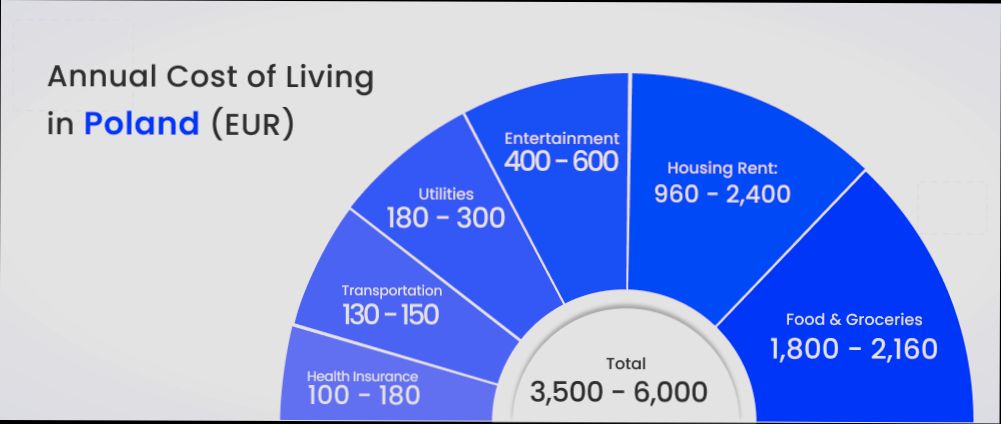
- Utilities: On average, the monthly cost of utilities (including electricity, heating, cooling, water, and garbage) for a standard apartment is around 650 PLN (approximately $140). This figure can vary significantly depending on the city and the size of the apartment.
- Healthcare Costs: Poland offers public healthcare options, but many choose private services for quicker access and higher quality. A routine doctor visit can range from 150 to 300 PLN ($32 to $65), depending on the specialist.
- Internet and Mobile Plans: The average cost of high-speed internet is about 80 PLN (approximately $17) per month, while mobile phone plans start at around 40 PLN ($8.50) for basic packages.
- Dining Out: Eating at a mid-range restaurant typically costs around 80 PLN ($17) for a three-course meal for two people, providing a familiar yet affordable dining experience.
Comparative Overview of Living Costs
| Expense Category | Average Monthly Cost (PLN) | Average Monthly Cost (USD) |
|---|---|---|
| Utilities | 650 | 140 |
| Healthcare (doctor visit) | 225 (average) | 50 |
| Internet | 80 | 17 |
| Mobile Plan | 40 | 8.50 |
| Dining Out | 80 | 17 |
Real-World Examples
In a recent survey, individuals living in Kraków reported utility costs averaging around 600 PLN monthly, depending on the season. Meanwhile, residents in smaller cities like Lublin noted their dining expenses significantly lower, yet still enjoying an average restaurant bill of only 60 PLN ($13) for a similar three-course meal.
These experiences underline the importance of considering location when budgeting for everyday expenses in Poland. Individuals should also be mindful of seasonal fluctuations in heating costs, particularly in winter.
Practical Implications
By gaining insights into these cost aspects, you can better prepare for your living arrangements in Poland. For example:
- When budgeting for utilities, always account for seasonal changes, especially during winter months when heating costs can spike.
- Consider if you’d prefer to rely on public or private healthcare services, as this choice will also impact your monthly expenses.
- When dining out, explore local eateries and special lunch menus, which often provide better value and unique culinary experiences.
Specific facts about living costs in Poland highlight that, while prices right now reflect a moderate increase, there remain affordable options across various categories. Understanding these data-driven insights can help you make informed financial decisions as you plan your life in Poland.
Real-World Examples of Expat Living Costs
When you decide to move to Poland as an expat, understanding the living costs you’ll incur is crucial. Many factors come into play, including leisure activities, healthcare, and personal care expenses. Let’s dive into specific examples of what expats typically spend in various categories while living in Poland.
Key Expat Living Costs
Here are some average costs that expatriates can expect in Poland:
- Dining Out: Enjoying a meal at a mid-range restaurant will typically set you back around 60 PLN ($13) per person, while a McDonald’s combo meal costs around 25 PLN ($5.50).
- Healthcare: Many expats opt for private health insurance. Plans can range from 150 PLN ($32) to 500 PLN ($110) per month, depending on coverage.
- Entertainment: A monthly gym membership usually hovers around 150 PLN ($32), an accessible way to maintain a healthy lifestyle.
- Personal Care: Regular haircuts cost approximately 60 PLN ($13), making grooming affordable for residents.
- Childcare: If you have children, you can expect to pay around 1,500 PLN ($330) monthly for daycare services, a notable consideration for young families.
Comparative Expat Costs Table
| Expense Type | Average Cost (PLN) | Average Cost (USD) |
|---|---|---|
| Dining Out (per meal) | 60 | 13 |
| Healthcare (monthly) | 150-500 | 32-110 |
| Gym Membership (monthly) | 150 | 32 |
| Haircut | 60 | 13 |
| Childcare (monthly) | 1,500 | 330 |
Real-World Examples
Consider Alex, a digital nomad living in Kraków. He spends around 200 PLN ($44) weekly on groceries, which he combines with dining out about three to four times a week, adding roughly 240 PLN ($52) a month to his food budget. Alongside this, he takes a gym membership that costs about 150 PLN ($32) monthly. His total monthly budget for food and fitness comes to around 590 PLN ($128).
On the other hand, Maria, a teacher with two kids in Gdańsk, reports childcare expenses of 1,500 PLN ($330) monthly. Along with her family’s healthcare costs averaging 300 PLN ($66) each month for private insurance, her additional discretionary spending, such as entertainment and dining, amounts to approximately 500 PLN ($110). This adds up to around 2,300 PLN ($500) for essentials.
Practical Implications for Expats
Knowing these costs can significantly help you manage your budget. For instance, you might want to explore local cuisine rather than dining out to save money. Additionally, consider investing in a monthly transportation pass, as it may offer savings compared to individual ride payments to travel conveniently.
It’s wise to keep track of your spending in categories where you notice you might be spending more than expected. Adjusting your budget based on real-world examples like Alex and Maria’s experiences can provide a clearer picture of what you need versus what you want.
Be proactive in seeking discounts and deals, especially on health and fitness services, as many places offer promotional rates for first-time users.

Benefits of Living in Poland’s Urban Areas
Living in urban areas of Poland offers a myriad of benefits, especially for those who enjoy a vibrant lifestyle with access to various amenities. The pulsating life in cities like Warsaw, Kraków, and Wrocław is not just about being part of a community; it also translates into practical advantages for your daily living.
Access to Employment Opportunities
Urban areas in Poland are economic powerhouses. Here are some noteworthy points regarding employment:
- Job Availability: In major cities, job opportunities abound across multiple sectors, with urban centers accounting for approximately 80% of the country’s GDP.
- Diverse Industries: Major cities host various industries including IT, finance, and creative sectors, enhancing your chances of finding a job that suits your qualifications.
Cultural and Recreational Activities
Living in urban Poland means never running out of things to do:
- Cultural Events: Cities like Kraków and Warsaw regularly organize over 300 cultural events annually including concerts, festivals, and exhibitions.
- Entertainment Facilities: With multiple theaters, galleries, and concert halls, urban dwellers can enjoy unique experiences every weekend. For instance, Warsaw boasts over 20 theaters, providing diverse options for entertainment.
Educational Advantages
Poland’s urban areas are home to some of the best educational institutions:
- Higher Education: Approximately 70% of the nation’s universities and colleges are in urban settings, including well-regarded universities like the University of Warsaw and Jagiellonian University.
- Language Proficiency: Urban centers often facilitate access to language schools and international curriculums, enriching your educational experience.
Quality of Life and Services
Urban living provides you with essential services and a higher quality of life:
- Healthcare Access: Major cities offer a range of healthcare facilities, and urban residents have access to about 30% more healthcare services than those in rural areas.
- Public Services: You benefit from efficient city services, including waste management and public safety, which are often subsidized, resulting in reduced personal costs.
| Benefit Category | Urban Areas | Rural Areas |
|---|---|---|
| Employment Opportunities | High | Lower |
| Cultural Events | 300+ per year | Limited |
| Access to Universities | 70% of all | 30% of all |
| Healthcare Accessibility | 30% more services | Fewer services |
| Public Transport Availability | Extensive network | Limited |
Real-World Examples
Consider the case of a young professional moving to Warsaw. With around 34% of job seekers finding employment within one month in urban areas, they likely secured a position in an IT firm, taking advantage of the city’s tech hub. On weekends, they enjoy one of the city’s many music festivals, attended by thousands, cultivating a lively social scene and enhancing their cultural knowledge.
Practical Implications
For anyone considering a move, the numerous benefits of urban living in Poland are clear. You can leverage the job market, partake in cultural experiences, and access quality healthcare and education—all contributing to a rich and fulfilling life.
Actionable Advice
If you’re looking to maximize your urban living experience in Poland, start by exploring neighborhoods with high cultural activity and employment rates. Don’t hesitate to engage in local events; this is a fantastic way to network and enhance your community ties.
Healthcare Costs and Quality in Poland
Navigating healthcare costs and quality in Poland is crucial for a well-rounded understanding of living in the country. Whether you’re a local or an expatriate, knowing how healthcare operates can greatly influence your budget and well-being.
Overview of Healthcare Costs
In Poland, healthcare operates on a dual system: public and private. Many residents have access to the public healthcare system funded by the National Health Fund (NFZ), but private healthcare is gaining popularity due to reduced wait times and enhanced services.
- Public Healthcare Contributions: As a Polish citizen or resident, you contribute approximately 9% of your income to public healthcare, which covers a wide array of services.
- Private Healthcare Costs: For those opting for private healthcare, expect to pay around 150-300 PLN ($33-$66) for a general practitioner visit and around 400-1000 PLN ($88-$220) for specialist consultations.
Quality of Healthcare Services
Poland has made significant strides in improving healthcare quality, yet regional disparities exist.
- Life Expectancy: The average life expectancy in Poland is around 78 years, which highlights the effectiveness of healthcare services.
- Hospital Bed Density: Poland boasts approximately 6.5 hospital beds per 1,000 people, which is comparable to the EU average but may impact service availability during peak times.
Comparative Table of Healthcare Costs
| Service | Public Cost (PLN) | Private Cost (PLN) |
|---|---|---|
| General Practitioner Visit | Covered by NFZ | 150 - 300 |
| Specialist Consultation | Covered by NFZ | 400 - 1000 |
| Dental Check-up | Covers basic care | 200 - 500 |
| Basic Laboratory Tests | Covered by NFZ | 50 - 150 |
Real-World Examples
One example that stands out is the growing presence of private healthcare facilities in major cities like Warsaw and Kraków. Many expats choose private health insurance not just for quicker access but also for elective procedures, leading to satisfaction rates of over 90% with private services according to industry statistics.
A case study from a recent survey indicates that patients who opted for private healthcare reported significantly shorter wait times—average wait time for a specialist was just 5 days, compared to up to 3 months in public facilities.
Practical Implications for Residents
If you’re looking to manage your healthcare costs effectively in Poland, consider these actionable tips:
- Public vs. Private: Weigh the pros and cons of public versus private healthcare. For routine check-ups, public healthcare suffices; however, for specialist care, private services often deliver quicker results.
- Health Insurance: If you’re an expatriate, invest in comprehensive health insurance that covers private healthcare options to bypass long wait times.
- Routine Care: Stay informed about what is covered under public healthcare to maximize benefits and reduce out-of-pocket expenses.
Specific Facts and Actionable Advice
- Preventive Care: Taking advantage of preventive care services covered by the NFZ can save you money in the long run. Regular screenings and vaccinations are often free.
- Utilization of Online Services: With the rise of telemedicine, consider online consultations as they can lower costs while still providing access to quality healthcare.
Being informed about healthcare costs and quality in Poland not only prepares you financially but ensures that you can take full advantage of the health services available to you.