What are the Costs of Moving to Thailand? Well, it’s not just about booking a flight and finding a place to crash. For instance, if you’re eyeing cities like Bangkok or Chiang Mai, your budget can really take a hit. Monthly rent for a one-bedroom apartment in Bangkok averages around 600 to 1,200 USD, depending on the district. Meanwhile, Chiang Mai offers a more affordable range of 300 to 700 USD, but remember, utilities can add up quickly—expect to pay around 100 to 200 USD every month for electricity and internet.
Think about your daily expenses, too. Good food is super affordable; you can snag a delicious street meal for as little as 1.50 USD. But if you lean toward dining out at mid-range restaurants, budget around 15 to 30 USD per meal. Don’t forget healthcare costs—expats usually opt for private insurance averaging about 50 to 150 USD a month. All these numbers paint a clearer picture about the financial side of relocating. So, if Thailand has your heart, it’s time to crunch some numbers!
Housing Costs and Accommodation Options
When considering a move to Thailand, understanding the spectrum of housing costs and accommodation options is crucial for budgeting and lifestyle planning. In this section, I’ll break down what you can expect in terms of rental prices, types of housing available, and practical implications for your new life in Thailand.
Key Points on Housing Costs
- Rental Prices: In major cities like Bangkok and Chiang Mai, expect to pay between 15,000 to 30,000 THB ($450 to $900 USD) per month for a one-bedroom apartment in the city center. This can significantly drop to around 7,000 to 15,000 THB ($210 to $450 USD) if you choose to live away from the hustle and bustle.
- Utilities: On average, anticipate spending about 2,000 to 4,000 THB ($60 to $120 USD) monthly for utilities, which typically cover electricity, water, and internet services. Utilities can vary based on lifestyle and the size of your accommodation.
- Long-term Rentals: Long-term rentals (6 months or more) may afford you discounts, with prices often reduced by 10-20%. For example, a one-bedroom unit priced at 20,000 THB per month could drop to around 16,000-18,000 THB if leased for a year.
- Security Deposits: Typically, a security deposit of one to two months’ rent is standard in Thailand, so factor this into your initial moving costs.
Comparative Table of Housing Costs
| City | Average Rent (1-BR City Center) | Average Rent (1-BR Outside Center) | Utilities (Monthly) |
|---|---|---|---|
| Bangkok | 25,000 THB ($750 USD) | 10,000 THB ($300 USD) | 3,000 THB ($90 USD) |
| Chiang Mai | 18,000 THB ($540 USD) | 7,000 THB ($210 USD) | 2,500 THB ($75 USD) |
| Phuket | 22,000 THB ($660 USD) | 12,000 THB ($360 USD) | 3,500 THB ($105 USD) |
| Pattaya | 20,000 THB ($600 USD) | 9,000 THB ($270 USD) | 2,800 THB ($84 USD) |
Real-World Examples
- An expat couple moving to Bangkok found a comfortable one-bedroom apartment for 22,000 THB. They saved on utilities, averaging 2,800 THB monthly, as they were mindful of their air conditioning usage.
- A digital nomad in Chiang Mai opted for a seven-month lease in a shared house, bringing their total housing cost to about 12,000 THB per month, which included utilities. This choice allowed them to enjoy a vibrant community while keeping costs low.
Practical Implications
- Location Matters: Your choice of city and neighborhood can significantly impact your living expenses. While city centers offer convenience, living slightly further out can yield substantial savings.
- Lease Agreements: Be cautious about the lease terms. Many landlords may ask for a two-month security deposit, so having extra cash set aside can alleviate stress when you find the right place.
- Consider Short-term vs. Long-term: If you are unsure where to settle, consider starting with a short-term rental. This way, you can explore various neighborhoods and find the best fit before committing to a long-term lease.
Specific Facts and Actionable Advice
- Ask for furnished apartments to save on initial setup costs. Many landlords provide basic furnishings, which can help reduce your moving costs.
- Join expat groups online to gather insights and recommendations on affordable housing options in your desired city. It’s a great way to find listings that may not appear on typical rental websites.
- Regularly check rental listings and be ready to act quickly, as desirable properties often rent out fast. Keeping a budget and a list of priorities can streamline your search.
Healthcare Expenses for Expats in Thailand
When moving to Thailand, understanding healthcare expenses is vital for both budget planning and peace of mind. Healthcare costs can vary significantly depending on the facility, type of service, and your insurance coverage. Let’s explore the specifics you’ll need to navigate medical expenses as an expat in Thailand.
Key Healthcare Expenses Overview
1. Medical Insurance: Most expats opt for private health insurance, which typically costs between 25,000 to 100,000 THB ($700 to $2,800 USD) per year depending on coverage levels and age.
2. Out-of-Pocket Costs: If you choose to pay out-of-pocket, a general practitioner’s visit in a private clinic might cost around 1,000 THB ($30 USD), while a specialist could charge from 1,500 to 3,000 THB ($45 to $90 USD).
3. Hospital Facilities: Private hospitals, known for high standards of service, can charge significantly more. Daily hospital stays might range from 5,000 to 15,000 THB ($150 to $450 USD), depending on the treatment required.
4. Routine Check-ups: Basic health check-ups fall around 3,000 to 10,000 THB ($90 to $300 USD). Comprehensive packages that include blood tests and imaging are available at higher rates.
5. Emergency Services: Emergency room visits can range from 3,000 to 10,000 THB ($90 to $300 USD), and additional treatments may apply if hospitalization is necessary.
Healthcare Expenses Comparative Table
| Service Type | Cost (THB) | Cost (USD) |
|---|---|---|
| Medical Insurance (annual) | 25,000 - 100,000 | $700 - $2,800 |
| GP Visit | 1,000 | $30 |
| Specialist Visit | 1,500 - 3,000 | $45 - $90 |
| Daily Hospital Stay | 5,000 - 15,000 | $150 - $450 |
| Routine Check-up | 3,000 - 10,000 | $90 - $300 |
| Emergency Room Visit | 3,000 - 10,000 | $90 - $300 |
Real-World Examples
Case Study 1: John, a 35-year-old expat in Bangkok, opted for a comprehensive health insurance plan costing 45,000 THB ($1,300 USD) annually. When he required an emergency appendectomy, his total hospital bill came to 80,000 THB ($2,300 USD), but his insurance covered most expenses except for a deductible of 10,000 THB ($300 USD).
Case Study 2: Sarah, a retiree living in Chiang Mai, visited a private clinic for a check-up costing 4,500 THB ($135 USD). She did not have insurance at first, but after her experience, she decided to purchase a plan costing 35,000 THB ($1,000 USD) yearly for added security against future medical needs.
Practical Implications for Expats
- Research Insurance Options: Investigate various health insurance options before relocating to find the best coverage suited for your health and financial needs.
- Consider Public vs. Private Care: Public healthcare is available, but many expats prefer private healthcare for shorter waiting times and better amenities. Assess what matters most to you.
- Budget for Medical Expenses: As you plan your finances, set aside a dedicated fund for healthcare to cover out-of-pocket expenses that insurance may not fully address.
Actionable Advice on Healthcare Expenses
- Explore Local Resources: Use expat forums and local resources to find recommended clinics and hospitals, allowing you to compare costs and services.
- Stay Informed on Coverage: Regularly review and understand your health insurance policy to ensure you’re not caught off guard by unexpected expenses.
- Preemptive Health Measures: Investing in routine health check-ups can catch potential issues early and save on costs in the long run. Prioritize health to minimize unforeseen medical expenses.
Statistical Overview of Moving Costs
Moving to Thailand brings excitement but also a range of costs that you should consider. Understanding the statistical breakdown of these costs can help you navigate your financial planning more effectively.
Key Moving Cost Statistics
When you’re planning a move, here are some important statistics to keep in mind:
- International Shipping Costs: The average cost of shipping a 20-foot container to Thailand can range from $2,000 to $4,000, depending on your origin country and the shipping company.
- Air Freight Costs: For smaller shipments, air freight can cost approximately $10 to $15 per kilogram, making it beneficial for urgent items but expensive for large volumes.
- Customs Duties: Thailand imposes a customs duty that can be as high as 30% on specific imported goods, impacting your overall moving budget if you’re bringing items over.
- Insurance Costs: Don’t forget to factor in insurance, which averages around 1% of the declared value of the goods shipped, providing peace of mind against loss or damage during transit.
- Storage Costs: If you need temporary storage for your belongings, the cost can range from 1,000 to 2,500 THB ($30 to $75 USD) per month for a standard storage unit.
Comparative Table of Moving Costs
| Cost Component | Estimated Cost (USD) | Estimated Cost (THB) |
|---|---|---|
| Shipping a 20-foot container | $2,000 - $4,000 | 66,000 - 132,000 |
| Air freight per kilogram | $10 - $15 | 330 - 495 |
| Customs duties | Up to 30% of value | Varies |
| Insurance (1% of value) | Varies | Varies |
| Monthly storage costs | $30 - $75 | 1,000 - 2,500 |
Real-World Examples
Consider an expat who moves from the US, shipping a 20-foot container of their belongings valued at $40,000. They would anticipate spending around $4,000 on shipping costs, plus another $12,000 in potential customs duties. Alternatively, someone bringing just a few essential items might prefer air freight at $350 for a 25 kg shipment, which while expensive, ensures quicker delivery.
Practical Implications
Being aware of these costs allows you to make informed decisions about what to bring to Thailand. For instance, it might be more economical to sell larger appliances in your home country rather than pay hefty shipping or customs fees.
Specific Facts and Actionable Advice
When budgeting for your move to Thailand, prioritize essential items and consider shipping costs against the values of your items. Always obtain multiple quotes from shipping companies and explore local options for insurance to ensure you’re getting the best rate. This way, you can better align your budget with realistic moving expenses and avoid unexpected financial burdens.

Cost of Living Comparisons: Thailand vs. Home Country
As you think about moving to Thailand, one of the most significant considerations will be the cost of living compared to your home country. Understanding these differences can help you make informed financial decisions and plan for a smooth transition.
Living in Thailand is generally more affordable than many Western countries. For instance, the average cost of living for one person in Thailand is around $832, while in the United States, it’s a substantial $2,498. This stark contrast highlights how moving to Thailand can open up doors to a more budget-friendly lifestyle.
Key Points on Costs
- Housing: Rent in Thailand is significantly lower. A one-bedroom apartment in central Bangkok costs about $497, compared to $1,640 in major cities in the U.S.
- Food: Monthly food expenses can be managed on around $266 in Thailand versus $638 in the United States.
- Utilities: Expect only about $49.4 for utilities in Thailand, while in the U.S., it can be around $124.
- Transportation: Local transport is notably cheaper, costing $1 for a local transport ticket in Thailand, compared to $2.35 in the U.S.
| Expense Category | Thailand | United States |
|---|---|---|
| Average cost of living (1 person) | $832 | $2,498 |
| One-bedroom apartment (city center) | $497 | $1,640 |
| Monthly food expenses | $266 | $638 |
| Utilities for one person | $49.4 | $124 |
| Local transport ticket | $1 | $2.35 |
Real-world Cost Comparisons
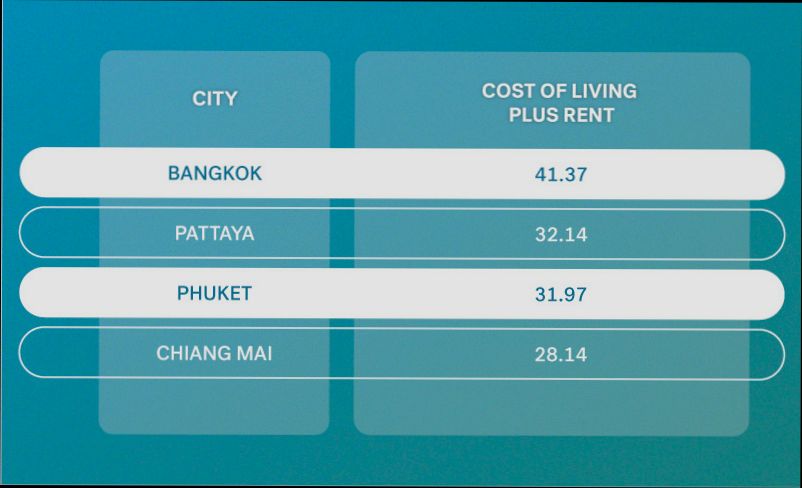
Take living in Bangkok as an example. The cost of living there is $941, which starkly contrasts with cities like New York City, where living expenses can reach $4,441. This means resettling from such an expensive city to Bangkok could lead to significant financial savings.
Similarly, moving from Los Angeles, where costs average $3,196, to Chiang Mai in Thailand, which is around $691, offers an opportunity for a more flexible financial situation, marked by lower rent and everyday expenses.
Practical Implications for You
Understanding these costs can directly affect your overall quality of life in Thailand. Lower expenses allow you to allocate funds towards experiences such as travel, dining out, or even saving. You might consider:
- Exploring local dining options: With lunch costing only $2.79 compared to $19.4 in the U.S., eating out can become a regular pleasure rather than an occasional luxury.
- Enjoying leisure activities: A movie ticket in Thailand is just $6.9, a fraction of the $14.2 you might pay in the U.S. This allows for a more mindful approach to entertainment spending.
Specific Facts to Consider
- Moving to Thailand might increase your purchasing power significantly, given the substantial difference in the average monthly salary after tax. In Thailand, it is about $715, while in the U.S., it’s $4,485.
- The quality of life index is lower in Thailand, yet so are living costs, making Thailand an appealing option for those looking for cost-effective living without sacrificing comfort.
Consider these financial factors as you plan your move, and you’ll be better equipped to enjoy all that Thailand has to offer while keeping your budget in check.
Practical Experiences of Recent Movers
Transitioning to a new life in Thailand is an adventure full of practical challenges and enlightening experiences. Recent movers have provided invaluable insights into their journeys, shedding light on what to expect when making this significant leap.
Key Insights from Recent Movers
Many individuals who moved to Thailand expressed the importance of proper planning and budgeting during their transition. Here are a few significant points drawn from their experiences:
- Shipping Costs Awareness: One mover shared their shipping costs for a 20-foot container, which ranged from $2,000 to $4,000. This gave them a clearer picture of additional expenses incurred even before settling down.
- Handling Local Imports: Another expatriate mentioned that using AmazonGlobal for importing goods to Thailand resulted in an average additional cost of $10.03 for shipping and an estimated total of $25.02 per order after factoring in import fees.
- Relying on Local Services: A common theme among movers was the need to adjust to local services. Several reported that connecting with local providers for utilities and internet services often came at a lower cost than they anticipated, easing the initial shock of living expenses.
| Expense Category | Average Cost |
|---|---|
| International Shipping | $2,000-$4,000 |
| Local Import Fees | $10.03 |
| Average Order Total from Amazon | $25.02 |
Real-World Examples
One mover from the United States found that integrating into the Thai lifestyle required more than just logistics; it demanded adapting to new customs. They detailed how community engagement opportunities played a role in easing the relocation anxiety.
Another couple relocating from Canada recounted their experience of unpacking their belongings. By prioritizing essentials, they transformed their apartment quickly into a cozy home. They emphasized the effectiveness of a room-by-room unpacking strategy, which reduced feelings of overwhelm.
Practical Implications for Readers
From these shared experiences, it’s evident that understanding the nuances of moving logistics can drastically improve your journey to Thailand. Here are some practical takeaways:
- Create a Budget: Expect and plan for varying shipping costs and local fees. This proactive approach will minimize surprises once you arrive.
- Maximize Local Resources: Investigate local services for utilities, internet, and other essentials. They may offer favorable deals compared to your home country’s providers.
- Prioritize Settling In: Focus on unpacking critical items first to make your new space feel like home. This can significantly enhance your adjustment period in Thailand.
Be prepared for an exciting journey by learning from those who’ve successfully navigated the moving process. Recognizing the importance of planning, budgeting, and community integration can make your transition to Thailand a smooth and rewarding experience.
Financial Benefits of Relocating to Thailand
Moving to Thailand isn’t just about embracing a new lifestyle; it’s also about realizing significant financial benefits. With a lower cost of living and favorable economic conditions, your money can stretch much further here compared to many countries.
Key Financial Benefits to Consider
1. Overall Cost of Living: The cost of living in Thailand is notably lower than in many Western countries. For example, you can expect to save up to 50% on expenses related to housing, groceries, and dining out, allowing for a healthier budget for leisure activities.
2. Healthcare Affordability: Thailand boasts an impressively affordable healthcare system. On average, expats can access quality healthcare services for a fraction of what they’d pay in Western nations. For instance, a consultation with a specialist may only cost around 1,500 THB ($45 USD), compared to $300 in the US.
3. Low Inflation Rate: As of the latest statistics, Thailand’s inflation rates have remained relatively stable compared to other ASEAN countries, averaging around 2% annually. This stability allows for more predictable budgeting without the fear of rapidly rising prices.
4. Optimized Currency Exchange: The Thai Baht (THB) provides a favorable exchange rate against many currencies, enhancing your purchasing power. For instance, if you move from a country with a strong currency, your income can provide a much higher standard of living.
5. Investment Opportunities: With a burgeoning economy, Thailand offers numerous opportunities for expats looking to invest, including real estate and small businesses. The country has seen significant foreign investment, increasing job and growth prospects.
Cost of Living Comparison Table
| Expense Category | Thailand (THB) | Western Country (USD) | Savings Percentage |
|---|---|---|---|
| Rent (1-bedroom apartment) | 15,000 - 30,000 | 1,500 - 3,000 | 50% |
| Dining out (mid-range) | 300 - 600 | 20 - 40 | 50% |
| Healthcare (specialist) | 1,500 | 300 | 80% |
| Groceries (monthly) | 4,000 | 800 | 50% |
Real-World Examples
- An American couple who relocated to Chiang Mai found that their monthly expenses decreased from $4,500 to just $2,500. They were able to afford dining out regularly, frequent travel within Southeast Asia, and even put money aside for savings.
- A British retiree shared that they were able to live comfortably on a pension that, when converted, was nearly double the value in Thailand. They reported feeling financially secure and enjoying a higher quality of life.
Practical Implications for You
- If you choose to move, consider how the lower cost in healthcare and real estate can allow you to invest in your lifestyle or even save for future ventures.
- Take advantage of the steady inflation rates to create a long-term budget without the fluctuations commonly seen in other countries, helping you to plan your finances effectively.
- Explore various investment options, as Thailand’s economy continues to grow, providing avenues for your savings to generate additional income.
Actionable Advice
- Develop a detailed budget before moving, factoring in the cost of housing, food, and healthcare based on the statistics and experiences shared.
- Research local markets for best deals, particularly for long-term rentals and healthcare providers to maximize your savings.
- Stay informed on the local exchange rates and economic conditions to ensure that you consistently achieve favorable purchasing power in your new life in Thailand.
Education Expenses for Families Moving Abroad
Moving to Thailand can be an exciting adventure for families, especially when it comes to education options for children. Understanding the education expenses you might encounter is essential to ensure a smooth transition and a successful academic experience.
Key Education Expenses
1. Tuition Fees: International schools in Thailand can range significantly in pricing, with tuition fees averaging between 200,000 to 500,000 THB ($6,000 to $15,000 USD) annually per child, depending on the school’s curriculum and reputation.
2. Additional Costs: Besides tuition, families should budget for additional expenses such as:
- Uniforms: Expect to spend around 3,000 to 5,000 THB ($90 to $150 USD) for uniforms each year.
- Books and Supplies: School supplies and textbooks can cost between 5,000 to 15,000 THB ($150 to $450 USD) annually.
3. Enrollment Fees: Most international schools charge an enrollment fee ranging from 10,000 to 50,000 THB ($300 to $1,500 USD), which is often non-refundable.
4. Transportation Costs: If the school doesn’t provide transportation services, families should consider additional costs for daily commuting—this could be around 2,000 to 4,000 THB ($60 to $120 USD) monthly.
Comparative Table of Education Expenses
| Expense Type | Cost Range in THB | Cost Range in USD |
|---|---|---|
| Annual Tuition | 200,000 - 500,000 | $6,000 - $15,000 |
| Uniforms | 3,000 - 5,000 | $90 - $150 |
| Books and Supplies | 5,000 - 15,000 | $150 - $450 |
| Enrollment Fees | 10,000 - 50,000 | $300 - $1,500 |
| Monthly Transport | 2,000 - 4,000 | $60 - $120 |
Real-World Examples
When considering education expenses, I spoke with Emma, a mother who recently moved to Bangkok. She shared that her son attends a reputable international school with an annual tuition of about 300,000 THB ($9,000 USD). In her case, she found the quality of education and extracurricular activities were well worth the expense.
Another family, the Johnsons, opted for a local bilingual school for their children, which charged them around 160,000 THB ($4,800 USD) in fees per year. They appreciated the lower tuition rates while still receiving a decent level of education.
Practical Implications
When planning your move, consider these actionable insights:
- Research Different Schools: Take time to compare schools in your preferred area. Look into annual fees, curriculum, and student reviews to find a fit for your family.
- Ask About Financial Aid: Some international schools offer scholarships or financial assistance, which might ease the tuition burden.
- Understand the Enrollment Process: Be prepared for the enrollment timelines and required documentation, as these can differ greatly between institutions.
Lastly, it’s helpful to create a budget that factors in all aspects of education expenses, allowing you to allocate funds effectively and avoid surprises once you arrive in Thailand.