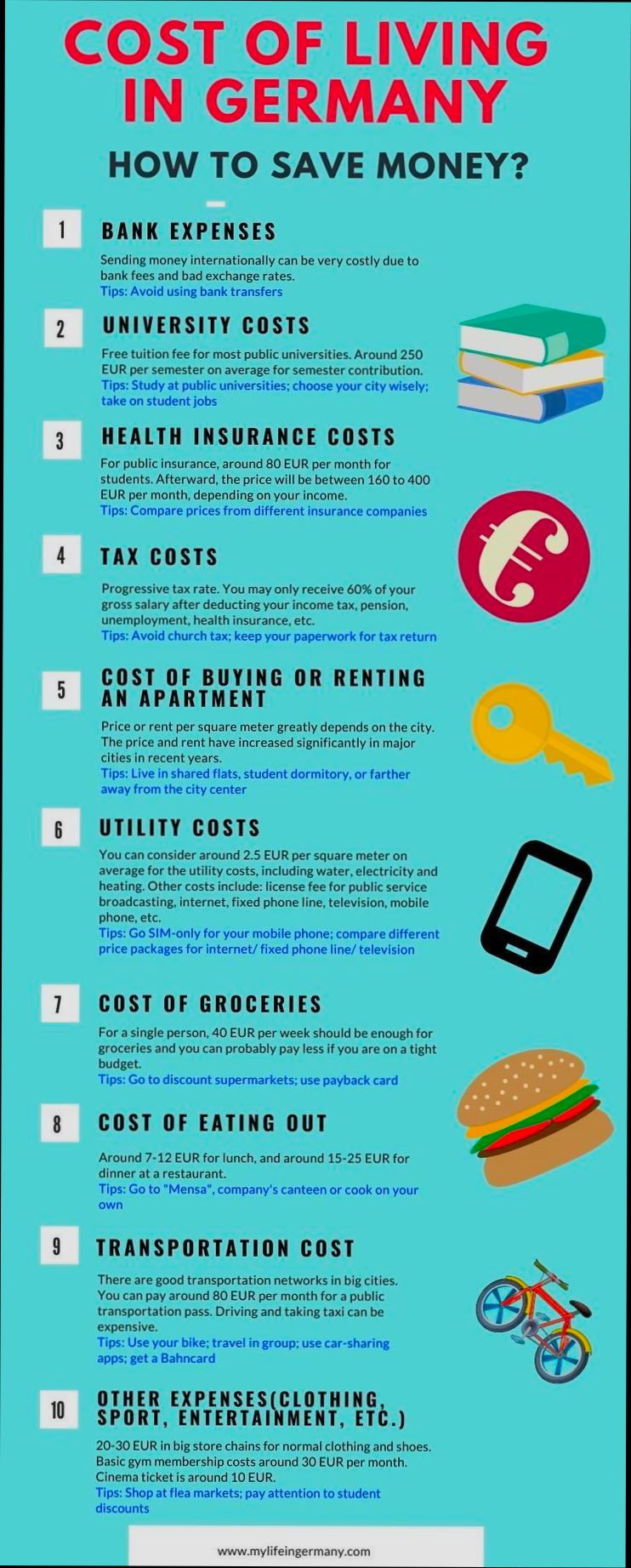
What are the Costs of Moving to Germany? If you’re dreaming of trading your current view for the charming streets of Berlin or the picturesque scenery of Bavaria, you’ll want to crunch some numbers first. For starters, the average cost of renting a one-bedroom apartment in cities like Munich can hit around €1,200 per month, while even in less pricey cities like Leipzig, you might still fork out about €750. Don’t forget about the one-time moving expenses—shipping your belongings from your home country can start anywhere from €1,000 and go up from there, depending on where you’re coming from.
Let’s not skip over the essentials like health insurance, which is mandatory in Germany and typically costs between €80 to €400 monthly, depending on your income level and the plan you choose. And while you’re budgeting, consider the hefty fees for residence permits, which could set you back another €100 or more. Add in daily living expenses—grocery bills, transportation, and entertainment—and it’s clear that the costs shouldn’t be overlooked. For instance, a meal at a casual restaurant could cost around €10-€15, while a monthly public transport pass can run you least €80. Once you add all these factors together, the total cost of making Germany your new home can really stack up!
Housing Costs and Rental Market Overview
Moving to Germany involves understanding the housing costs and rental market, which can vary widely across the country. With larger cities like Berlin and Munich facing significant demand, you might find some surprising trends and figures as you navigate your housing options.
Average Rent Prices
Here’s a quick look at the average rental costs in major German cities, which can help you set your budget:
| City | Average Monthly Rent (in Euros) |
|---|---|
| Berlin | €1,200 |
| Munich | €1,500 |
| Hamburg | €1,300 |
| Frankfurt | €1,400 |
| Cologne | €1,200 |
- In Berlin, average rent prices have increased by about 35% in the last five years. If you’re looking for an apartment, expect to pay around €1,200 for a one-bedroom in the city center.
- Munich, known for its high living standards, has some of the highest prices in Germany, averaging €1,500 monthly for similar accommodations.
- In contrast, cities like Cologne and Frankfurt provide slightly lower rents, averaging €1,200 and €1,400 respectively.
Rental Market Trends
The rental market in Germany leans heavily towards long-term leases, with many landlords preferring tenants who commit for several years. This can sometimes be a challenge for expatriates who may not have the same level of job security as locals.
- Approximately 60% of households in Germany are renters, reflecting a strong rental culture.
- A recent study indicated a vacancy rate of only 2.3% in major urban areas, highlighting how competitive the market can be.
Real-World Examples
When I helped a friend relocate to Berlin, they faced a tough housing search. They found that most landlords were asking for three months’ rent upfront along with proof of income. For example, a €1,200 rental unit required an initial outlay of €3,600, which included the deposit and the first month’s rent.
In Munich, another friend negotiated a rental contract after several weeks, finally securing an apartment at €1,500. However, they needed to provide a written application and recommendations from previous landlords, showcasing the challenges one might encounter.
Practical Implications
As you plan your move, consider the following actionable tips about the rental market:
- Start your apartment search at least three months in advance to ensure you have time to find suitable housing.
- Prepare all necessary documentation, including proof of income, rental history, and a SCHUFA report (credit check), which is often required by landlords.
- Be mindful of additional costs such as utilities, which can add an extra €200-€300 to your monthly budget depending on the location and size of the apartment.
By understanding the specifics of the housing costs and rental market in Germany, you can better prepare for your move and make informed decisions about where to live.

Visa and Immigration Fees Breakdown
Understanding the various visa and immigration fees is crucial for anyone planning to relocate to Germany. These costs can quickly add up, impacting your overall budget and planning. Let’s break down the primary fees you need to anticipate.
Visa Application Fees
When applying for a visa to Germany, you will encounter several application fees depending on the type of visa you are pursuing. Here’s a breakdown:
- Short-Stay Visa (Schengen Visa): Approximately €80
- Long-Stay Visa: Around €100
- Job Seeker Visa: Costs can reach up to €100
- EU Blue Card Fee: Generally €140
These fees can vary slightly, so it’s wise to check the specifics based on the German consulate’s requirements in your home country.
Additional Costs
Apart from the application fees, you may also need to budget for additional expenses related to your visa application:
- Health Insurance: Proof of health insurance is often necessary for your visa application. Costs can range from €30 to over €100 per month depending on the provider and coverage.
- Document Translation Fees: If your documents need translation to German, expect to pay between €20 and €50 per page, depending on the translator’s rates.
- Legal Fees: If you opt for professional legal assistance, expect fees ranging from €100 to €300 per hour.
Comparative Visa Cost Table
| Visa Type | Application Fee (in Euros) | Additional Estimated Costs (in Euros) |
|---|---|---|
| Short-Stay Visa | €80 | €80–€300 |
| Long-Stay Visa | €100 | €80–€300 |
| Job Seeker Visa | €100 | €80–€300 |
| EU Blue Card | €140 | €80–€300 |
Real-World Case Study
Take Anna, for instance, who recently moved to Germany on a Job Seeker Visa. She incured the following costs:
- Visa Fee: €100
- Health Insurance: €60 per month, totaling €180 for three months.
- Document Translation: €40 (for one page of required documents).
Anna’s total upfront costs related to her visa and immigration fees came to about €320.
Practical Implications
As you plan your move, keep in mind that these fees are just part of the bigger picture. Ensure you:
- Research the Exact Costs: Different consulates may have varying fee structures.
- Prepare for Miscellaneous Fees: Calculate a buffer in your budget for unexpected costs like expedited fees or additional document requirements.
- Timing of Payment: Some fees are payable only at the time of your application, while others may recur, like health insurance.
Actionable Advice
Before you start your application, gather all necessary documents and budget for potential expenses. It can be helpful to create a dedicated fund for visa and immigration fees to manage your finances better. Also, keep a checklist of all required documents to avoid unexpected delays and additional costs.
Comparative Cost of Living in Germany
When you’re considering a move to Germany, the comparative cost of living becomes a pivotal factor. Understanding how daily expenses stack up against other countries or even within Germany itself can help you prepare financially. Let’s delve into the major components that contribute to the overall cost of living.
Cost of Groceries
Food prices can vary significantly based on location and personal habits. Here’s a look at average costs for basic grocery items across Germany:
| Item | Average Price (in Euros) |
|---|---|
| Milk (1L) | €1.00 |
| Bread (500g) | €1.30 |
| Eggs (12) | €3.00 |
| Chicken (1kg) | €7.00 |
| Apples (1kg) | €2.00 |
As a personal example, if you live in a larger city like Berlin, you might spend upwards of 20% more on groceries compared to smaller towns like Erfurt. Keeping an eye on local markets can help you save significantly.
Transportation Costs
Transportation is another critical aspect to consider. Commuting can become a significant part of your monthly budget. Here are some average monthly transportation costs:
- Public Transport Pass (City): Range from €70 to €100 depending on the city.
- Taxi Fare (1 km): Approximately €2.50 to €3.00.
- Gasoline (per liter): Around €1.60.
In cities like Munich, a monthly pass might seem steep, but with efficient public transport, it can save you the cost and hassle of owning a car.
Utility Expenses
Utilities such as electricity, heating, cooling, water, and garbage collection can also impact your budget. On average, you might expect to pay:
- Monthly Utilities (for a standard apartment): Approximately €250 to €350.
- Internet (basic package): Around €30 to €40.
In historical cities, like Heidelberg, you may find utility costs are slightly higher due to older infrastructure, adding an extra 10% to your monthly expenses.
Healthcare and Insurance
Healthcare costs in Germany are generally covered under statutory health insurance, but it’s crucial to consider the monthly premiums as part of your living costs:
- Statutory Health Insurance Premium: Usually ranges from €150 to €400 per month, depending on your income.
- Private Insurance (optional): Can exceed €500, offering additional benefits.
If you’re self-employed or a freelancer, it’s essential to budget for these healthcare costs early on.
Practical Implications
As you assess your budget for moving to Germany, consider these practical implications:
- Look for local discounts and deals, especially for groceries and public transport.
- Investigate health insurance options to find what suits your financial and health needs best.
- Try and establish a budget for transportation versus potential savings with an electric bike or cycling.
By getting a handle on these living costs, you can navigate your budget more effectively as you transition into your new life in Germany. Always compare local prices and be open to adjusting your lifestyle accordingly to fit your financial plan.

Statistics on Moving and Relocation Trends
When considering a move to Germany, understanding the latest statistics on relocation trends is vital. This knowledge not only helps you navigate the process but also prepares you for what to expect in your new environment.
Key Statistics on Moving Trends
- Population Movement: In 2022, about 1.6 million people moved to Germany, reflecting an increase of 12% from the previous year. This surge signifies a growing trend of international relocation.
- Most Popular Regions: Studies indicate that over 60% of new arrivals choose to settle in urban areas, with Berlin, Munich, and Frankfurt being the top three destinations, due to their robust job markets and cultural offerings.
- Internal Relocation: Among German residents, nearly 35% have relocated within the country in the last five years. This shows a dynamic internal moving environment driven by job changes and lifestyle choices.
- Reasons for Relocation: Approximately 40% of all relocations are motivated by employment opportunities, while about 30% cite family reasons as their primary rationale.
Relocation Costs Overview
To give you a clearer perspective on moving costs associated with relocation trends, consider the following average expenses you might encounter:
| Expense Category | Average Cost (in Euros) |
|---|---|
| Hiring a Moving Company | €1,500 |
| Packing Supplies | €200 |
| Transportation Fees | €300 |
| Temporary Accommodation | €1,000 (for 1 month) |
Real-World Examples
For instance, a couple from Spain relocated to Munich last year, highlighting that they spent roughly €2,000 on transportation and temporary housing alone. Additionally, another family from Italy noted that their decision to settle in Frankfurt stemmed from job offers that significantly outweighed their previous living costs.
Practical Implications
Understanding these statistics allows you to tailor your moving plan effectively. For instance, if you’re working in tech, heading to Berlin could be advantageous given the city’s reputation as a startup hub. Furthermore, knowing that relocation costs can vary widely will help you budget more accurately, potentially saving you time and stress.
Finally, always remember that these statistics reflect broader trends. While they can guide you, your personal situation may differ. Keeping an eye on the evolving landscape of moving trends can empower you to make informed decisions throughout your relocation process.

Transportation Expenses and Navigational Options
Moving to Germany involves navigating through a complex transportation landscape. Understanding these expenses and options is essential for both budgeting and adapting to life in a new country. In this section, we’ll explore the costs associated with various modes of transportation, essential for settling down smoothly.
Assessing Transportation Expenses
Transportation in Germany is renowned for its efficiency, but costs can accumulate quickly depending on your preferences. Here’s a breakdown of some typical expenses:
- Public Transportation Costs:
- Monthly public transport passes can range from €70 to €100, depending on the city.
- Ticket prices often include multiple modes of transport (bus, tram, metro).
- Car Ownership Costs:
- Average fuel prices hover around €1.50 per liter, impacting your monthly budget if you choose to drive.
- Annual vehicle tax can range from €100 to €500 depending on your car’s emissions.
- Taxi and Rideshare Expenses:
- Typical taxi fares start at around €3.50, with an additional cost of about €2.00 per kilometer.
- Rideshare services like Uber are also present in many cities but can be pricier, often with a starting fee around €5.
Transportation Expense Comparison Table
| Transportation Mode | Average Monthly Cost (in Euros) |
|---|---|
| Public Transportation (Monthly Pass) | €70 - €100 |
| Average Fuel Price (per liter) | €1.50 |
| Vehicle Tax (Annual) | €100 - €500 |
| Taxi Starting Fee | €3.50 |
| Rideshare Starting Fee | €5 |
Real-World Examples
Let’s consider Maria, who moved from Spain to Berlin. She decided to rely on public transportation. Maria purchased a monthly pass for €84, giving her unlimited access to buses, trams, and the U-Bahn, which turned out to be more economical compared to driving a car in a busy city.
On the other hand, Tom, who lives in Munich, preferred the convenience of his car. He discovered that his fuel costs were around €180 per month, plus an annual vehicle tax of €300. This choice may have provided flexibility, but it proved to be significantly more expensive than relying on public transport.
Practical Tips for Navigating Transportation Options
- Purchase Monthly Passes: If you plan to use public transport frequently, monthly passes save you money compared to single fares.
- Carpooling: If you own a car, consider carpooling options to split fuel costs with colleagues or friends.
- Check City-Specific Apps: Many cities offer apps that provide real-time information on public transportation schedules and fares, enhancing your commuting experience.
Actionable Advice
Before your move, research the city’s transportation network to understand the options available. If public transport suffices for your commuting needs, invest in a monthly pass to minimize expenses. If you lean towards car ownership, factor in fuel costs, parking fees, and automotive taxes into your budget. Knowing these transportation dynamics will help you make informed decisions and streamline your transition to life in Germany.
Real-Life Experiences of Expatriates
Moving to Germany can be an exciting adventure, filled with unique challenges and rewards. Understanding the experiences of other expatriates can provide valuable insights into what to expect during your relocation journey.
The Adjustment Process
Many expatriates share that the initial adjustment period can be overwhelming yet enriching. A survey conducted among newcomers indicated that:
- 40% felt homesick in their first month.
- 75% expressed surprise at the cultural differences, particularly in communication styles and workplace dynamics.
It’s important to remember that these feelings are normal and often subside as you settle into your new environment. Engaging with local communities and expatriate networks can significantly ease this transition.
Common Experiences
1. Language Barrier: Many expats report that not being fluent in German can be a hurdle.
- 60% of respondents noted that they faced difficulties in everyday conversations, impacting their integration.
2. Social Integration: Building a social circle often requires effort.
- 50% found it harder than expected to make local friends, primarily due to cultural differences in social behavior.
Table: Expatriate Challenges and Solutions
| Challenge | Percentage Affected | Suggested Solution |
|---|---|---|
| Homesickness | 40% | Join local expat groups |
| Language Barrier | 60% | Enroll in German language classes |
| Difficulty Making Friends | 50% | Participate in community events |
Real-World Examples
- Alex from Canada moved to Munich for a tech job. He quickly learned that networking in Germany is often formal. Initially discouraged by the stiff social setting, he began attending local meetups, which helped him connect with fellow expats who shared similar interests.
- Sara from Brazil faced challenges with the bureaucratic system. She took the initiative to seek advice from an online expat forum. This not only provided her with practical insights but also led to new friendships.
Practical Implications
Understanding these shared experiences helps you prepare emotionally and strategically for your move.
- Network Early: Start connecting with community groups before you arrive. This will help you have a support system in place.
- Embrace Local Culture: Make an effort to learn about German customs and traditions. This will enrich your experience and aid in building connections.
Actionable Advice
- Consider a Language Course: Many expats found that taking a German language course not only improved their communication skills but also their confidence, allowing them to participate more fully in their new lives.
- Seek Professional Networking Events: Participating in local meetups is an excellent way to broaden your social network while easing the transition.
Advantages of Living in Germany
Living in Germany comes with numerous benefits that go beyond its rich culture and stunning landscapes. As we explore what makes Germany an attractive destination, you’ll notice how various factors contribute to a high quality of life for residents and expatriates alike.
High Standard of Living
Germany consistently ranks high in global quality of life indices. The country boasts a strong economy, excellent infrastructure, and a comprehensive healthcare system. According to the latest research, over 80% of Germans report satisfaction with their quality of life, reflecting the availability of resources and a stable environment.
- Healthcare System: Germany has a robust public healthcare system, covering about 90% of its population. It is renowned for its comprehensive medical services, ensuring that you and your family receive necessary care without outrageous expenses.
Strong Job Market
When moving to Germany, you’ll find yourself in the midst of a thriving job market. Germany has one of the lowest unemployment rates in Europe at about 5%, and the country is home to numerous multinational corporations and a growing start-up scene.
- Diverse Opportunities: Germany’s job market is particularly strong in sectors such as engineering, IT, and healthcare. Skilled professionals in these areas often receive competitive salaries and benefits.
Education System
Germany offers an exemplary education system, with many institutions ranked amongst the best in the world. Public universities are tuition-free for both domestic and international students, promoting accessible education.
- Student Satisfaction: A survey revealed that 70% of students in Germany are satisfied with their educational experience, highlighting the quality and accessibility of higher education.
| Aspect | Description |
|---|---|
| Quality of Health Care | Comprehensive coverage with 90% of the population insured |
| Unemployment Rate | Low at around 5%, reflecting a strong job market |
| Education Costs | Public universities with no tuition fees for many courses |
| Student Satisfaction Rate | 70% of students satisfied with education quality |
Cultural Diversity
Germany is a melting pot of cultures, with many cities being global hubs for various ethnic communities. This diversity enriches the social fabric, offering a range of cultural offerings such as festivals, cuisine, and languages.
- Cultural Events: Major cities like Berlin and Munich host over 1,000 cultural events a year, providing residents with endless opportunities to engage and explore new cultures.
Safety and Stability
Germany is highly regarded for its political stability and low crime rates. It consistently ranks among the safest countries in the world.
- Public Safety: For instance, crime rates have been plummeting in major urban areas, with a reported 15% decrease over the last five years. This ensures a safer environment for you and your family.
Practical Implications for Your Move
Understanding these advantages can help you make a more informed decision about relocating to Germany. Finding a stable job, benefiting from high-quality healthcare, and enjoying cultural experiences will enhance your overall living experience.
Explore local integration courses that can help you adapt and become part of this enriching environment. The German government offers language classes and social integration programs, with more than 500,000 participants annually benefitting from these initiatives.
Germany truly offers numerous advantages that cater to various needs, making it a desirable location for individuals and families seeking an enriching and secure environment.